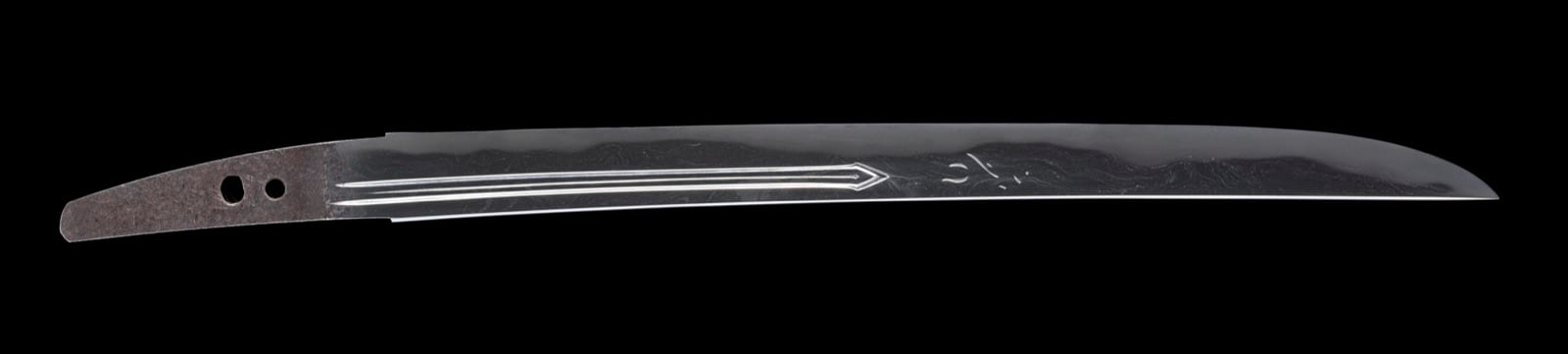
His works
| Work | Type | Designation | Where it is |
|---|---|---|---|
| 短刀 銘賀州住真景 貞治六年月日 (tantō mei Gashū jū Sanekage Jōji rokunen gappi) | Tantō of 28.5 cm, dated 1367 | Important Cultural Property since 1955 | Whereabouts unknown |
| 短刀 銘加州住真景 (tantō mei Kashū jū Sanekage) | Tantō of 28.8 cm | — | Kyoto National Museum |
The tantō of 1367
Signed and dated in the sixth year of Jōji (1367), hira-zukuri, mitsu-mune, of itame and with a temper of ko-notare with ko-gunome. It was designated an Important Cultural Property in 1955, owned by a private individual in Kanagawa, and today it appears on the Agency for Cultural Affairs’ list of cultural properties whose whereabouts are unknown. It is the only signed and dated blade of his with a national designation, and it cannot be photographed.
The Kyoto tantō
Signed 加州住真景 (Kashū jū Sanekage), of the Nanbokuchō, 28.8 cm long with 0.3 cm of curvature.
Jūyō Tōken katana
Among the blades that the NBTHK has designated Jūyō Tōken are unsigned katana attributed to him, such as a much shortened one (ō-suriage) from the 36th session.