On this page
Quick profile
- Name
- Kanenaga, called Tegai Kanenaga AT
- Kanji and reading
- 包永 (Kanenaga); the school is written 手掻 (Tegai), 手搔 (Tegai) or 転害 (Tegai) AT
- Period
- Mid- or late Kamakura, around the 正応 (Shōō) era, 1288–1293; birth and death unknown AT
- Province
- Yamato: next to the Tegai gate of the Tōdai-ji, in Nara, where the Tegai-chō district is today AT
- School or tradition
- Founder of the Tegai school (手掻派, Tegai-ha), one of the five of Yamato AT
- Generations
- The name Kanenaga was repeated for several generations, until Nanbokuchō; this monograph is about the first AT
- Documented fact and tradition
- Documented: his signed blades and his seven national designations. From the records and from tradition: his period, his byname and that he made tachi for the warrior monks of the Tōdai-ji. AT
In short
What we know. The database of cultural properties of the Agency for Cultural Affairs (文化庁, Bunkachō) gives one National Treasure and six Important Cultural Properties with the signature 包永 (Kanenaga), the same seven that the NBTHK counts.
How we know it. His life and his style come from Japanese dictionaries and encyclopaedias and from the NBTHK journal. His period comes from the old records and from reading the style, not from a dated blade.
What we do not know. Whether the Konotegashiwa is in the Kyōhō meibutsuchō (享保名物帳).
Sections
-
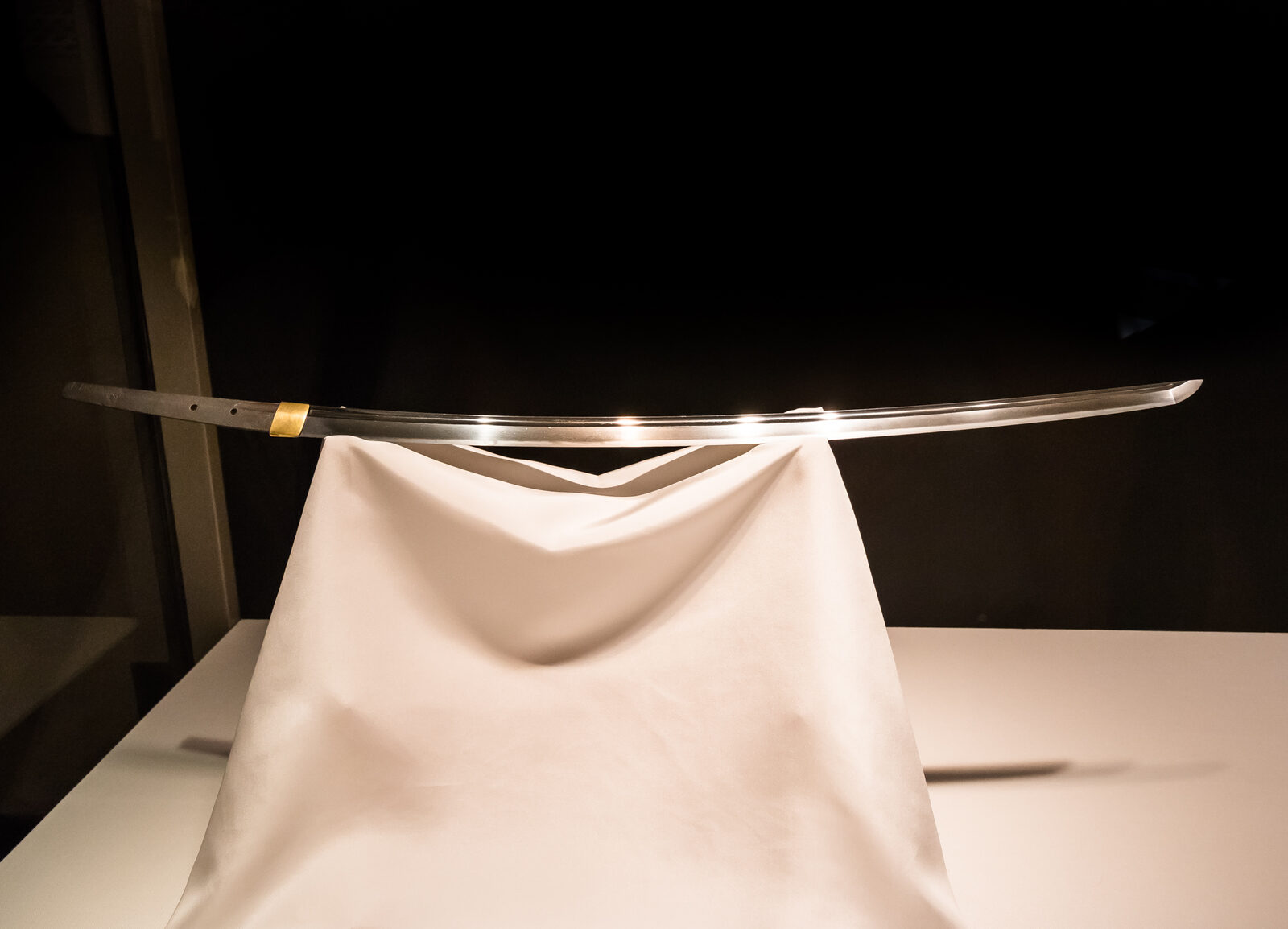 Nara · Tōdai-ji · Yamato
Life and times
The Tegai gate of the Tōdai-ji, his school and why his period is debated.
-
Itame · suguha · hakikake
Work and style
The kantei keys of his tachi: the steel, the temper, the point, the shape, the tang and the signature.
-
National Treasure · Konotegashiwa
Famous works
The National Treasure of the Seikadō, his six Important Cultural Properties and the Konotegashiwa, which burned in 1923.
-
Bibliography and credits
Sources
The sources consulted on 4 October 2026, with their link, and the credit for the image.