On this page
The National Treasure of the Seikadō
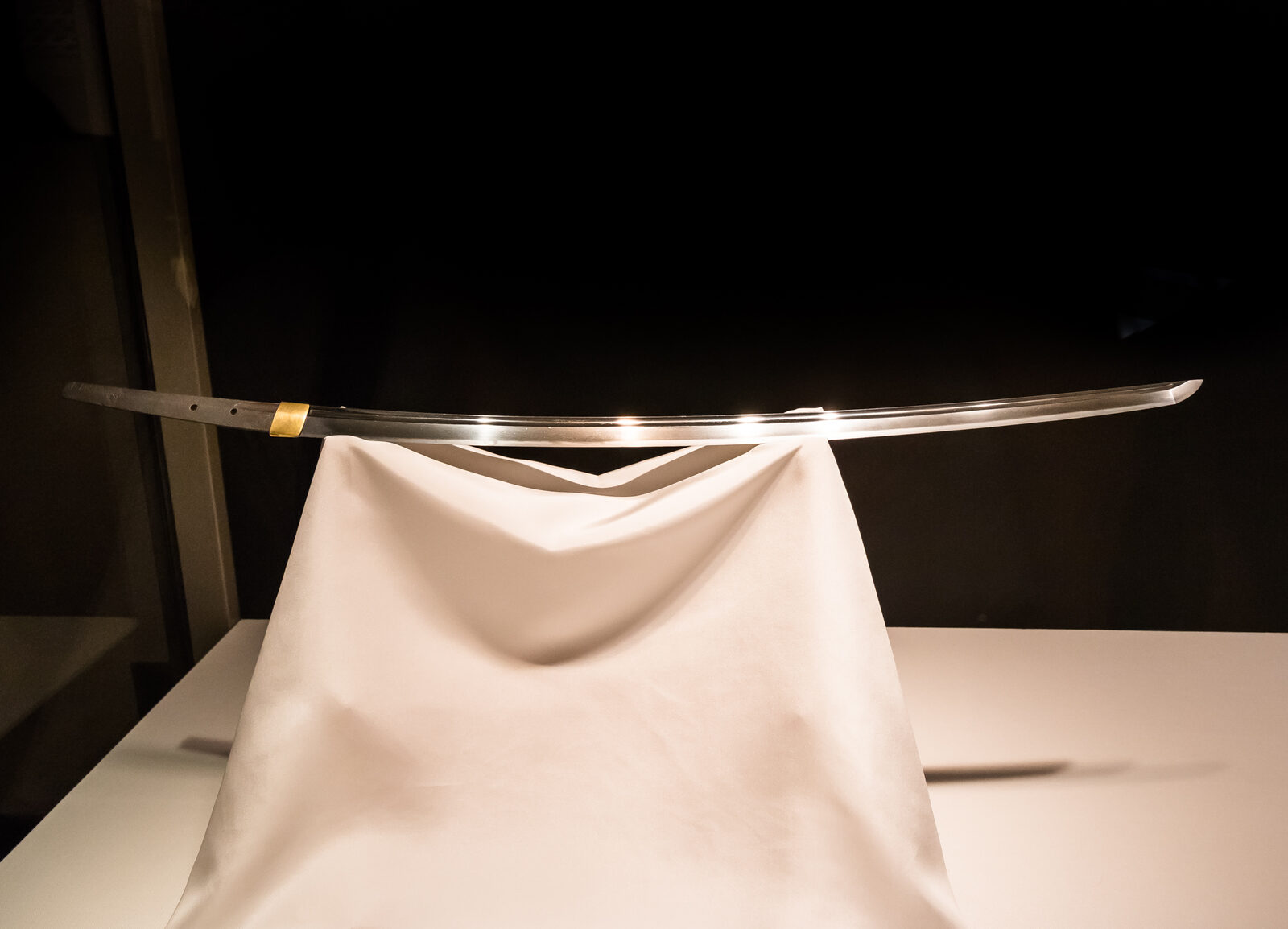
Tachi 銘包永 (mei Kanenaga), of the Seikadō Foundation, in Setagaya (Tokyo): designated on 24 December 1931 under the old law and a National Treasure since 22 November 1952. It measures 73.0 cm long, 2.7 cm of sori and 19.7 cm of tang. It belonged to Akaboshi Tetsuma and then to the Iwasaki family, who took it to the Seikadō.
His designated works
The official database gives exactly seven blades with his signature: one National Treasure and six Important Cultural Properties, the same ones the NBTHK counts in 2016.
| Work | Designation | Where it is |
|---|---|---|
| Tachi 銘包永 (mei Kanenaga) | National Treasure, 1952 | Seikadō Foundation, Tokyo |
| Tachi 銘包永 (mei Kanenaga), with a letter from Tokugawa Ieyasu of 1585 | Important Cultural Property | Tokyo National Museum |
| Tachi 銘包永 (mei Kanenaga) | Important Cultural Property, 1924 | Shijōnawate shrine, Osaka |
| Tachi 銘包永 (mei Kanenaga) | Important Cultural Property, 1950 | Himeji shrine, Hyōgo |
| Tachi 銘包永 (mei Kanenaga) | Important Cultural Property | Private collection, Shizuoka |
| Tachi 銘包永 (mei Kanenaga) | Important Cultural Property | Private collection, Tokyo |
| Tachi 銘包永 (mei Kanenaga) | Important Cultural Property | Private collection, Osaka |
The tachi of the Shijōnawate shrine
According to the NBTHK, it was given by Inaba Masakuni; the shōgun Tokugawa Tsunayoshi had given it to Inaba Masanori in 1681 for directing the works on the mausoleum of Tokugawa Ietsuna.
The Konotegashiwa
- A kodachi signed 包永 (Kanenaga) that was called Konotegashiwa (児手柏). Hosokawa Yūsai shortened it in 1574 and engraved his note on it; it passed to Tokugawa Ieyasu and to the Mito branch of the Tokugawa, and it burned in the Great Kantō earthquake of 1923. It is in the Tokugawa Museum in Mito (Ibaraki), according to the Japanese Wikipedia and Bunka Isan Online.
- In 2017 月山貞利 (Gassan Sadatoshi) made a replica, which was exhibited next to the original.
- The NBTHK calls it “meibutsu”, and the Japanese Wikipedia cites the register of famous swords in its history. It has yet to be checked in the list itself that it is in the Kyōhō meibutsuchō (享保名物帳).
In the museums and the treatises
- The Tokyo National Museum holds another tachi 銘包永 (mei Kanenaga), without designation, with an Edo uchigatana mounting with dragons among clouds, according to ColBase.
- It is not on record in the wazamono list of the Kaihō Kenjaku (懐宝剣尺) consulted, nor in any classification of the treatises that has been found.