
The Okada-giri
- The 太刀 銘吉房 (tachi, mei Yoshifusa), called 岡田切 (Okada-giri), is in the Tokyo National Museum. It was designated in 1949 under the old law and has been a National Treasure since 2 February 1955.
- Its name dates from 1584, during the Komaki and Nagakute campaign: Oda Nobukatsu used it to kill his retainer Okada Sukesaburō Shigetaka. The Japanese Wikipedia adds that he was accused of collusion with Hideyoshi.
- The sources consulted call it by that name, but do not give it as a meibutsu, and it has not been checked whether it is in the Kyōhō meibutsuchō (享保名物帳).
His designated works
| Work | Designation | Where it is | Details |
|---|---|---|---|
| Tachi 吉房 (Yoshifusa), of the Shimazu house | National Treasure since 1953 (designated in 1931 under the old law) | Private collection (Tokyo) | 81.2 cm |
| Tachi 吉房 (Yoshifusa), of the Tokugawa | National Treasure since 1955 (designated in 1931 under the old law) | Fukuyama Museum of Art (Hiroshima) | 74.0 cm |
| Tachi 吉房 (Yoshifusa) | National Treasure since 1955 (designated in 1933 under the old law) | Hayashibara Museum of Art (Okayama) | Almost unshortened |
| Tachi 吉房 (Yoshifusa), Okada-giri | National Treasure since 1955 (designated in 1949 under the old law) | Tokyo National Museum | 69.0 cm |
| Tachi 吉房 (Yoshifusa), of the Takenokoshi | National Treasure since 1957 (Important Cultural Property, 1952) | Tokyo National Museum | 70.6 cm, sori 2.7 cm |
| Tachi 吉房 (Yoshifusa) | Important Cultural Property (designated in 1917 under the old law) | Nikkō Tōshōgū (Tochigi) | — |
| Tachi 吉房 (Yoshifusa) | Important Cultural Property (designated in 1936 under the old law) | 土津神社 (Hanitsu-jinja), Fukushima | — |
| Tachi 額銘吉房 (gaku-mei Yoshifusa), with the signature cut out and inlaid | Important Cultural Property (designated in 1935 under the old law) | Tōgō-jinja (Tokyo), on deposit at the Tokyo National Museum | — |
From hand to hand
- The Shimazu blade was, according to the Japanese Wikipedia, a gift from the shōgun Tokugawa Ietsuna to Shimazu Tsunataka in 1667.
- The Takenokoshi blade: according to tradition, it belonged to Toyotomi Hideyoshi, who gave it to Takenokoshi Masanobu, a retainer of Tokugawa Ieyasu, and it remained in that Owari family. The Japanese Wikipedia adds that Emperor Meiji bought it. The Tokyo National Museum describes it as deeply curved and robust, with a showy chōji.
- The one in the Hayashibara Museum comes, according to the Japanese Wikipedia, from the Matsudaira of Saijō, in Iyo.
- The Tōgō-jinja blade was given by the crown prince, the future Emperor Taishō, to Admiral Tōgō Heihachirō during the Russo-Japanese War, in 1904.
Lists and treatises
He does not appear in the Japanese Wikipedia’s list of wazamono, nor has any work of his been found in the Kyōhō meibutsuchō (享保名物帳) in the sources consulted.
Gallery
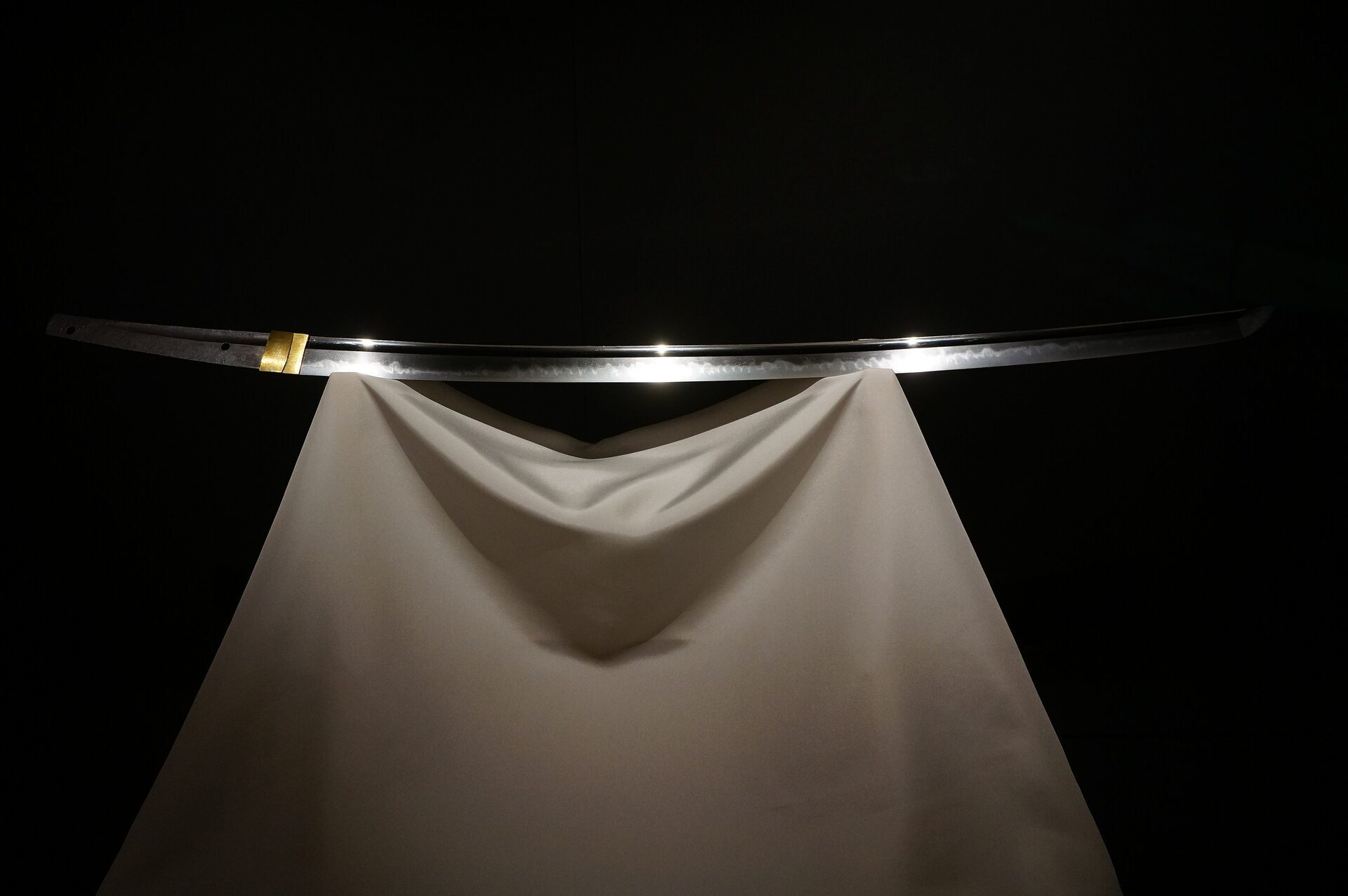
The Okada-giri on display at the Tokyo National Museum. SLIMHANNYA, CC BY-SA 4.0, via Wikimedia Commons · CC BY-SA 4.0 · source 
The Takenokoshi tachi, whole, on one side. Tokyo National Museum, via ColBase · ColBase terms of use · source 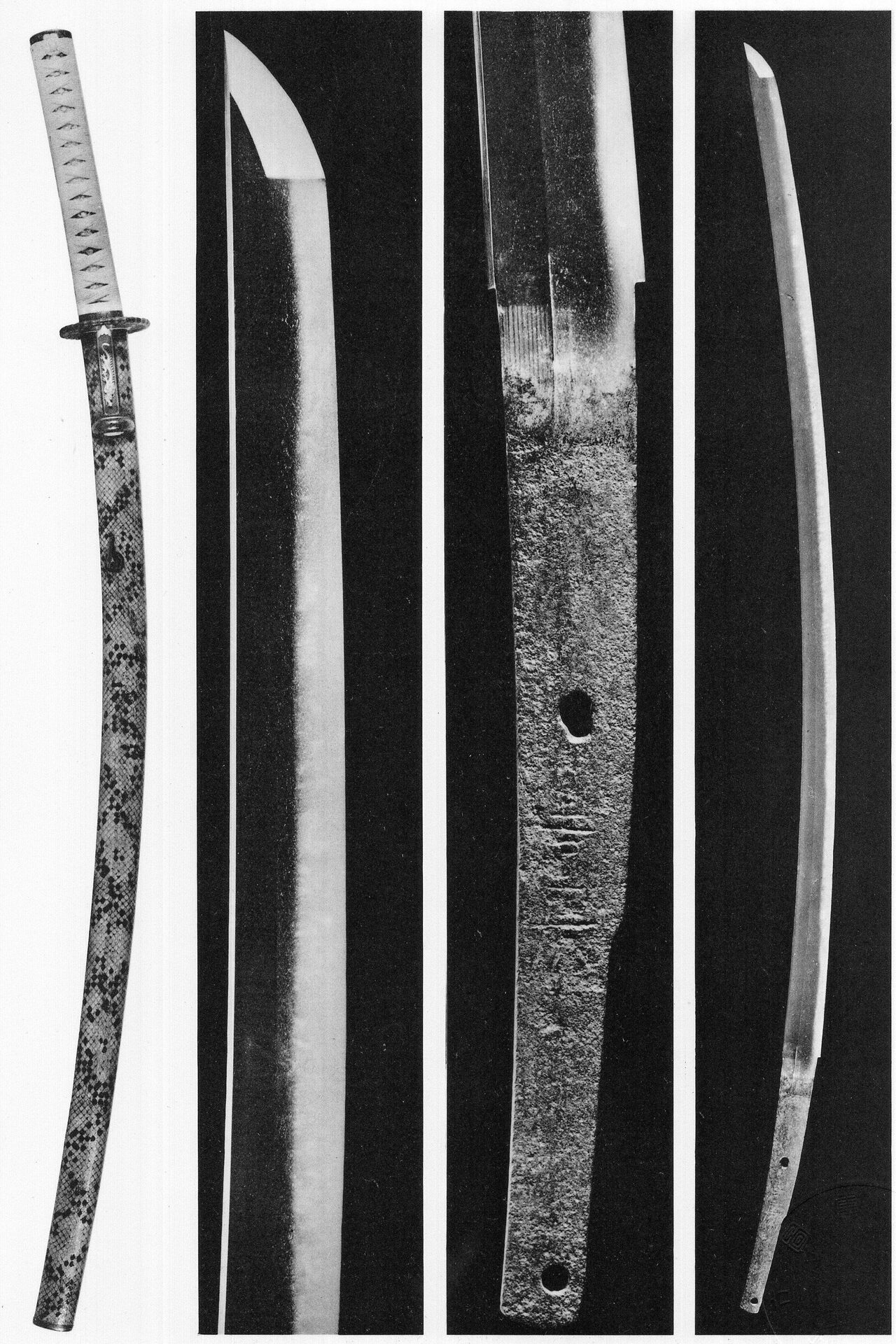
The Yoshifusa tachi of the Shimazu house, in a plate of the National Treasures. Committee for the Protection of Cultural Properties, Public domain, via Wikimedia Commons · Public domain · source 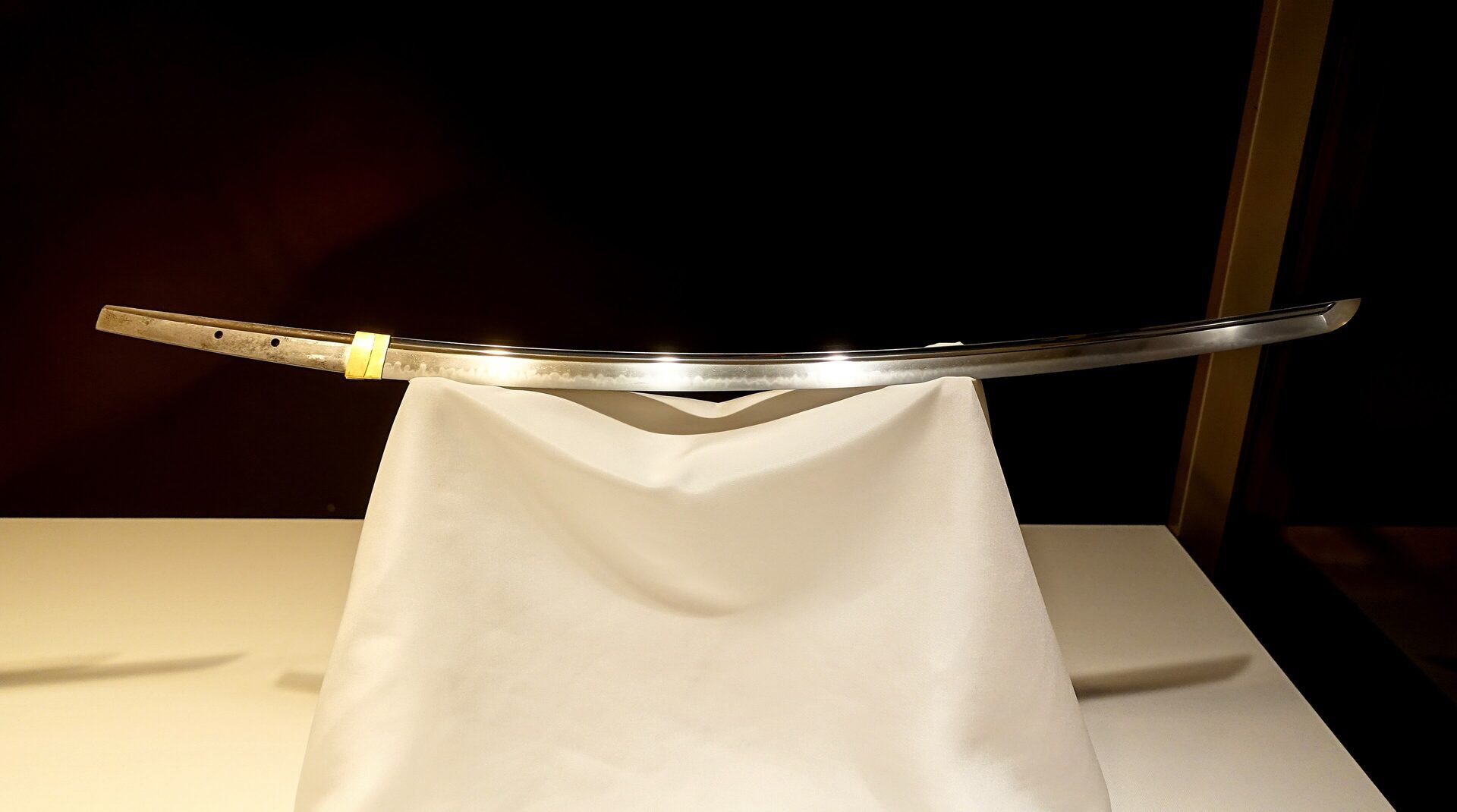
A Yoshifusa tachi on display at the Tokyo National Museum; the photo does not say which of the two. Daderot, Public domain, via Wikimedia Commons · Public domain · source


