What he is after
He pursues the reproduction of the ancient swords of the Bizen-den, and the Japanese Wikipedia places him among those who began its boom among today’s swordsmiths; it singles out his utsuri, the hardest thing in the Bizen-den. His speciality is a broad chōji-midare, the “Yoshihara chōji”, and his carvings (彫物, horimono) are highly prized. For him, the sword has to cut well and be at once a sacred object and a work of art, not a weapon.
Gallery of works
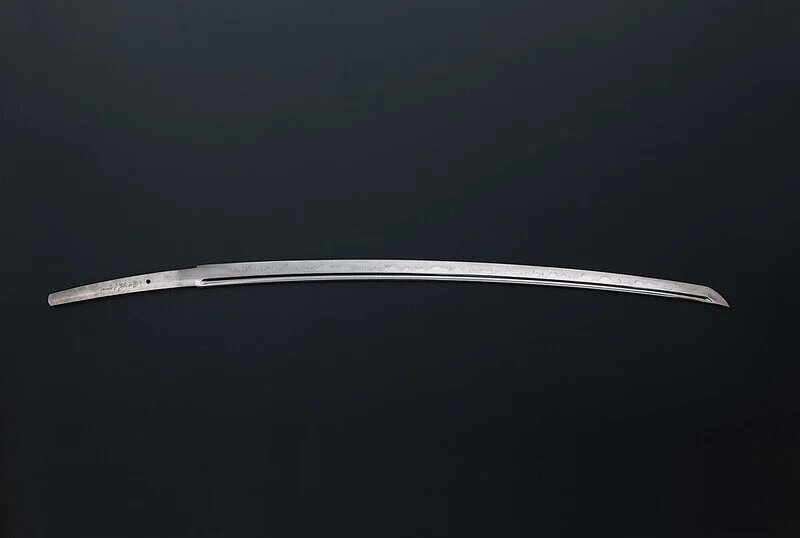
A katana by Yoshindo with bōhi, whole. Photo: dealer in Japan 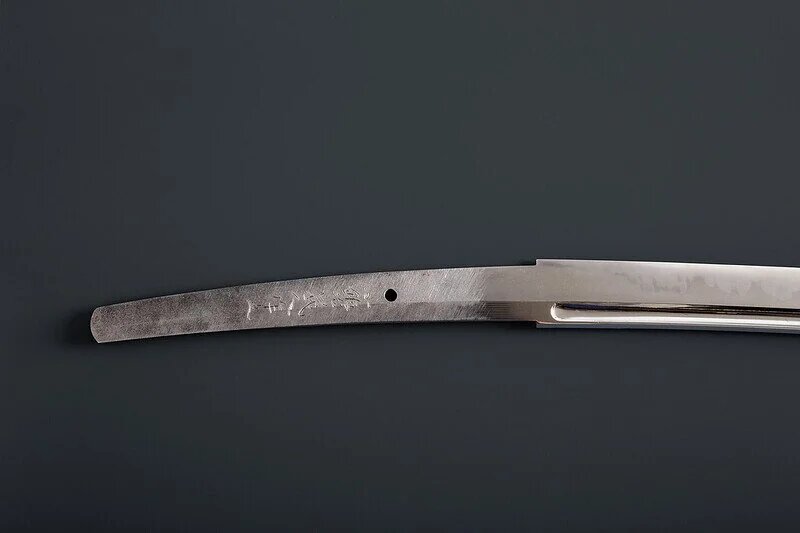
The same katana: the tang with its signature and the start of the bōhi. Photo: dealer in Japan 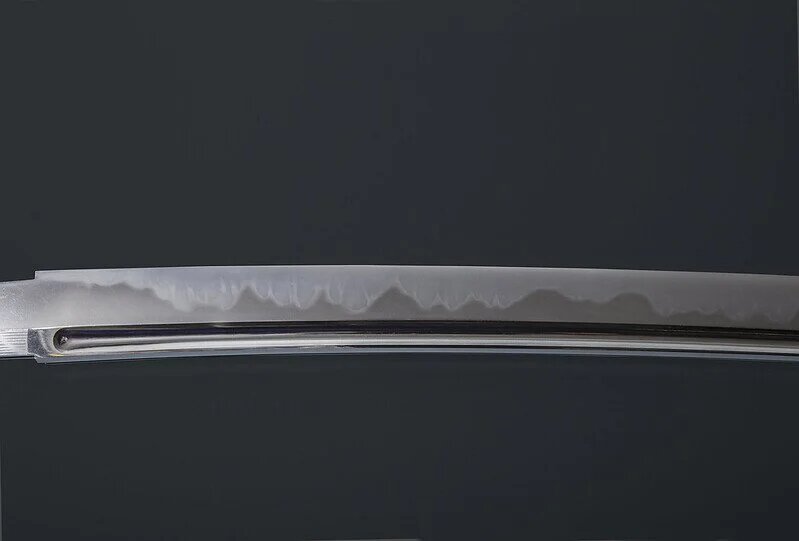
The chōji hamon of the same katana, near the base. Photo: dealer in Japan 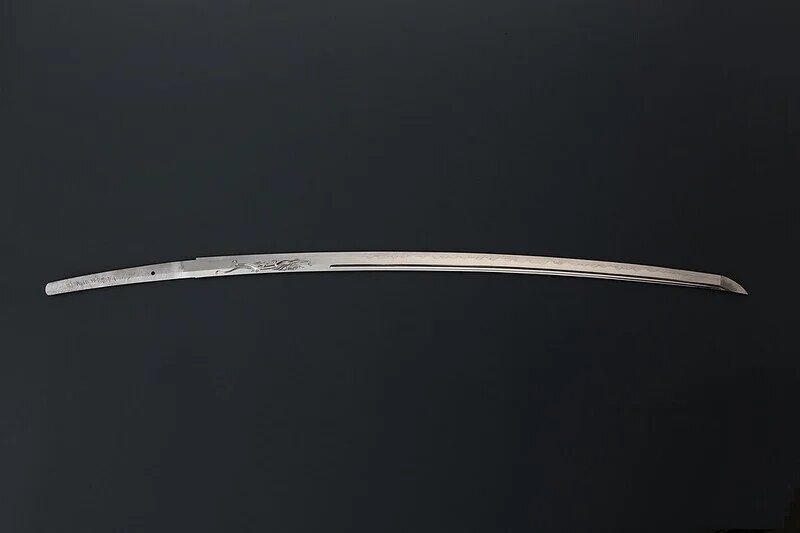
A katana by Yoshindo with horimono at the base. Photo: dealer in Japan 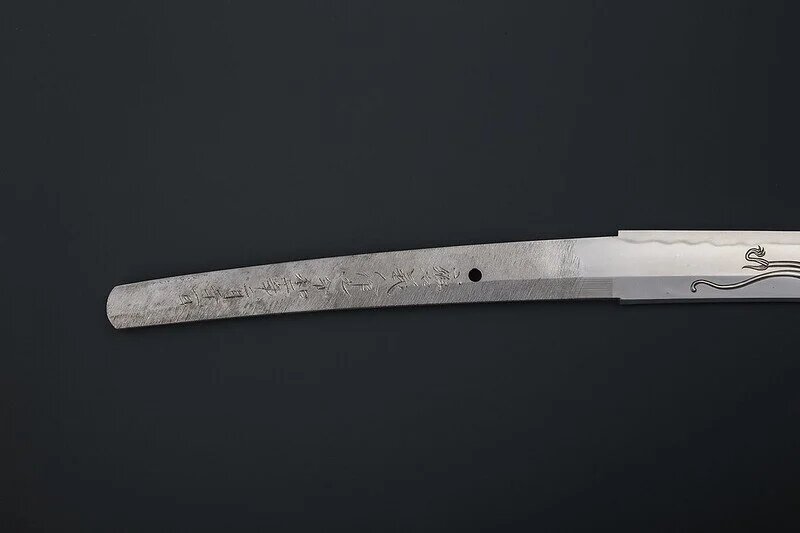
The tang of the same katana, with its inscription, and the start of the horimono. Photo: dealer in Japan 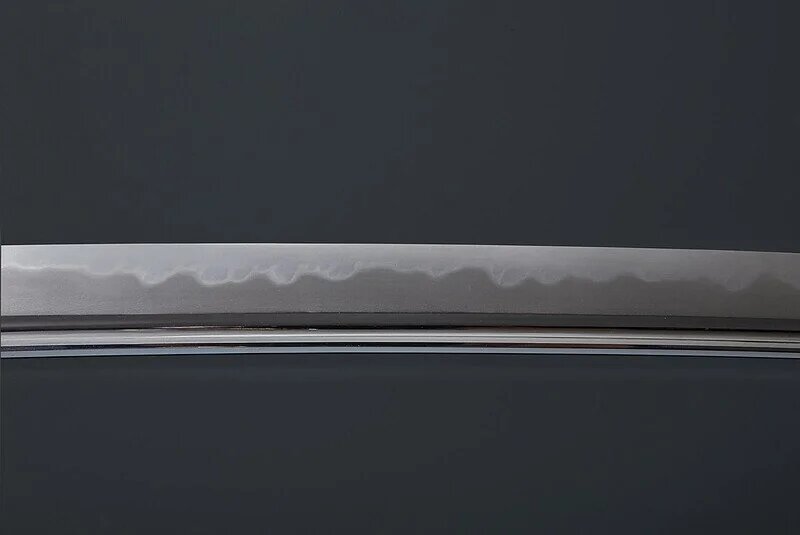
The chōji-midare of the same katana. Photo: dealer in Japan 
A moroha-zukuri (両刃造, double-edged) tantō by Yoshindo. Photo: dealer in Japan 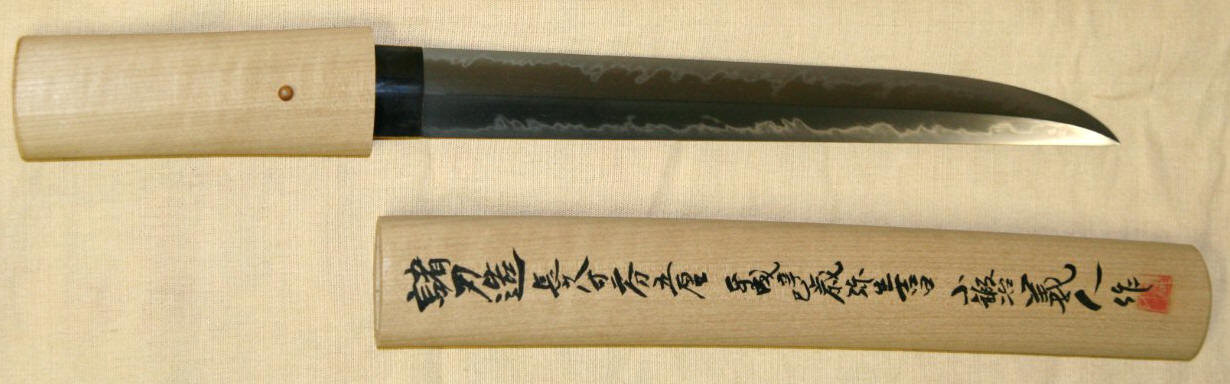
The same tantō, in its shirasaya. Photo: dealer in Japan 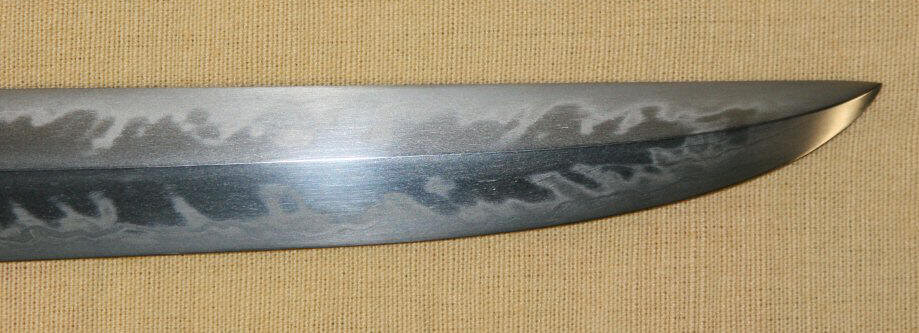
The temper of both edges, near the point. Photo: dealer in Japan
Works exhibited by the NBTHK
Those listed in the catalogues of the Japanese Sword Museum:
| Year | Work | Signature | Nagasa | Level |
|---|---|---|---|---|
| 1999 (exhibited in 2019, 名工大賞, Meikō Taishō) | Wakizashi with horimono carved by him, polished by Takaiwa Setsuo; the saya is also his | 義人彫同作 (Yoshindo hori dōsaku) | 38.0 cm | HD |
| 2021 | Katana | 小鍛冶義人作之 (Kokaji Yoshindo kore o tsukuru) | 72.0 cm | HD |
| 2022 | Wakizashi | 小鍛冶義人作七十九 (Kokaji Yoshindo saku, nanajūku: at the age of 79) | 34.3 cm | HD |
| 2024 | Wakizashi | 小鍛冶義人作 (Kokaji Yoshindo saku), spring of Reiwa 5 (2023) | 44.9 cm | HD |
| 2026 | Wakizashi | Kokaji Yoshindo saku | 40.3 cm | HD |
In museums
He has work in the Metropolitan Museum of Art in New York and in the Museum of Fine Arts in Boston, which offered to buy a sword from him after 1980, and a wakizashi in the Bargello National Museum in Florence, donated in 2005.