On this page
Kantei keys
- Sugata
- The Maeda tantō: hira-zukuri, mitsu-mune and uchi-zori, the common shape of Kamakura tantō. HD
- Jihada
- Tightly packed itame, with thick ji-nie and chikei. HD
- Hamon
- Hiro-suguha with ko-ashi and yō, kinsuji here and there, a deep nioi and plenty of ko-nie. HD
- Bōshi
- Straight, with komaru, hakikake and kinsuji, and a somewhat long turn-back. HD
- Nakago and mei
- Never shortened, kurijiri, katte-sagari yasurime, one hole, and the signature 行光 (Yukimitsu) in two characters cut with a fine chisel, below the hole and in the centre. HD
His style
- The Tokyo National Museum sees his style as halfway between his master’s suguha and Masamune’s curving midare, and gives the Maeda tantō as a typical example.
- The official record of the tantō calls it a masterpiece of Sōshū Yukimitsu: its style resembles Kunimitsu’s, with plenty of chikei in the steel and a suguha rich in nie with kinsuji.
- For the NBTHK his jiba is full of nie, with chikei, kinsuji and yubashiri, “charming in appearance”, among the best of the Sōshū-den. It resembles Yukihira and the Taima school of Yamato, but the proportions of the shinogi-ji and the bōshi are not those of Yamato.
The blades attributed to him
- The NBTHK says that the unsigned blades attributed to him show many styles: some recall Masamune, Norishige or Rai Kunitsugu, with notare, midare-ba and hitatsura. From the Muromachi on, the treatises already said that he worked in many styles.
- An NBTHK kantei gives him as the option that remains when a blade is not by Masamune, Sadamune, Norishige or another of Masamune’s ten pupils.
- The NBTHK speaks of a nakago “in the style of Sōshū Yukimitsu”: with a tip that narrows sharply towards the mune, shaped like a boat, which also appears on blades of the Rai school influenced by Sōshū.
The measurements of the Maeda tantō
The Agency for Cultural Affairs gives a blade of 26.4 cm, a motohaba of 2.3 cm and a nakago of 10.7 cm; the Tokyo National Museum, a blade of 26.2 cm.
Gallery
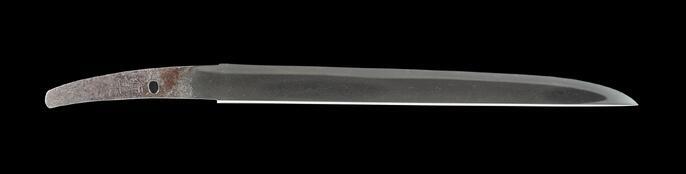
The Yukimitsu tantō of the Maeda house, on one side. Tokyo National Museum, via ColBase · ColBase terms of use · source 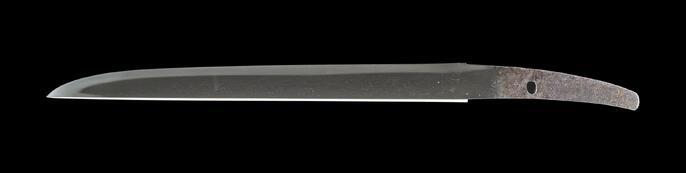
The Maeda tantō, from the other side. Tokyo National Museum, via ColBase · ColBase terms of use · source 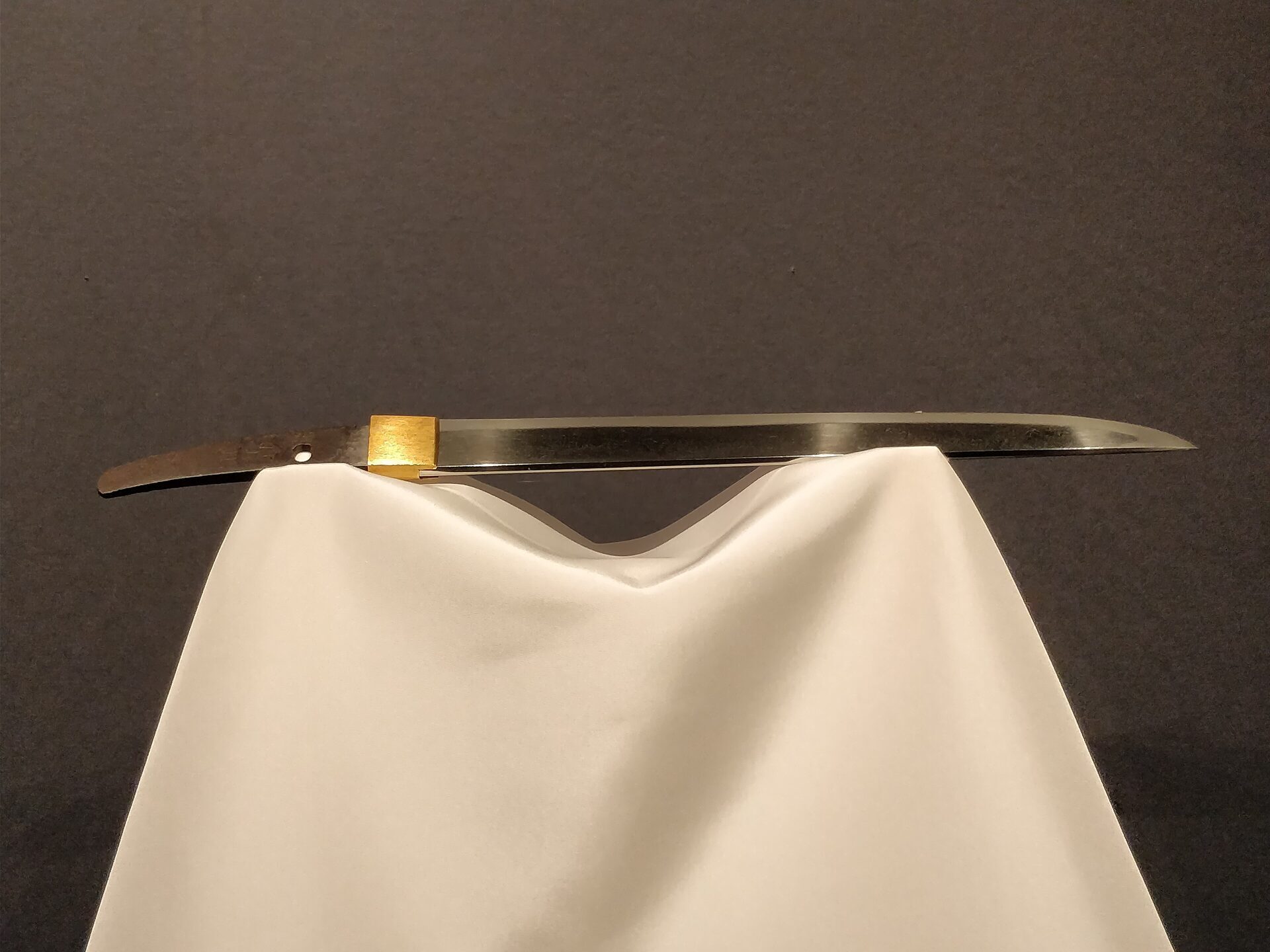
The Maeda tantō in a display case at the Tokyo National Museum. Underbar dk, CC BY-SA 4.0, via Wikimedia Commons · CC BY-SA 4.0 · source
