On this page
The Maeda tantō
- The 短刀 銘行光 (tantō, mei Yukimitsu), from the Maeda house of Kaga, is in the Tokyo National Museum. It was designated in 1931 under the old law and has been a National Treasure since 20 March 1954.
- It is kept with a lacquered aikuchi koshirae with clouds in makie.
His two signed blades
- The NBTHK says that only two blades with his signature are known: one that Tokugawa Ieyasu gave to Takenokoshi Masanobu, of Imao, in Mino, and the one of the Maeda house, a National Treasure.
- The Tokyo National Museum says that, of his signed blades, the representative ones are the Maeda blade and the one of the Imperial Household Agency.
- Neither source says whether the blade Ieyasu gave away is the one of the Imperial Household.
The Fudō Yukimitsu
- The 不動行光 (Fudō Yukimitsu) is a tantō associated with Oda Nobunaga. The blade that bears that name today, privately owned, measures 25.5 cm, is engraved with Fudō Myōō and is signed 行光 (Yukimitsu).
- The 享保名物帳 (Kyōhō meibutsuchō) records only a “Fudō”, with no swordsmith’s name. According to the Japanese Wikipedia, that entry is not in the original and was added by Hon'ami Nagane in the late Edo; in 1901, Hon'ami Chōshiki told Imamura Chōga that that Fudō was by Sōshū Sadamune, and Fukunaga Suiken doubts that it is today’s Fudō Yukimitsu. Some accounts say it burned at Honnōji.
- No meibutsu of his is recorded with certainty.
The Sano Yukimitsu
According to Markus Sesko, the famous Kotegiri Masamune was attributed to Yukimitsu when it was owned by Sano Nobuyoshi, lord of the Sano domain, in Shimotsuke, and for that reason it was called 佐野行光 (Sano Yukimitsu).
Other blades and papers
| Work | Designation | Where it is | Details |
|---|---|---|---|
| Tantō 行光 (Yukimitsu) | Property of the Imperial Household | Imperial Household Agency | One of his two representative signed blades |
| Unsigned katana, attributed to Yukimitsu | NBTHK tokubetsu jūyō tōken | NBTHK; formerly owned by Walter Compton | Heavily shortened; chū-suguha with plenty of ko-nie, bōhi |
| Origami by Hon'ami Kōchū for a tantō by Yukimitsu | — | Not stated | Dated 1702 (Genroku 15) |
Lists and treatises
Tōsaburō Yukimitsu does not appear in the Japanese Wikipedia’s list of wazamono; the Yukimitsu listed there is Fujishima Yukimitsu, a different swordsmith.
Gallery
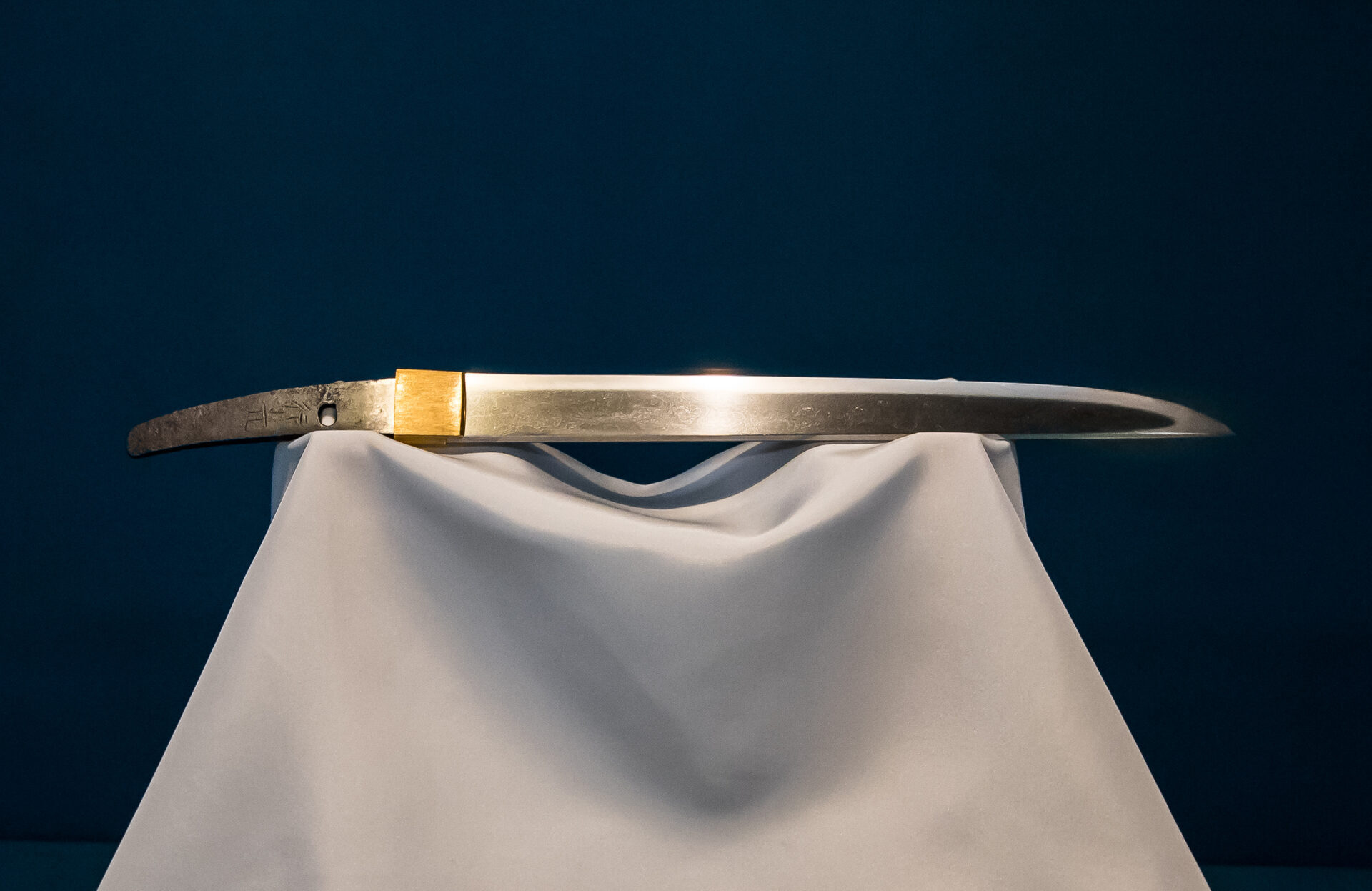
The Maeda tantō on display at the Tokyo National Museum. Kakidai, CC BY-SA 4.0, via Wikimedia Commons · CC BY-SA 4.0 · source 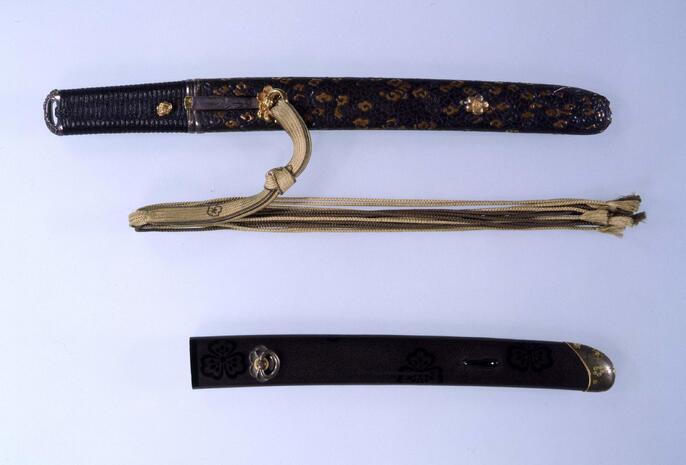
The koshirae of the tantō: a lacquered aikuchi with clouds (瑞雲, zuiun) in makie. Tokyo National Museum, via ColBase · ColBase terms of use · source 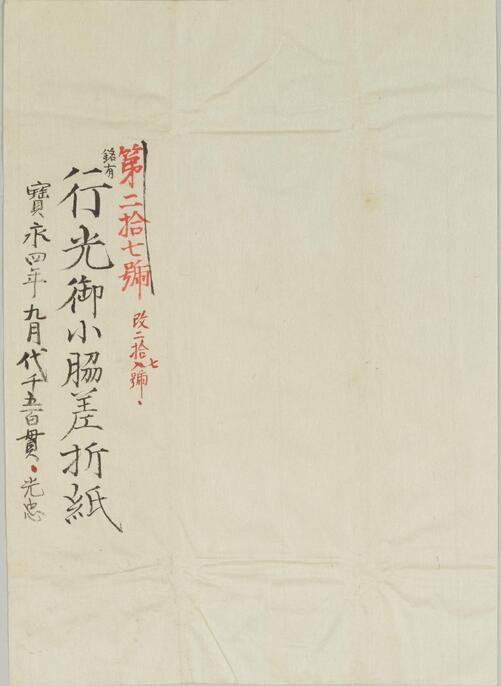
The cover of the origami (折紙, origami), the Hon'ami certificate, that accompanies the Maeda tantō. Tokyo National Museum, via ColBase · ColBase terms of use · source 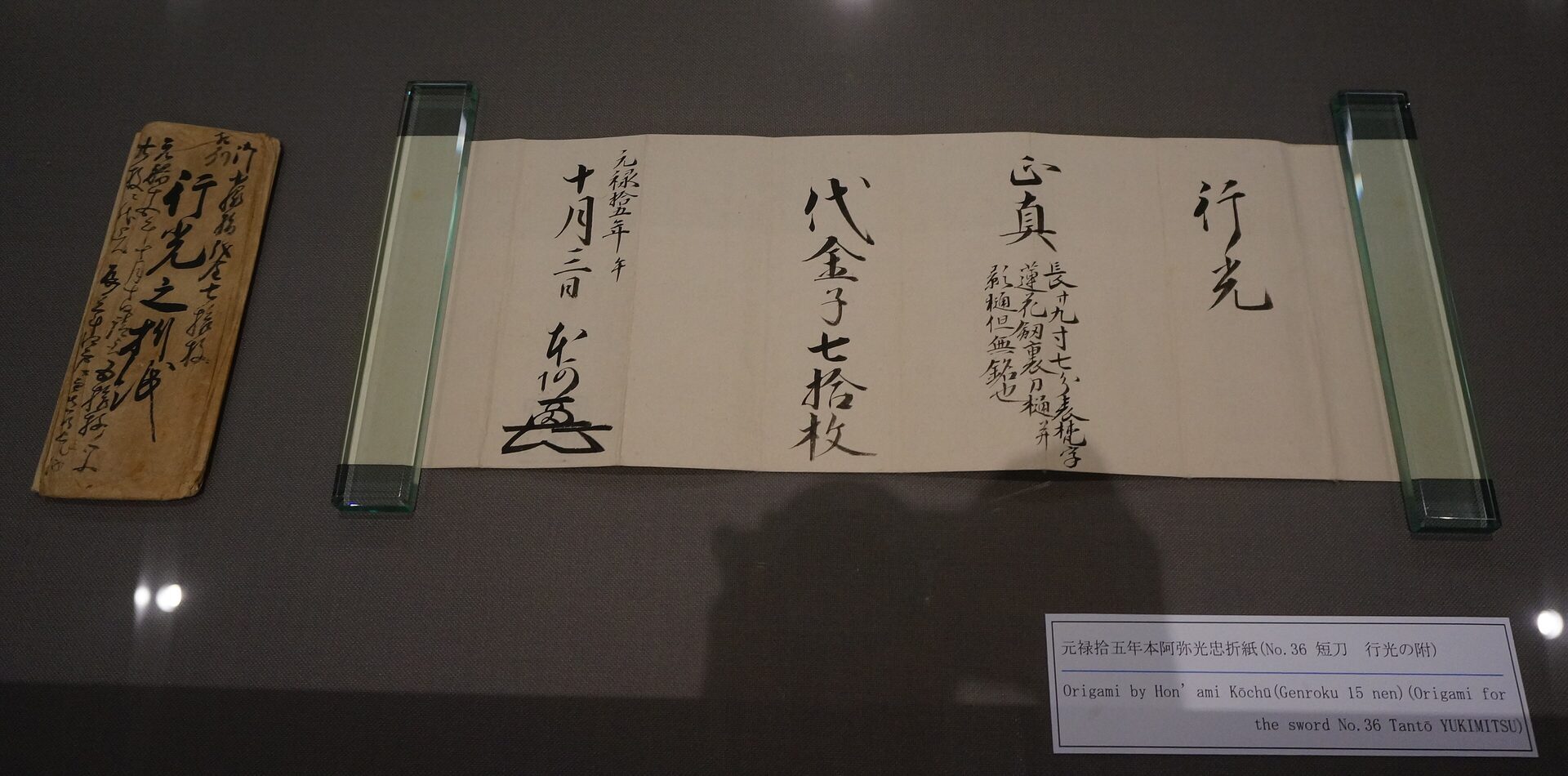
An origami by Hon'ami Kōchū of 1702 certifying a tantō by Yukimitsu. SLIMHANNYA, CC BY-SA 4.0, via Wikimedia Commons · CC BY-SA 4.0 · source

