On this page
The style of the forge
The school makes vigorous works whose ideal is Minamoto Kiyomaro (源清麿, Minamoto Kiyomaro), with utsushi of Kiyomaro, above all by Kanehiro and Kanetsugu.
Kanemitsu takes to the competition long tachi, from 74.9 to 80.3 cm, and tantō from 22.0 to 29.3 cm, in the Bizen-den line, with chōji (丁子) and jūka-chōji (重花丁子). His cards state models: the 2022 katana, in the manner of Osafune Kanemitsu (長船兼光), with midare-utsuri; the 2025 one, in the manner of the 水神切兼光 (Suijin-giri Kanemitsu). In 2020 and 2021 he exhibited tachi imitating the Sanchōmō (山鳥毛).
Joint works
Father and son have signed at least two works together (合作, gassaku): an utsushi of the Sanchōmō from 2019, “写山鳥毛 肥後國住赤松太郎兼嗣兼光合作” (utsushi Sanchōmō, Higo no Kuni-jū Akamatsu Tarō Kanetsugu Kanemitsu gassaku), and a katana from October 2022 for iaidō and tameshigiri, of 75.7 cm.
Blades for use
The forge is known among practitioners of iaidō and tameshigiri for its blades for use. A dōjō published in 2013 and 2014 videos of cuts on tatami and thick bamboo with blades signed 赤松太郎兼光 (Akamatsu Tarō Kanemitsu), according to their titles. It is the best public evidence of their work in cutting.
Works
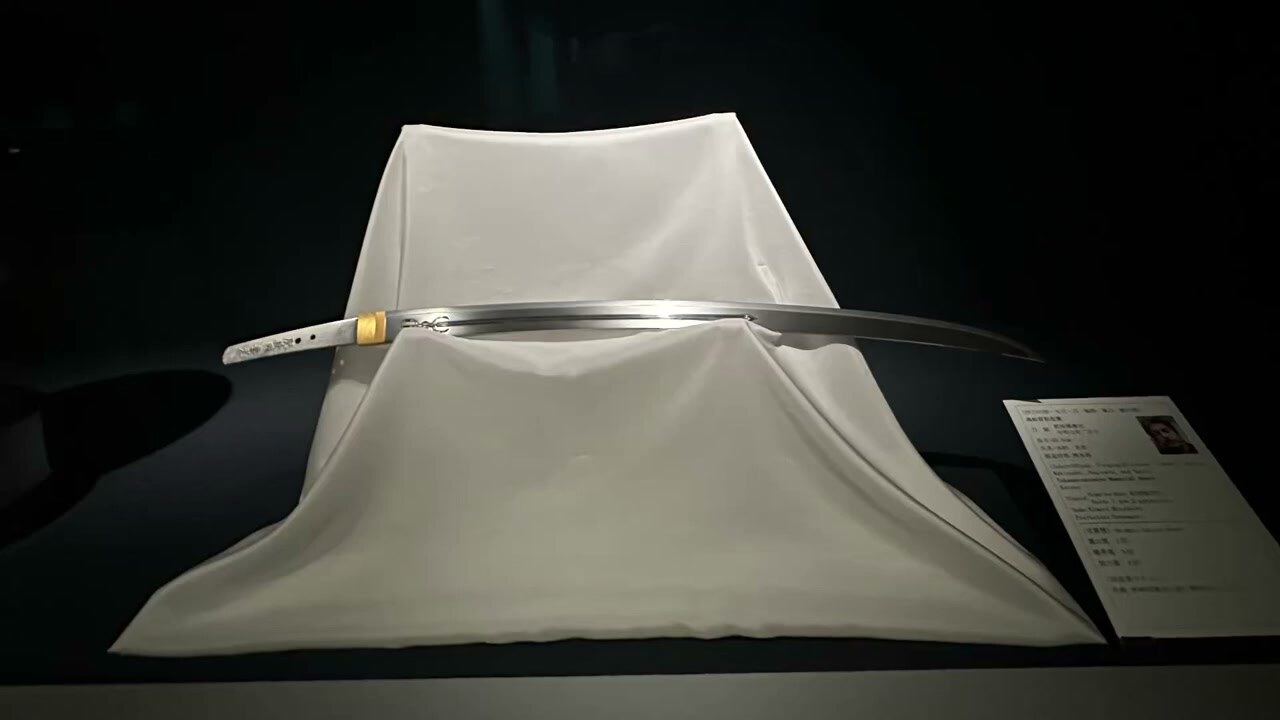
The katana of the 2025 Takamatsu-no-miya Kinenshō, at the Japanese Sword Museum. 永野照男 (probable reading: Nagano Teruo) · © 永野照男 (probable reading: Nagano Teruo) · source 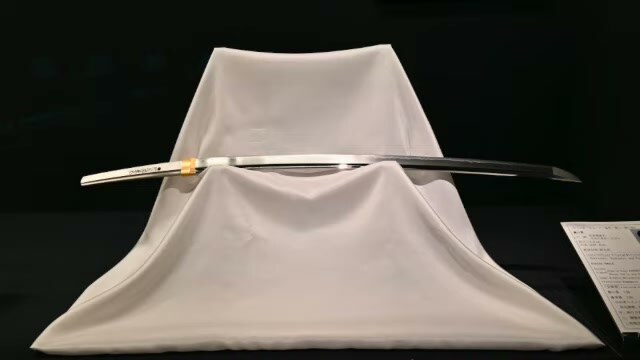
Kanemitsu’s katana of the 2022 Kunzanshō (薫山賞), 74.9 cm. 迫田貫路 (probable reading: Sakoda Kanji) · © 迫田貫路 (probable reading: Sakoda Kanji) · source 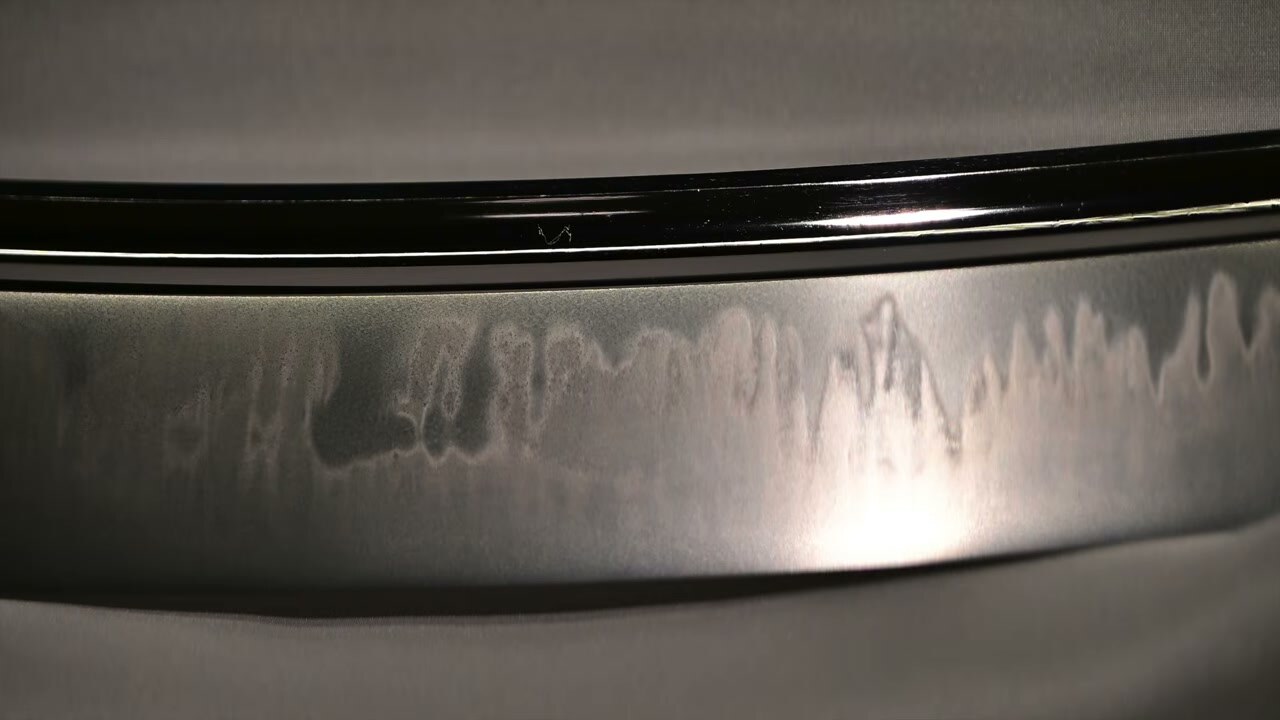
The hamon of Kanemitsu’s 2026 tachi: jūka-chōji (重花丁子). NIHONTOU · © NIHONTOU · source 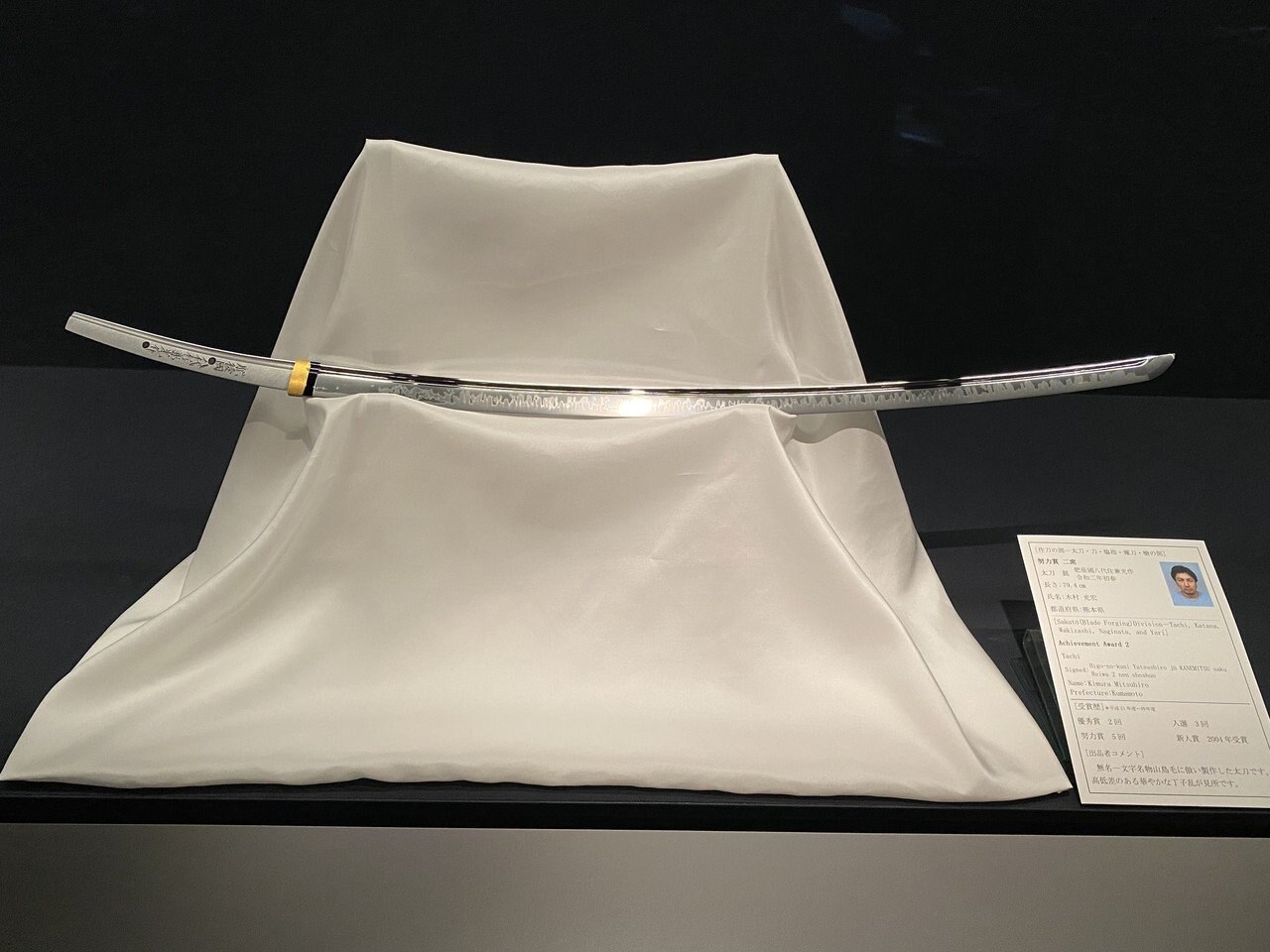
Kanemitsu’s tachi imitating the Sanchōmō (山鳥毛), at the 2020 現代刀職展 (Gendai Tōshokuten). 中村圭佑 (probable reading: Nakamura Keisuke), 刀箱師 (katana-bakoshi, sword-box maker), on note · © Nakamura Keisuke 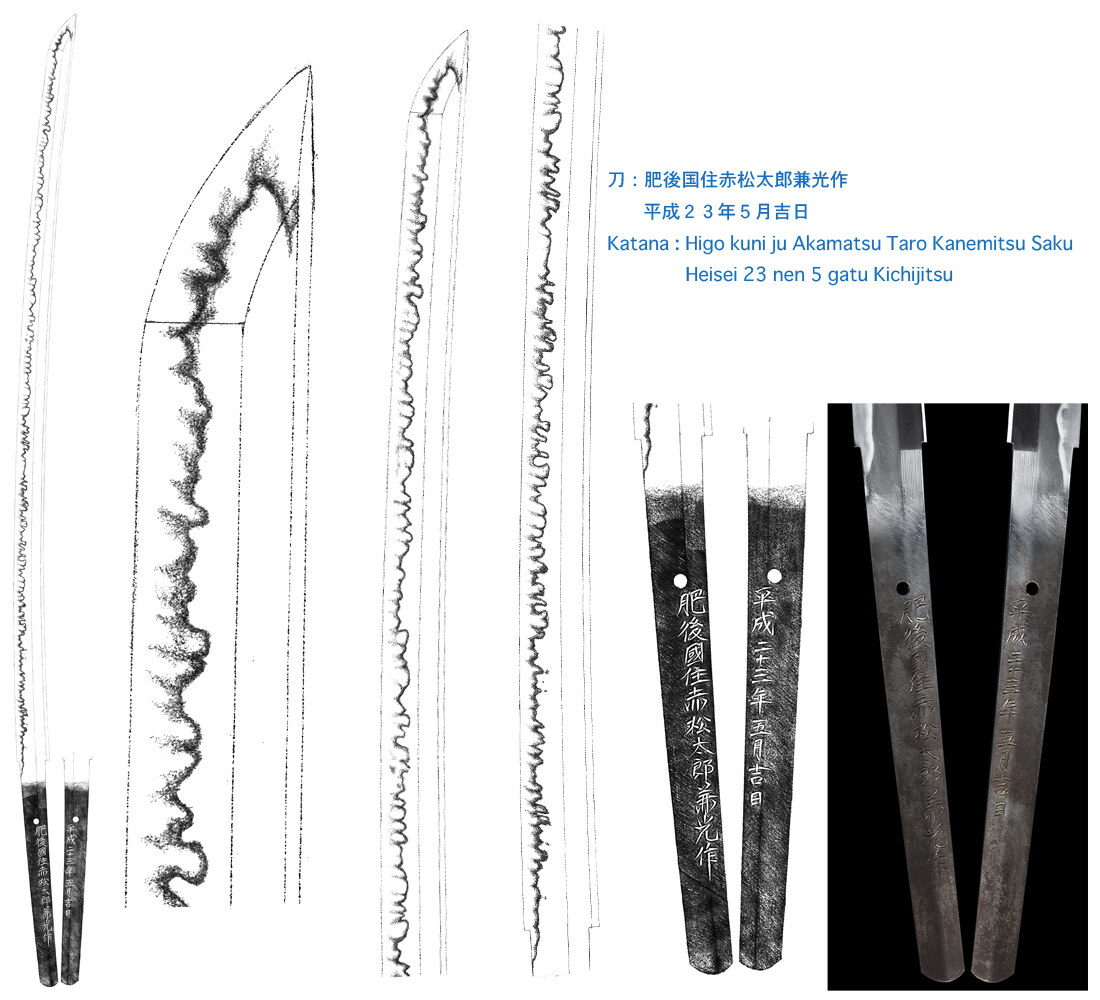
Oshigata of a 2011 katana by Kanemitsu. Photo: dealer in Japan 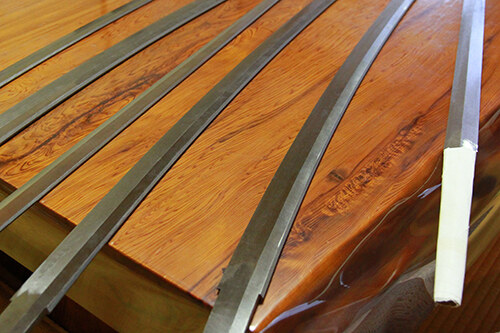
Rough blades on the bench (2014). 太田光柾 (probable reading: Ōta Kōsei), of the 武士道美術館 (Bushidō Bijutsukan) · © 武士道美術館 (Bushidō Bijutsukan)