On this page
The name
The Akamatsu Tarō pass (赤松太郎峠, Akamatsu Tarō-tōge) is one of the three “Tarō” passes (三太郎峠, Santarō-tōge) on the old road to Satsuma, south of Yatsushiro. The forge takes its name from it.
The smiths of the family sign with 赤松太郎 (Akamatsu Tarō) before their name. In the NBTHK competition, Kanemitsu signs without it: 肥後國八代住兼光作 (Higo no Kuni Yatsushiro-jū Kanemitsu saku), 肥後國兼光 (Higo no Kuni Kanemitsu) or 肥後國兼光造之 (Higo no Kuni Kanemitsu kore o tsukuru).
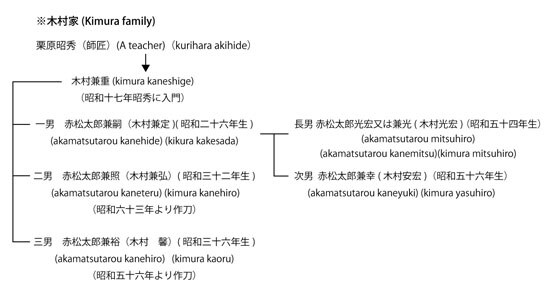
The family
- Kimura Kaneshige (木村兼重), Kanemitsu’s grandfather: he trained under Kurihara Akihide and appears in 1942 in the 聖代刀匠位列 (Seidai Tōshō Iretsu) ranking.
- 兼嗣 (Kanetsugu): born in Yatsushiro in 1951, Kaneshige’s eldest son; he has trained with his father since 1971 and has held a licence since 1976. He is the head of the family. The Zen Nihon Tōshōkai lists him with his civil name and his smith name.
- Kaneteru (兼照), Kaneshige’s second son, and Kanehiro (兼裕), born in 1961, who makes utsushi of Kiyomaro: Kanetsugu’s brothers.
- Kanemitsu (兼光), Kanetsugu’s son, born in 1979: the most decorated.
- Kaneyuki (兼幸), born in 1981, the other son; in 2014 he did the polishing.
The family says it descends from the smiths of the Sagara clan, of Hitoyoshi, who in the Meiji era turned to making knives and went back to swords with Kaneshige. No independent historical source documents it.
Kanemitsu’s master: the sources disagree. The Zen Nihon Tōshōkai gives his father, Kanetsugu; another source, his grandfather, Kaneshige.
The forge
The smiths of the family engrave on the reverse “以自家製鉄鍛之” (jika seitetsu o motte kore o kitau, “forged with home-made iron”): they say they gather the iron sand themselves, from the Kuma river, and smelt their own steel. There is no public source about their furnace. A visitor who was at the forge in April 2014 says the whole family shares out the work.
- 4 October 2018: open day at the forge for the Zen Nihon Tōshōkai’s Japanese Sword Day, with Kanemitsu and Kanetsugu.
- 2019: Kumamoto prefecture and city publish the feature “Kumamoto’s Samurai”, with Kanemitsu as a tenth-generation craftsman; in December, the municipal magazine やつしろの風 (Yatsushiro no Kaze) devotes another one to the forge.
- October 2020: after the July floods, the forge begins restoring 77 rusted sacred and votive swords of the 青井阿蘇神社 (Aoi Aso Jinja) shrine, in Hitoyoshi, according to the Hitoyoshi Shimbun.
- September 2026: Kanemitsu rebuilds the hearth and goes back to forging, by his own account.
The forge in pictures
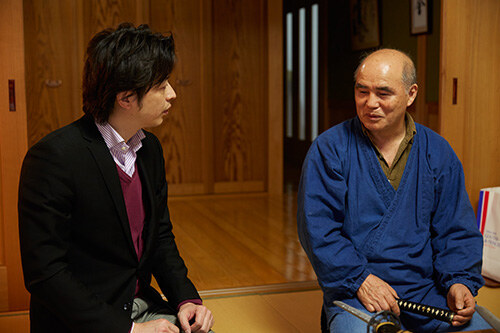
Kanetsugu, head of the family, with a visitor (2014). 太田光柾 (probable reading: Ōta Kōsei), of the 武士道美術館 (Bushidō Bijutsukan) · © 武士道美術館 (Bushidō Bijutsukan) 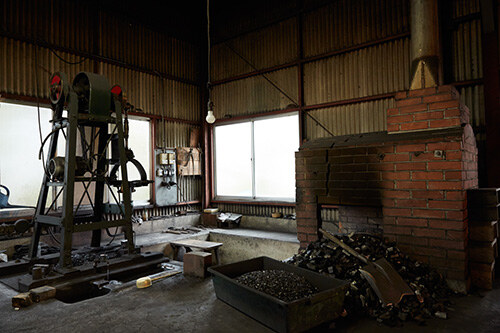
The forge: power hammer and hearth (2014). 太田光柾 (probable reading: Ōta Kōsei), of the 武士道美術館 (Bushidō Bijutsukan) · © 武士道美術館 (Bushidō Bijutsukan) 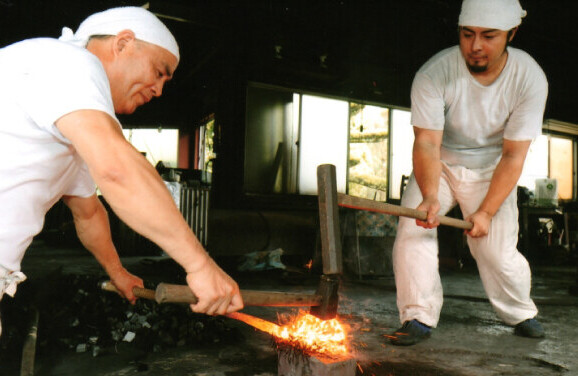
Two-handed hammering, at the forge. Photo: dealer in Japan 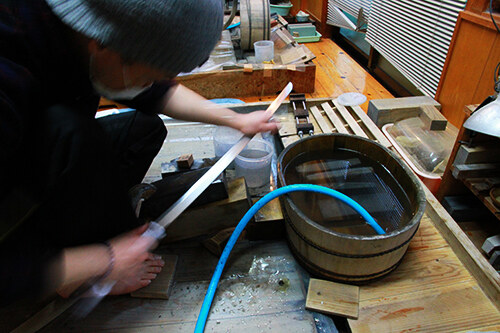
Polishing at the forge (2014). 太田光柾 (probable reading: Ōta Kōsei), of the 武士道美術館 (Bushidō Bijutsukan) · © 武士道美術館 (Bushidō Bijutsukan) 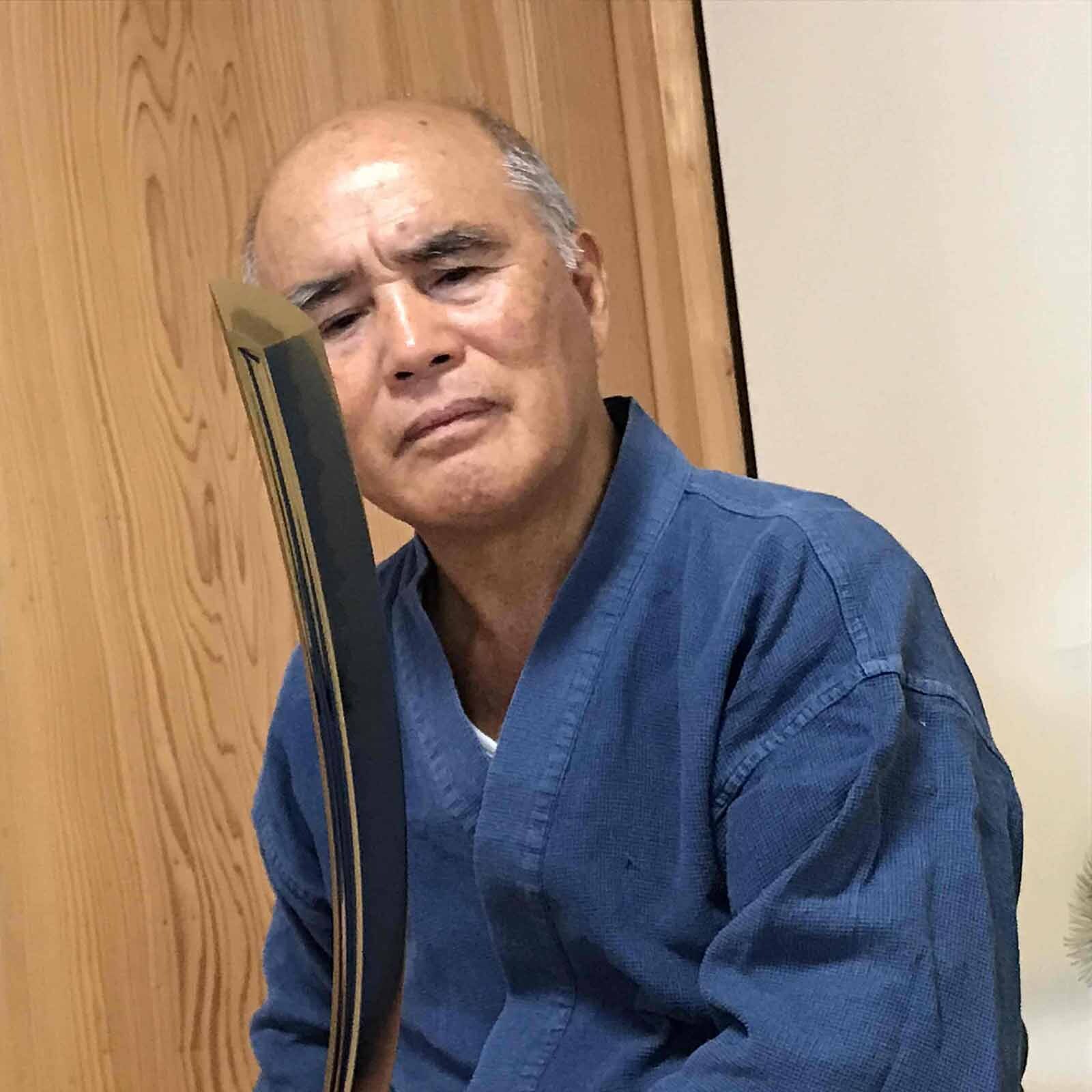
Kanetsugu with a blade. Photo: dealer in Japan 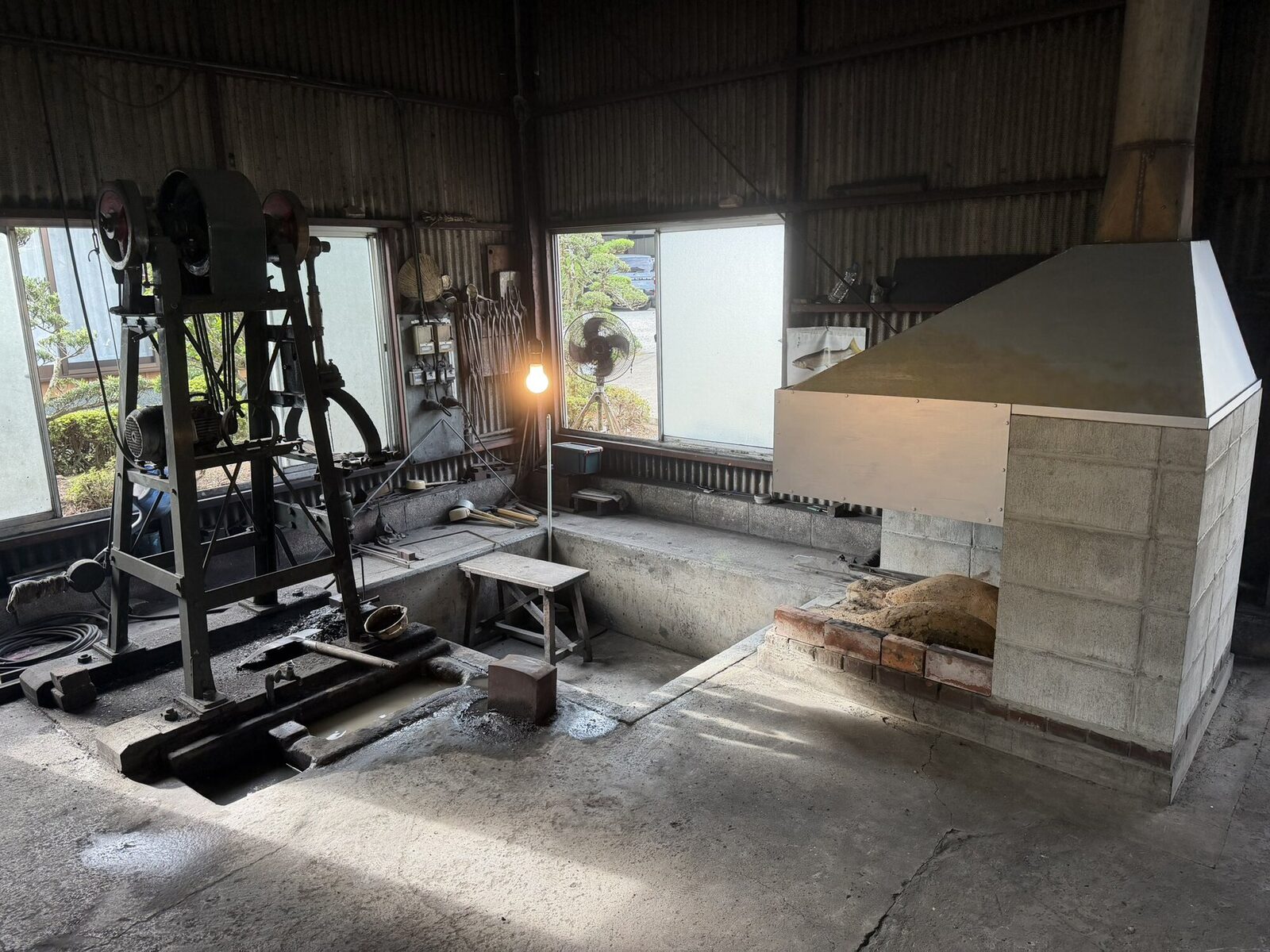
The hearth rebuilt by Kanemitsu (20 September 2026). Photo: the smith himself