On this page
The Nakigitsune
The 鳴狐 (Nakigitsune) is in the Tokyo National Museum, donated by Watanabe Seiichirō, and is an Important Cultural Property. It was a National Treasure under the 1929 law, designated on 19 January 1931, when it belonged to the Akimoto family; with the 1950 law it became an Important Cultural Property, according to Japanese Wikipedia. The origin of the nickname is unknown; it passed from Ishiguro Jinemon, a retainer of Ikeda Toshitaka of Himeji, to the Akimoto of Tatebayashi.
It measures 54.0 cm; its sori is 1.6 cm according to Sesko and 1.5 cm according to Japanese Wikipedia. Sesko calls it a meibutsu, but its entry in the Kyōhō meibutsuchō (享保名物帳) has not been located.
The Nakigitsune, in eight photos

The whole blade, on one side. Tokyo National Museum, via ColBase · ColBase terms of use · source 
The whole blade, on the other side. Tokyo National Museum, via ColBase · ColBase terms of use · source 
The nakago with the signature and the start of the bōhi, which ends diagonally above the habaki. Tokyo National Museum, via ColBase · ColBase terms of use · source 
The nakago and the start of the blade, on the other side. Tokyo National Museum, via ColBase · ColBase terms of use · source 
The upper part in hira-zukuri, with the bōhi, and the kissaki. Tokyo National Museum, via ColBase · ColBase terms of use · source 
The kissaki and the bōshi, on the other side. Tokyo National Museum, via ColBase · ColBase terms of use · source 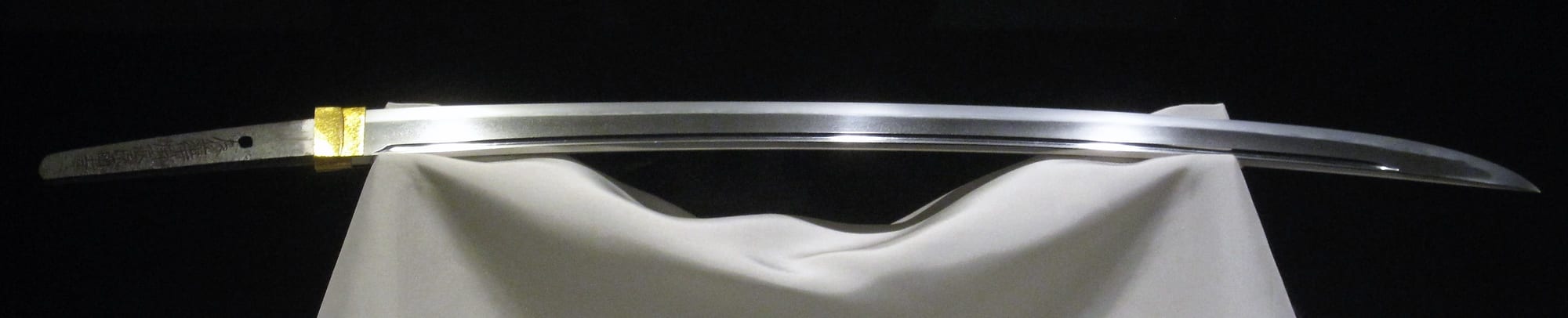
The Nakigitsune on display in its case. Ihimutefu, CC BY-SA 4.0, via Wikimedia Commons · CC BY-SA 4.0 · source 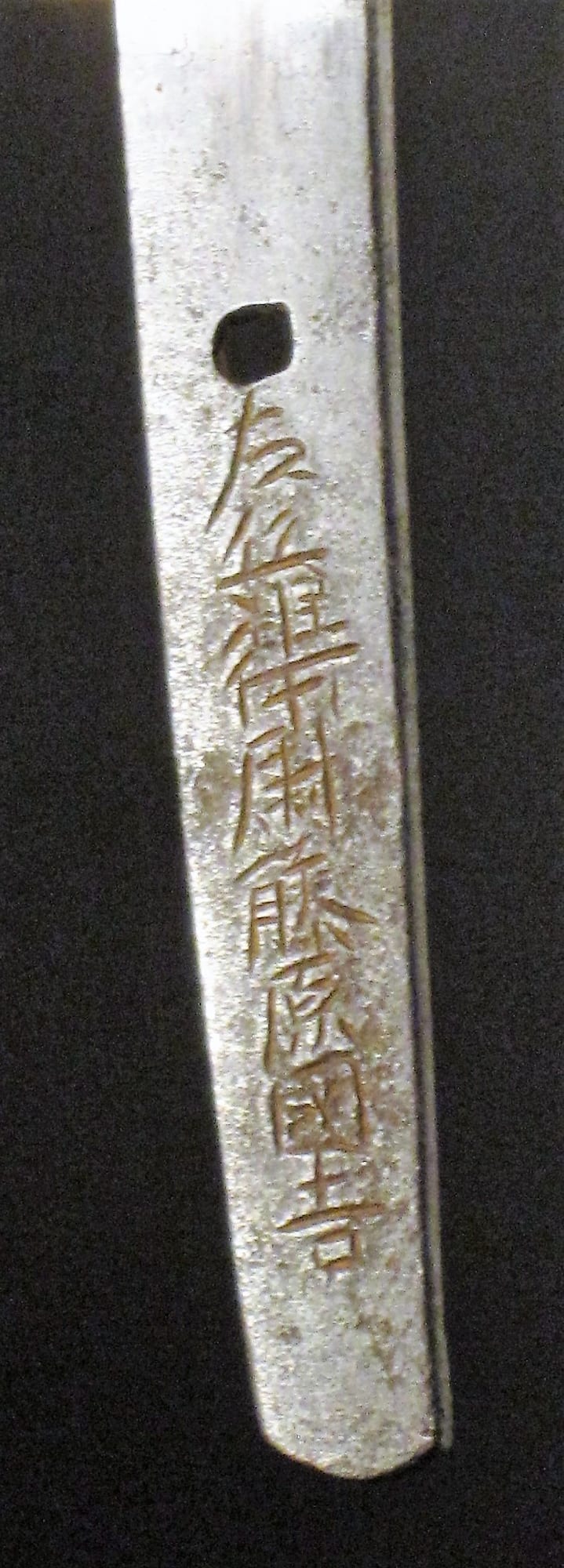
The signature 左兵衛尉藤原国吉 (Sahyōe no Jō Fujiwara Kuniyoshi), on the sashi-omote. Ihimutefu, CC BY-SA 4.0, via Wikimedia Commons · CC BY-SA 4.0 · source


The tachi Sayo Saan
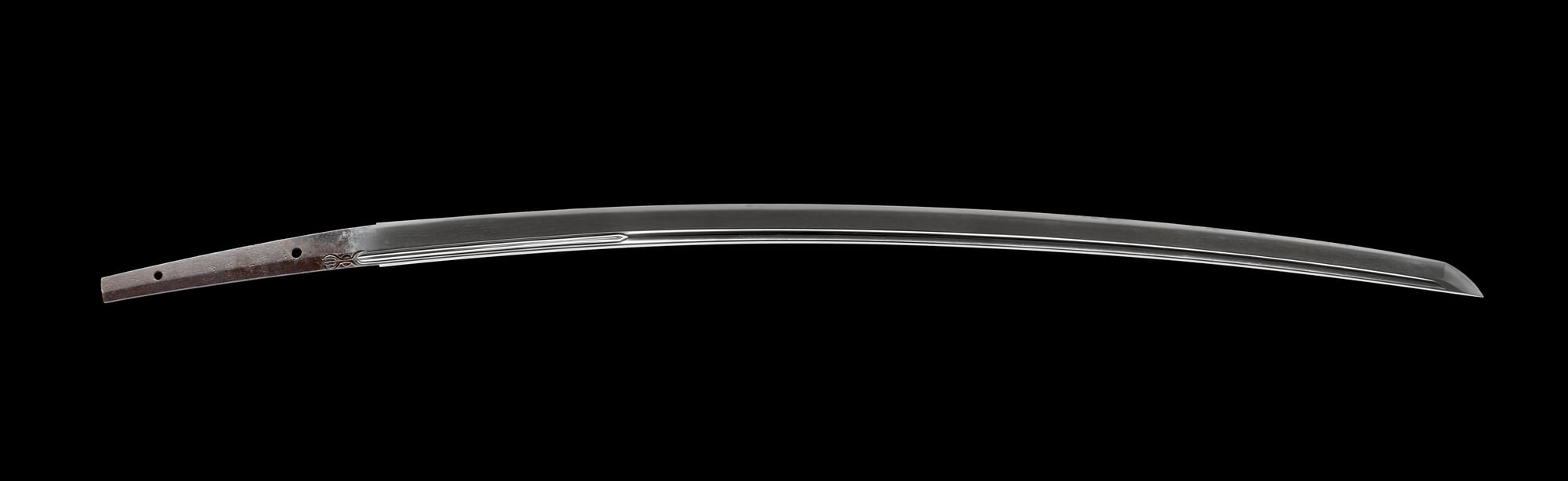
The tachi 小夜左庵国吉 (Sayo Saan Kuniyoshi), of 72.5 cm, takes its name from the pseudonym of its collector, Shibata Masatarō. It became an Important Art Object on 6 September 1939, in the name of Ōhashi Fujio, and an Important Cultural Property on 19 July 1952; the Kyoto National Museum bought it in 2019, according to Japanese Wikipedia. The Kyoto National Museum holds a tachi 太刀 銘国吉 (tachi mei Kuniyoshi) that is an Important Cultural Property. As it is the only tachi of his of that rank in the museum, the record is very probably that of the Sayo Saan, although no source consulted says so expressly.
His designated blades and those in museums
| Work | Rank | Where it is | Details |
|---|---|---|---|
| Uchigatana 刀 号鳴狐 (katana, gō Nakigitsune) | Important Cultural Property (重要文化財, jūyō bunkazai); National Treasure from 1931 under the 1929 law | Tokyo National Museum | 54.0 cm; hira-zukuri |
| Tachi 太刀 銘国吉 (tachi mei Kuniyoshi) | Important Cultural Property | Kyoto National Museum | With nijūba up to the bōshi |
| Tantō 短刀 銘国吉 (tantō mei Kuniyoshi), with a red lacquer mounting | No designation | Kyoto National Museum | Discovered by a collector of the Shōwa era; its earlier history is unknown |
| Ken 剣 銘国吉 (ken mei Kuniyoshi) | Important Cultural Property | Private collection | — |
| Tantō 短刀 銘国吉 (tantō mei Kuniyoshi) | Important Cultural Property | Private collection | — |
| Signed tantō, of the Asano family | Important Cultural Property | Not recorded | 22.9 cm |
| Ken 剣 銘国吉 (ken mei Kuniyoshi) | Important Art Object (重要美術品, jūyō bijutsuhin) | Tokugawa Art Museum (Tokugawa Bijutsukan) | — |
| Signed tantō, with machi-okuri | Tokubetsu jūyō tōken (NBTHK) | Not recorded | 29.1 cm |
| Signed tantō, of the Aoyama family | Important Art Object | Not recorded | 20.4 cm |
| Tantō 短刀 銘国吉 号蛇切 (tantō mei Kuniyoshi, gō Hebikiri) | No designation stated | Private collection | — |