Family and title
The Awataguchi school worked mainly in Yamashiro, in Kyoto, in the mid-Kamakura period; Awataguchi, today in the Higashiyama ward, was one of the seven entrances to Kyoto, according to the NBTHK. Japanese Wikipedia says that Kuniyoshi “is considered” the eldest son of Awataguchi Norikuni: a parentage handed down, not proven by any document. For Markus Sesko, after Norikuni the main line of the school was continued by Kuniyoshi, whose given name has not been handed down, only his title.
The Tokyo National Museum records that he is held to be the son of Norikuni. His signature shows that he was of the Fujiwara family and held the title of 左兵衛尉 (Sahyōe no Jō), according to the Tokyo National Museum.
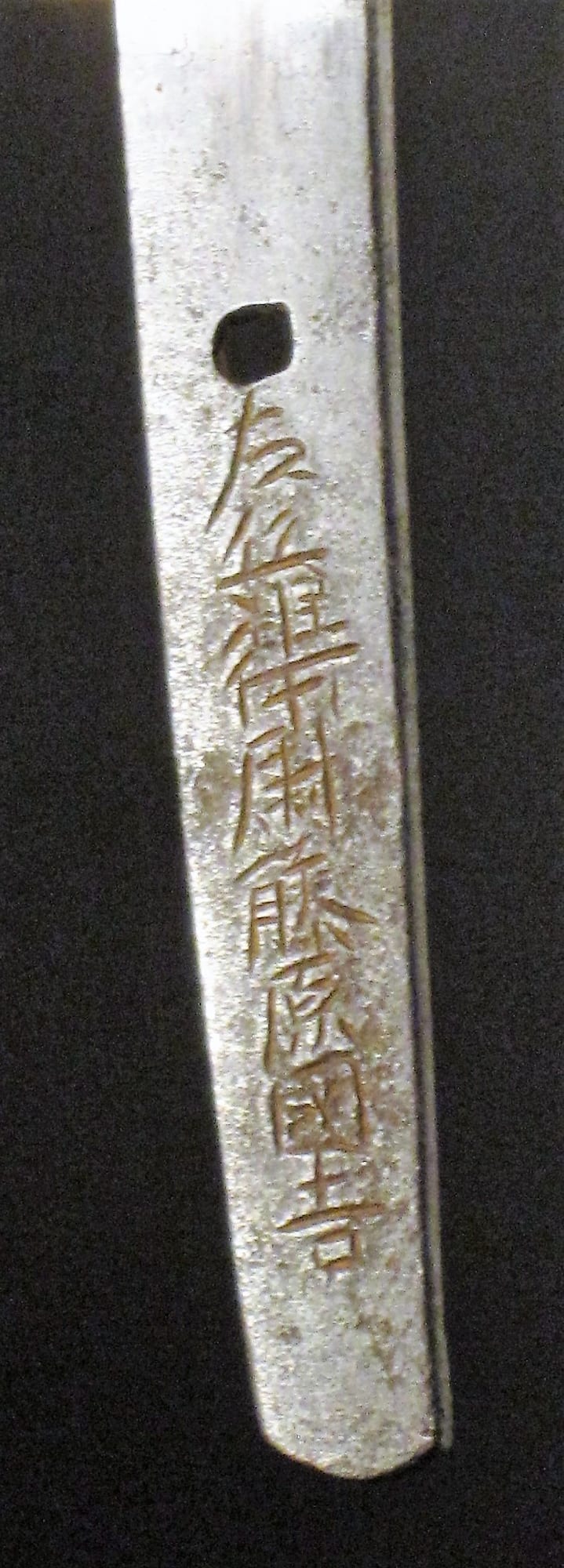

Kunitaka, in Kamakura
Japanese Wikipedia records as one version, not as a fact, that the regent Hōjō Tokiyori summoned him to Kamakura, where he lived in Yamanouchi and signed 国高 (Kunitaka); when wonders occurred with a dagger signed Kuniyoshi that Tokiyori owned, the regent had him return to the name Kuniyoshi.
The dates
His dated works run from Kōchō 2 (1262) to Kōan 7 (1284), and from their workmanship it is assumed that he was already active around Hōji (1247-1249), according to Japanese Wikipedia. Sesko cites old oshigata of blades dated Kenji 4 (1278), Kōan 6 (1283) and Kōan 10 (1287); the NBTHK gives the years from Kenji to Kōan (1275-1288).
The sources do not agree: the Kotō Meizukushi Taizen has him born in Genkyū 1 (1204) and dying in Bun'ei 4 (1267) at the age of 64, and the Nihon Jinmei Daijiten records that death as one version; Sesko considers it suspect, because there are blades of his dated later.
Between Hisakuni and Yoshimitsu
According to the NBTHK, Yoshimitsu (Tōshirō), the last great master of Awataguchi, is held to be the son or pupil of Kuniyoshi, and the shapes and variety of his tantō recall those of Kuniyoshi. The Nihon Jinmei Daijiten counts him alongside Yoshimitsu among the masters of the tantō.