On this page
What he forged
What survives is above all tantō. Sesko counts only two tachi with an indisputable signature, three more with a signature “to be studied” and more than a dozen jūyō and another dozen tokubetsu jūyō, unsigned, attributed to him. The Kyoto National Museum sums it up like this: he made many tantō and few tachi, and theirs is the representative tachi.
Tachi: sugata, jihada and hamon
Deep koshizori with funbari, but without the tapering of the early Kamakura tachi, and a chū-kissaki, not a ko-kissaki. A very dense ko-itame with ji-nie, fine chikei and nie-utsuri, of clear, “moist” steel. A ko-nie suguha-chō with some notare, ko-gunome, ko-chōji and ko-midare, ashi and kinsuji, a wide and bright nioiguchi, and an interrupted nijūba along almost the whole blade, according to Sesko. A tokubetsu jūyō tachi of 75.5 cm with a sori of 2.4 cm is ubu, kurijiri, with kiri-yasurime and two mekugi-ana.
Bōshi and nijūba
The bōshi is sugu, with a nijūba that runs almost to yakitsume. The nijūba reaching the bōshi was already noted in pre-Edo works and is his signature trait; the tachi 太刀 銘国吉 (tachi mei Kuniyoshi) of the Kyoto National Museum shows it remarkably, even in the bōshi.
The Nakigitsune
It is a long uchigatana, of 54.0 cm, in hira-zukuri and mitsu-mune, with a bōhi carved very close to the mune, an Awataguchi trait, which ends diagonally just above the habaki, a detail exclusive to Kuniyoshi that is also seen on some of his tantō; its jiba is like that of his tachi, with nijūba, a wide suguha and some ko-gunome and ko-notare in the fukura, according to Sesko. Japanese Wikipedia describes a ko-itame with good ji-nie, a suguha and a ko-maru bōshi with kaeri, with bōhi on both sides; hira-zukuri is rare in a Kamakura uchigatana, perhaps because of a special commission. The Tokyo National Museum describes it as an enlarged tantō with sori: a Kamakura uchigatana.
Tantō
Almost all signed with two characters, 国吉 (Kuniyoshi), except one signed Saemon no Jō Kuniyoshi. The shapes vary a great deal: normal, hōchō (wide and short), long and slender, and sunnobi (long and wide), with little or no sori; the hi is of many types, always close to the mune, and some end diagonally, according to Sesko.
The NBTHK, in a kantei exercise, describes a hira-zukuri tantō of 9 sun 1 bu, wide and of hōchō shape, with uchizori, katana-hi and soe-hi, a tight ko-itame with abundant ji-nie, chikei and bō-utsuri, and an elegant ko-nie suguha with a clear nioiguchi: an Awataguchi work. To tell it apart from Yoshimitsu, the latter would have yakidashi, a continuous ko-gunome and a somewhat larger jihada; Rai does not make such large tantō in hōchō shape, and Shintōgo would have more chikei and kinsuji.
Ken
Some seven ken are known, straight double-edged swords: slender, ryō-shinogi-zukuri, with a narrow hi on a high shinogi, almost all of 21 to 25 cm and with a proportionally long nakago; their temper is a ko-nie suguha-chō with kinsuji and sunagashi, according to Sesko. The largest measures 26 cm, according to Japanese Wikipedia; Sesko points out as an exception one of 84.8 cm, an Important Art Object.
A tantō and a tachi of the Kyoto National Museum
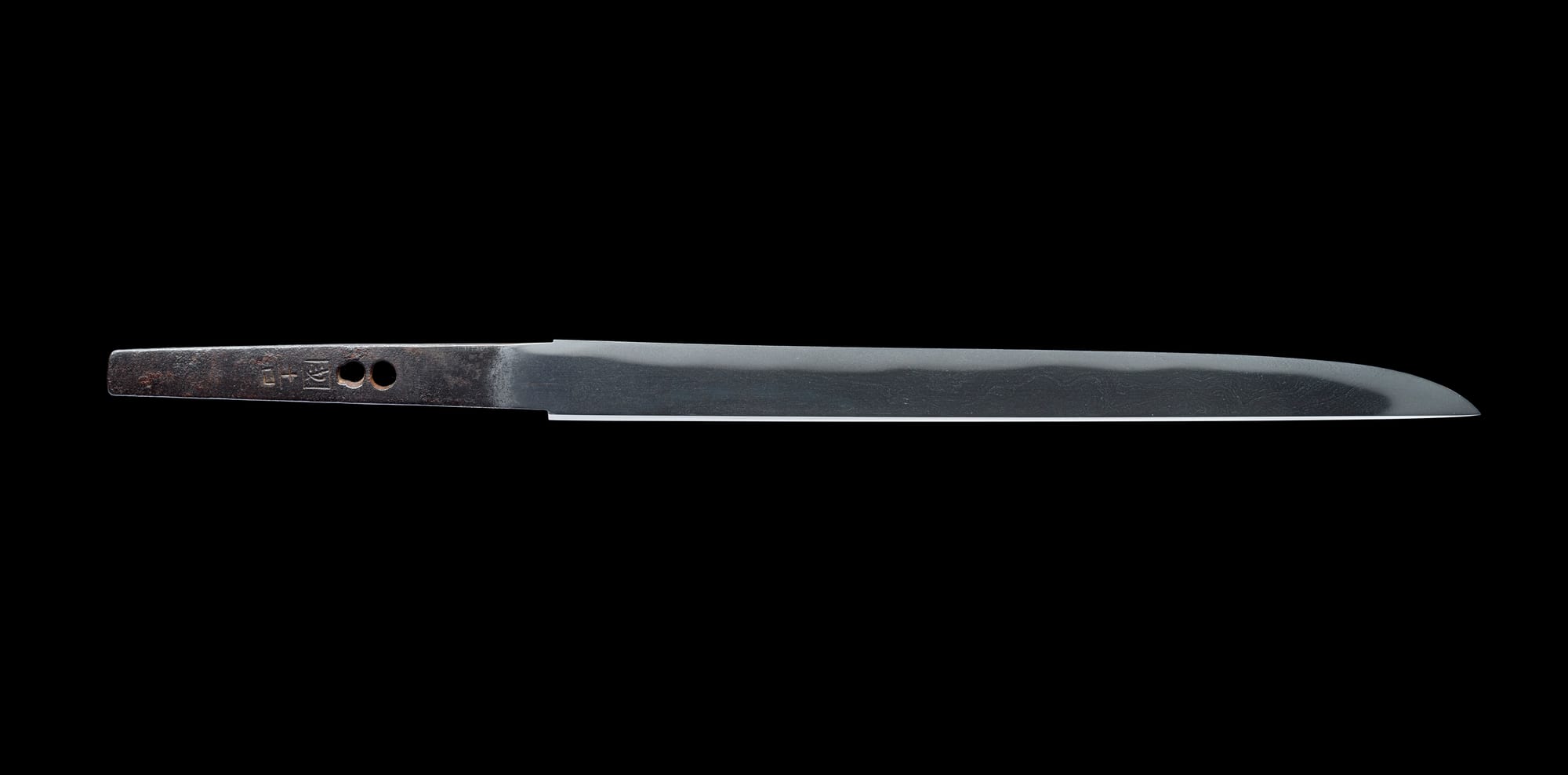
Tantō 短刀 銘国吉 (tantō mei Kuniyoshi): the blade and the nakago with the signature. Kyoto National Museum, via ColBase (photo: 岡田愛, Okada Ai) · ColBase terms of use · source 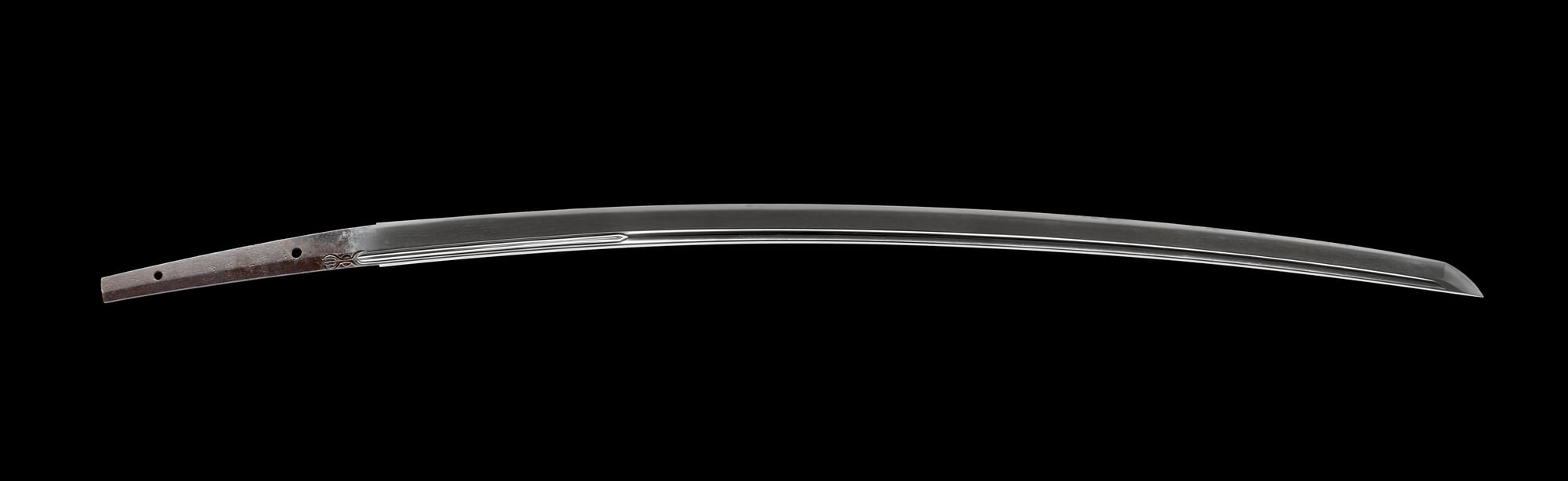
Tachi 太刀 銘国吉 (tachi mei Kuniyoshi), Important Cultural Property: the whole blade. Kyoto National Museum, via ColBase (photo: 岡田愛, Okada Ai) · ColBase terms of use · source