On this page
Kantei keys
- Sugata. The katana of the Tokyo National Museum is a sturdy blade with a shallow curve.
- Jihada. Fine ko-itame.
- Hamon. Gunome-midare in thick nie.
- Style. For the museum, he excelled in a bold Sōshū-den, and that katana is a typical piece of his.
- Mei. 出羽大掾藤原国路 (Dewa Daijō Fujiwara Kunimichi), on the Tokyo katana, on the two Miyazaki wakizashi and on the designated blades. On his earliest blades, 平安城住国路 (Heianjō jū Kunimichi), according to Sesko.
- Nakago. The two Miyazaki wakizashi have a single hole in the tang and bear the signature on one side; the other side is plain.
What is not on record
The sources consulted do not describe the bōshi of his blades, nor his jihada or his hamon beyond the Tokyo katana, nor do they give keys for telling the first Kunimichi from the second.
Gallery
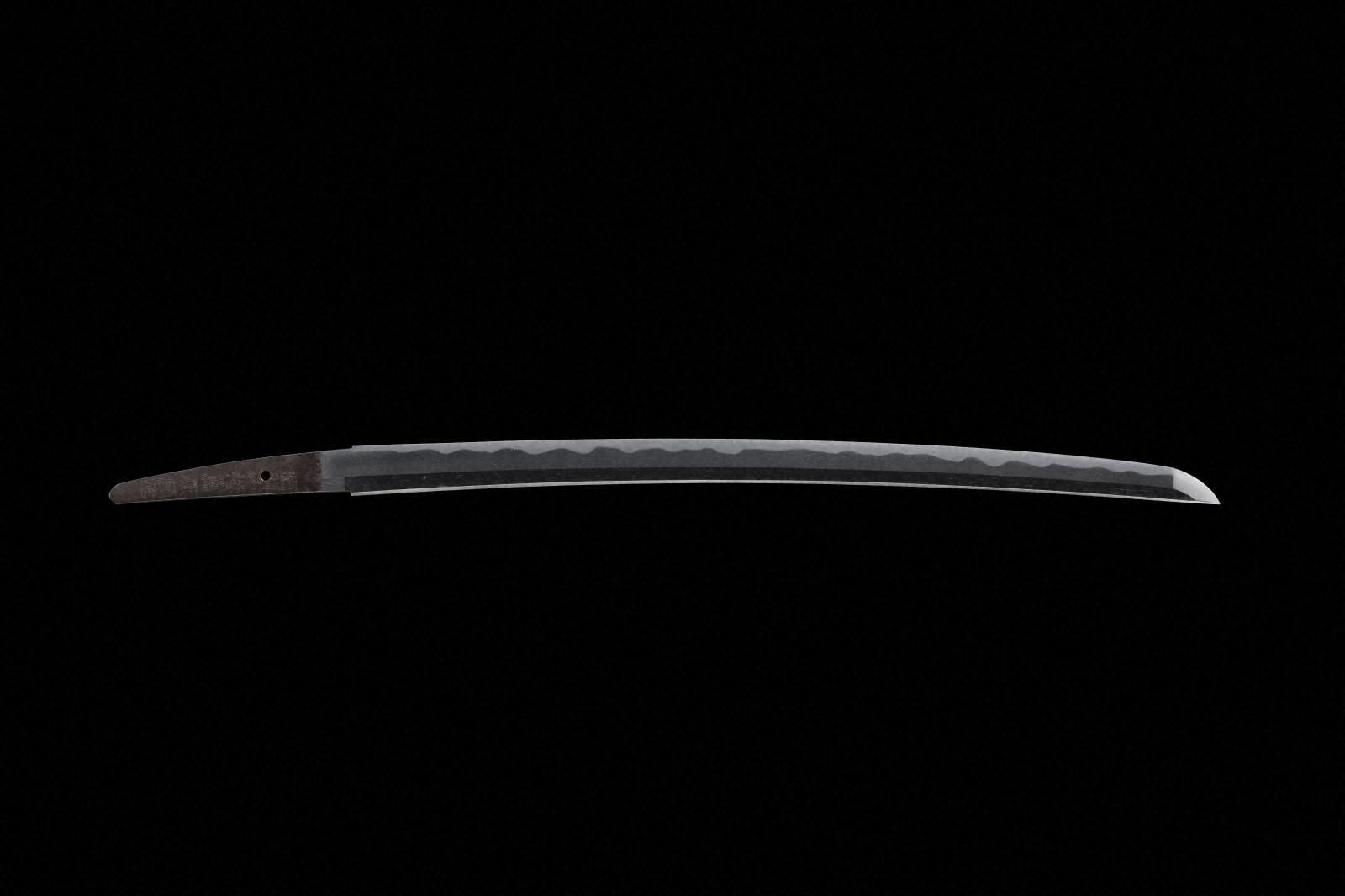
The museum’s other wakizashi, 51.1 cm long, also signed 出羽大掾藤原国路 (Dewa Daijō Fujiwara Kunimichi). Miyazaki Prefectural Museum of Nature and History · © Miyazaki Prefectural Museum of Nature and History 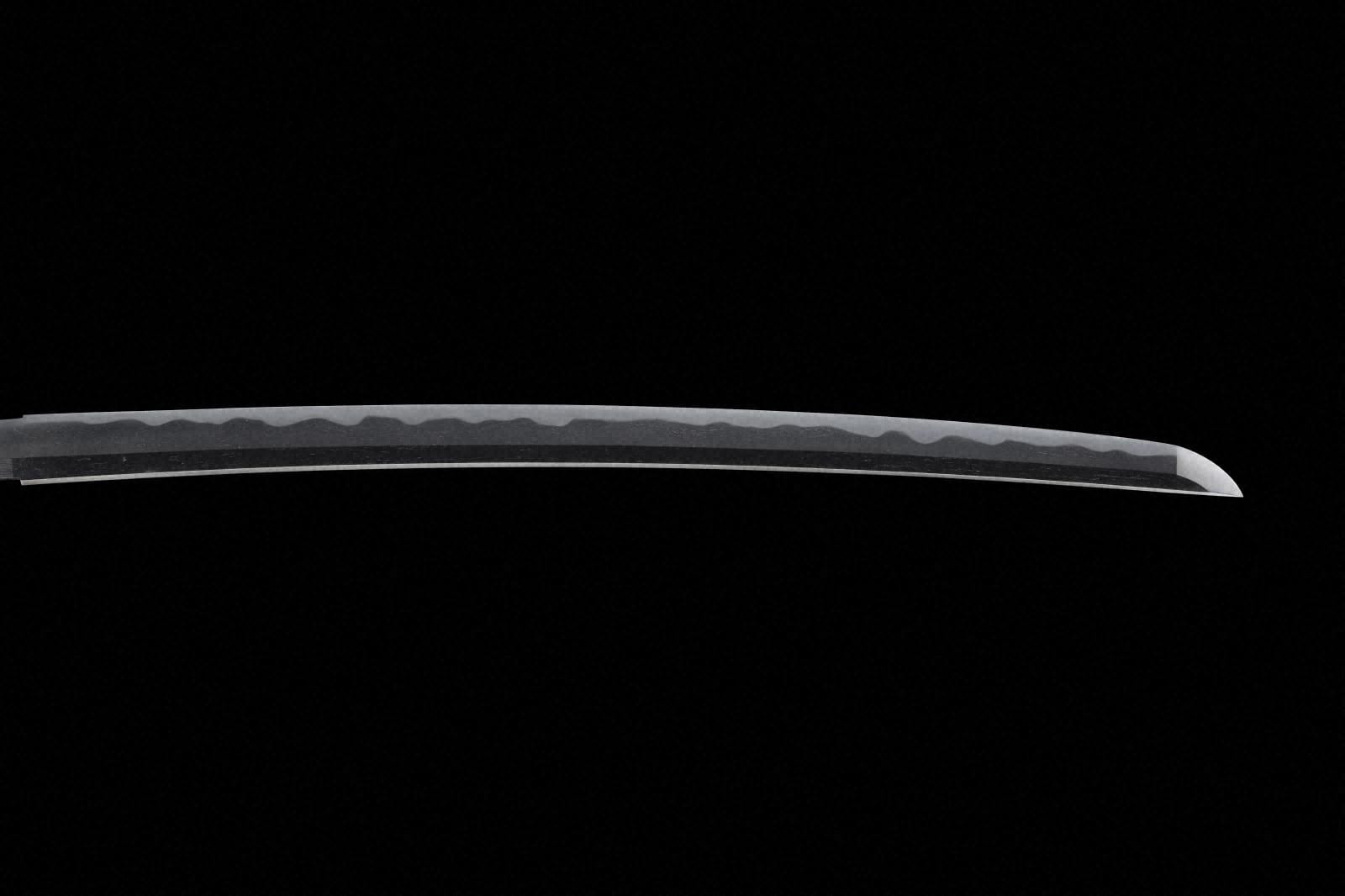
The front half of the 51.1 cm wakizashi, with the undulating temper line and the point. Miyazaki Prefectural Museum of Nature and History · © Miyazaki Prefectural Museum of Nature and History 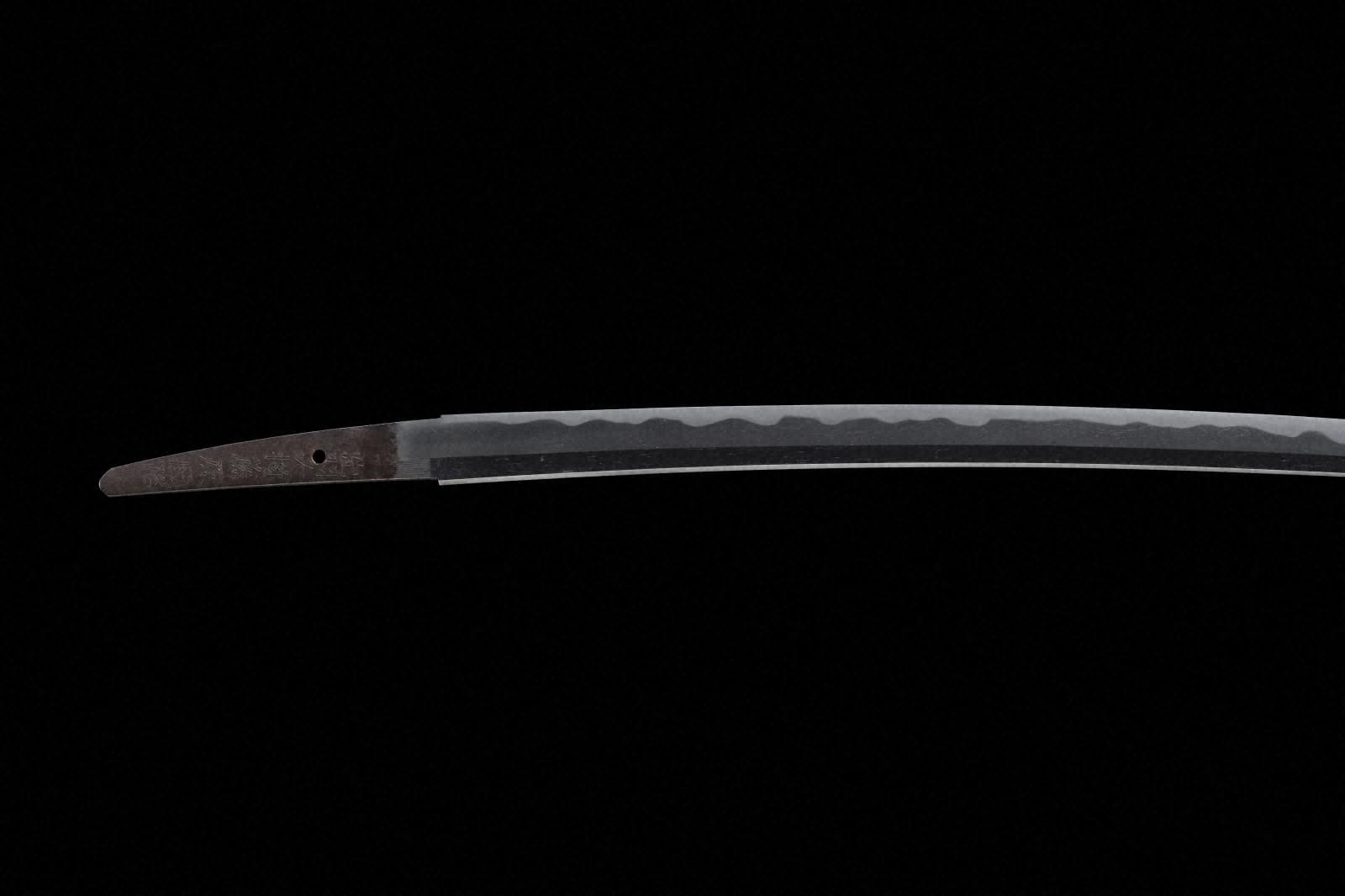
The tang of the 51.1 cm wakizashi, with the signature and the start of the temper line. Miyazaki Prefectural Museum of Nature and History · © Miyazaki Prefectural Museum of Nature and History