His master
According to Japanese Wikipedia, Kunimichi is one of the pupils of Horikawa Kunihiro (堀川国広, Horikawa Kunihiro), with 国安 (Kuniyasu), Ōsumi no Jō Masahiro, Echigo no Kami Kunitomo, Izumi no Kami Kunisada, Kawachi no Kami Kunisuke and Yamashiro no Kami Kunikiyo. Kunihiro died in 1614, at the age of 84. The Tokyo National Museum presents him as 高弟 (kōtei), the leading pupil of the great Kyoto master, and places him between the end of the Azuchi-Momoyama period and the early Edo period. Markus Sesko believes that Kunimichi was born in 1576 and trained first under the Mishina smith Iga no Kami Kinmichi and, from around 1609, under Kunihiro.
His dates
In his book “Shintō Zen”, Sesko reproduces a wakizashi of 1609 signed 平安城住国路 (Heianjō jū Kunimichi), “resident of Heianjō”, the old name of Kyoto, and another of 1630. The three tachi of the Yasaka shrine bear the date of the ninth month of 1654 (Jōō 3), already with the Dewa Daijō signature. The year in which he received the title is not recorded in any of the sources consulted.
The generations
The 日本人名辞典 (Nihon jinmei jiten) of 芳賀矢一 (Haga Yaichi) has an entry 国道 (Kunimichi), a swordsmith of Yamashiro, which refers to the 二世出羽大掾国路 (nisei Dewa Daijō Kunimichi), the second Dewa Daijō Kunimichi: it therefore knows two generations. Nothing in the sources consulted allows the work of the one to be told apart from that of the other.
A wakizashi from the Miyazaki museum
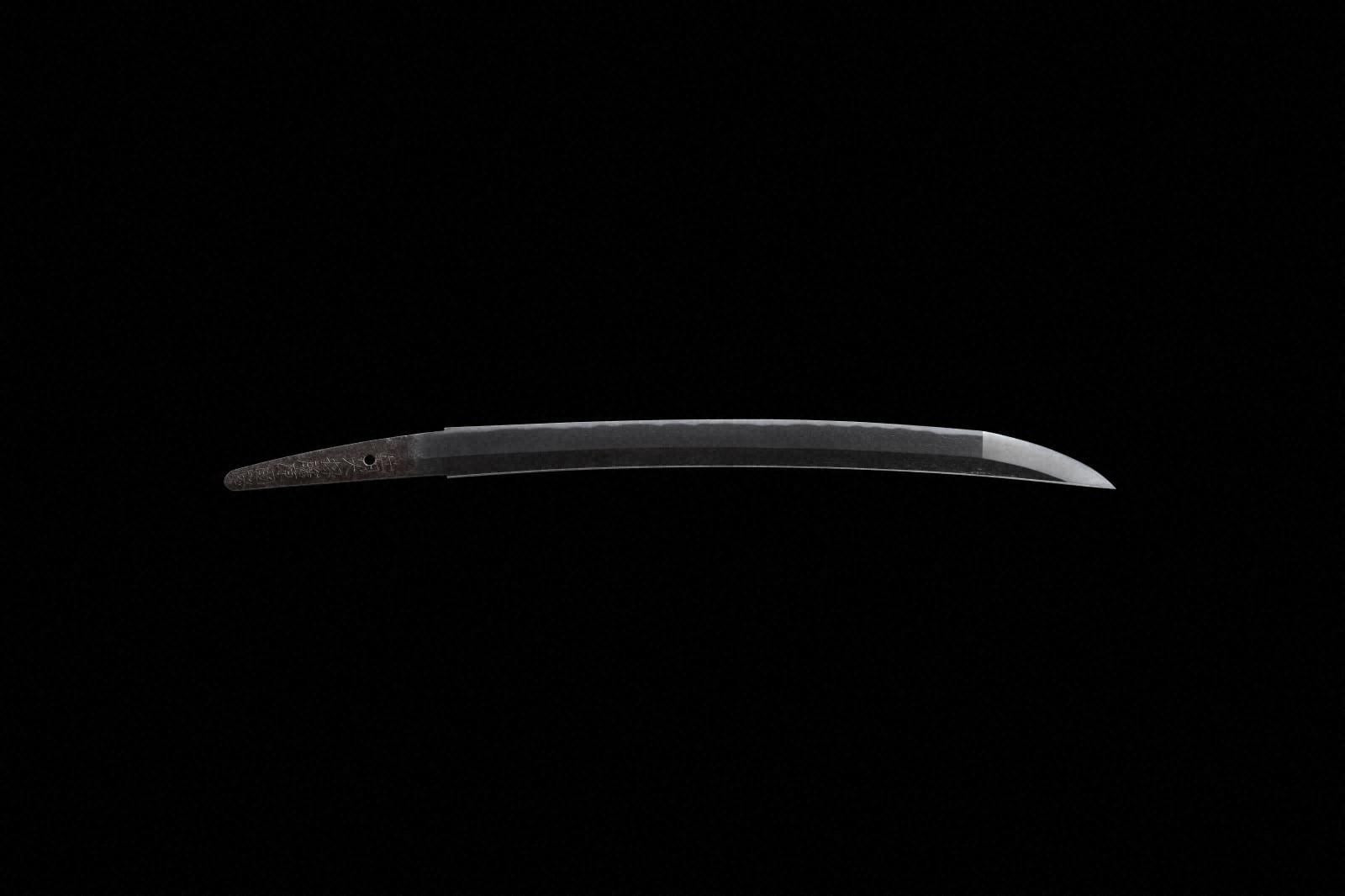
Wakizashi signed 出羽大掾藤原国路 (Dewa Daijō Fujiwara Kunimichi), 39.3 cm long. Miyazaki Prefectural Museum of Nature and History. Miyazaki Prefectural Museum of Nature and History · © Miyazaki Prefectural Museum of Nature and History 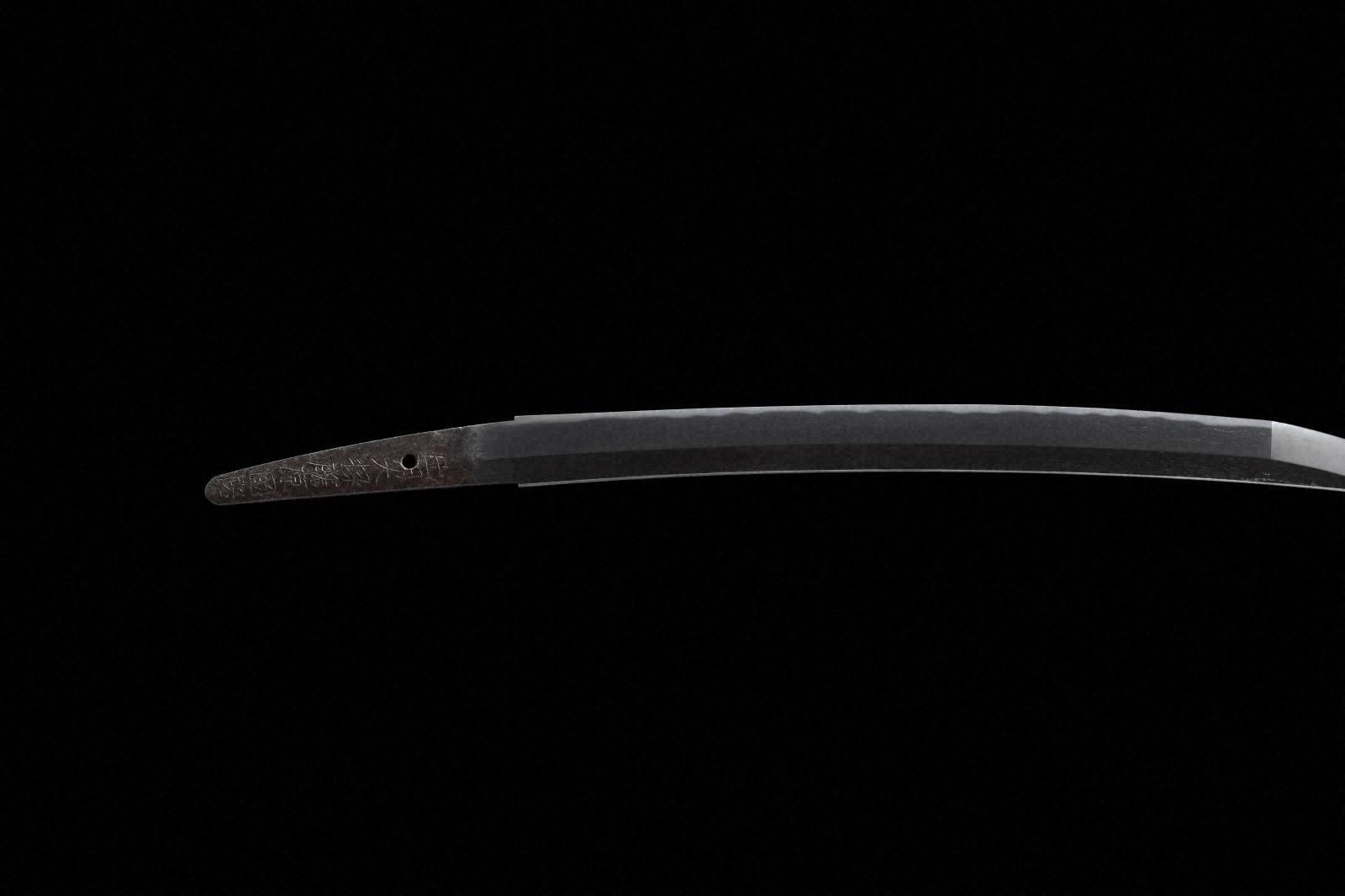
The tang of the same wakizashi, with the signature. Miyazaki Prefectural Museum of Nature and History · © Miyazaki Prefectural Museum of Nature and History 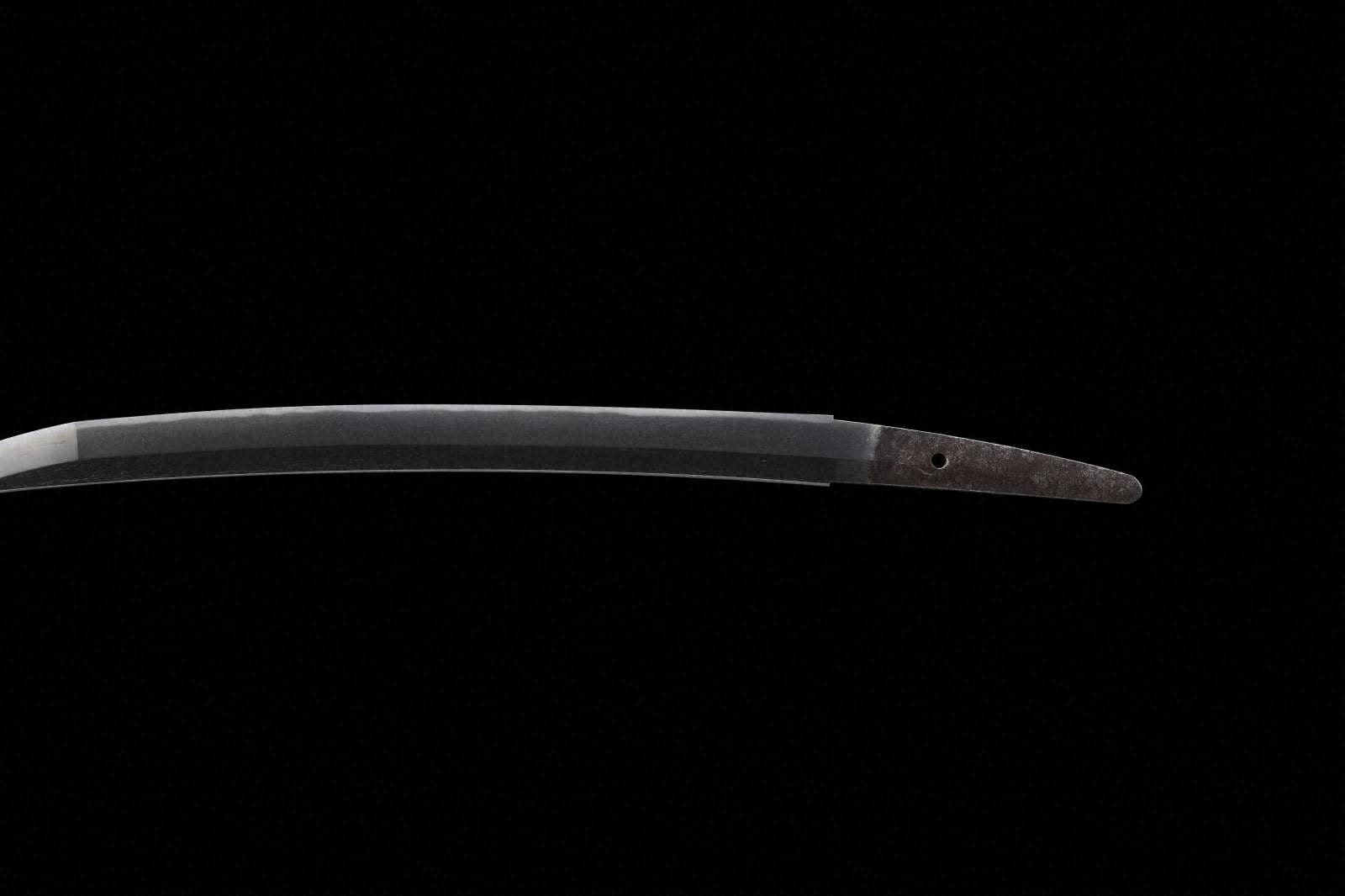
The same wakizashi from the other side: the tang bears no signature. Miyazaki Prefectural Museum of Nature and History · © Miyazaki Prefectural Museum of Nature and History