What he is after
His goal is the kotō of late Heian to Kamakura, in the Yamashiro, Bizen and Sōshū traditions, with a method of his own that he calls a “fusion of the old and the present”. The Kamakura forging method is for him a “lost technology” (ロストテクノロジー, rosuto tekunorojī) that he wants to recover: “鎌倉時代の刀剣の再現を目指す” (“I aim to reproduce the swords of the Kamakura period”).
In the work of his master Fujita Kunimune he was fascinated by a bright, deep jigane, and by a shape that combines thickness and mihaba and fits the hand.
What the jury said
- Of the tachi of the 2018 bronze: shinogi-zukuri, iori-mune and short kissaki; a flowing itame jigane, with strong mokume in places and faint utsuri; a suguha hamon with ko-gunome and ko-chōji, with a tight, continuous nioiguchi (匂口).
- Of a selected work: shinogi-zukuri, iori-mune and short kissaki; flowing itame, with ō-hada; suguha with small midare, ashi and yō; a straight bōshi (帽子) with a small round turn-back.
The notes are quoted by him; they could not be checked against a publication of the exhibition.
What he makes
Tachi, tantō and protective swords (守り刀, mamori-gatana), and also small knives (小柄小刀, kozuka-kogatana) by the same method. One of his tantō bears a Kurikara dragon on the ura side and a three-pronged sword (三鈷剣, sanko-ken) on the omote. The material consulted names no copy of a particular sword.
Gallery
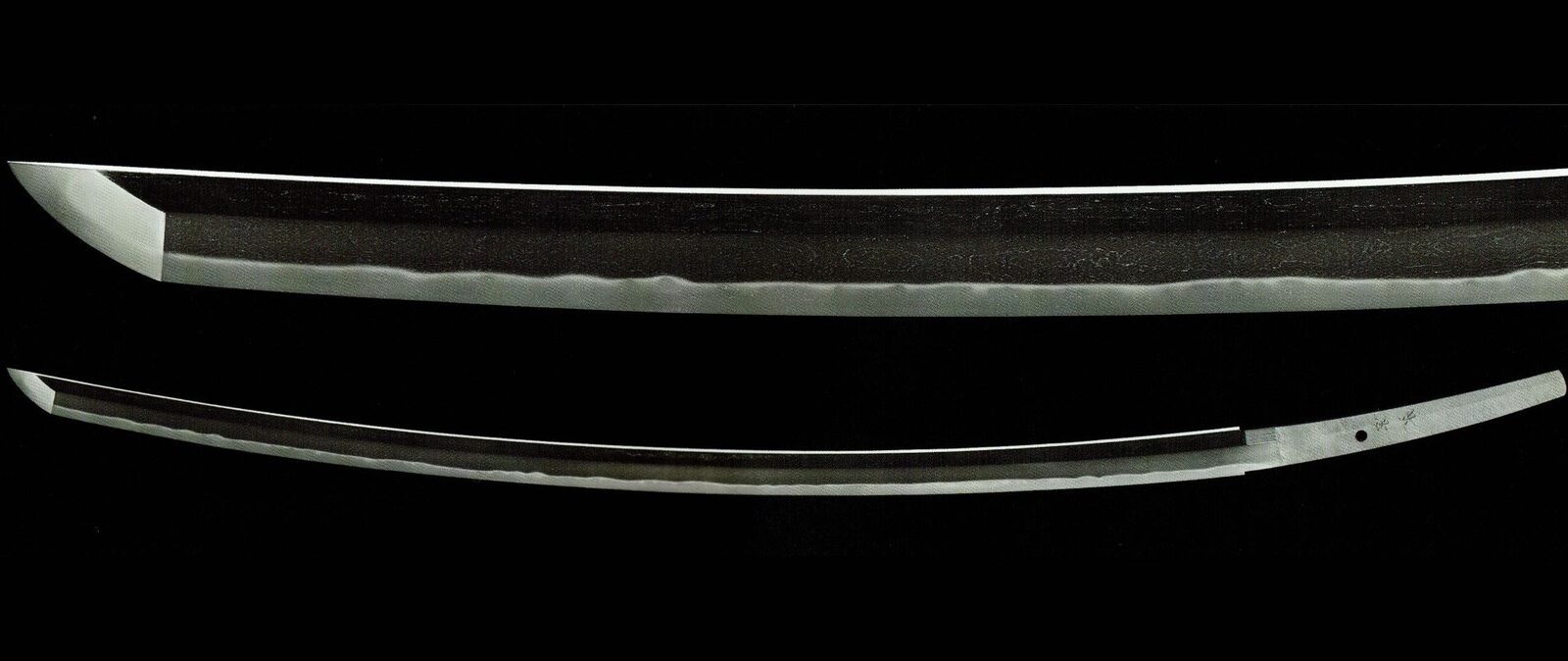
Two of his blades. Photo: the smith himself 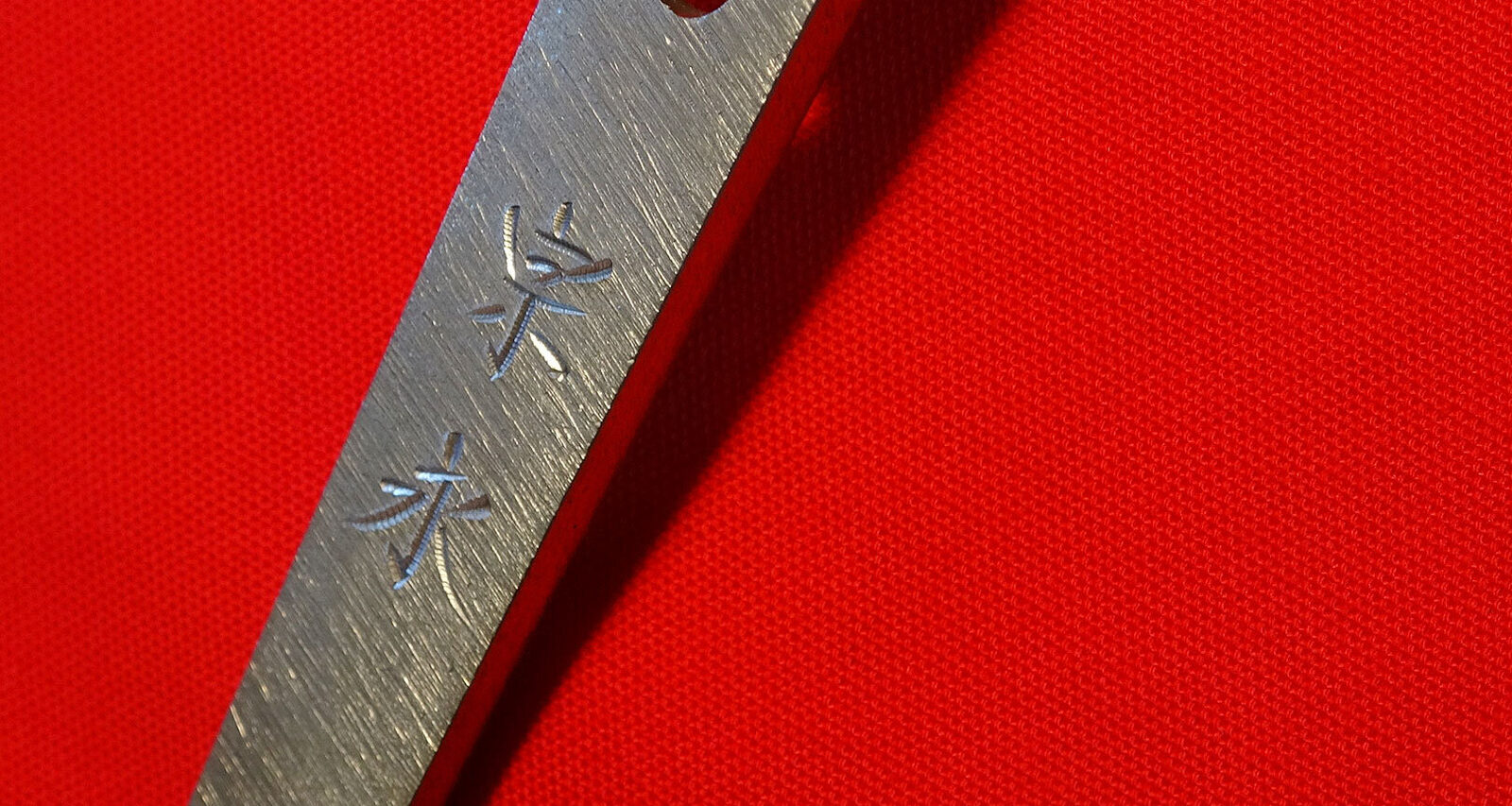
His signature, 宗永 (Munenaga), on the tang (cropped). Photo: the smith himself 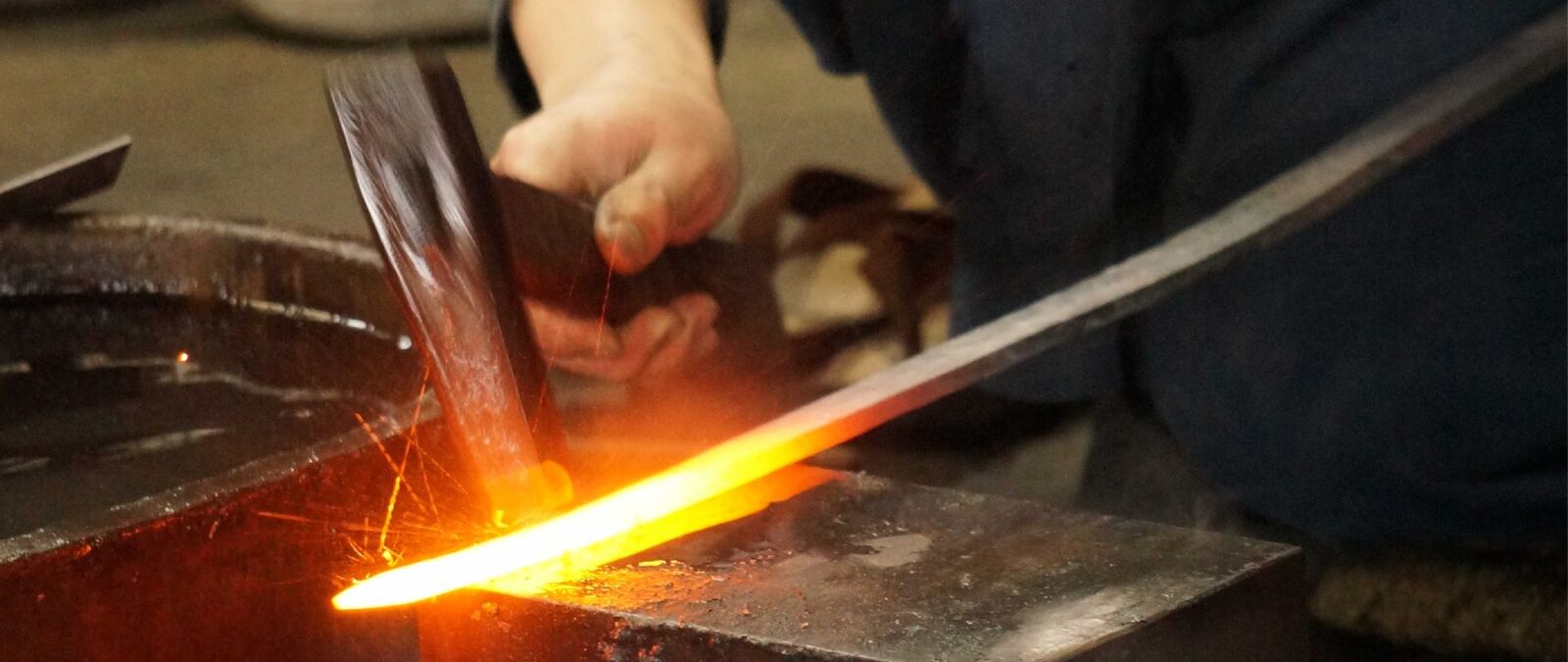
A red-hot blade on the anvil. Photo: the smith himself 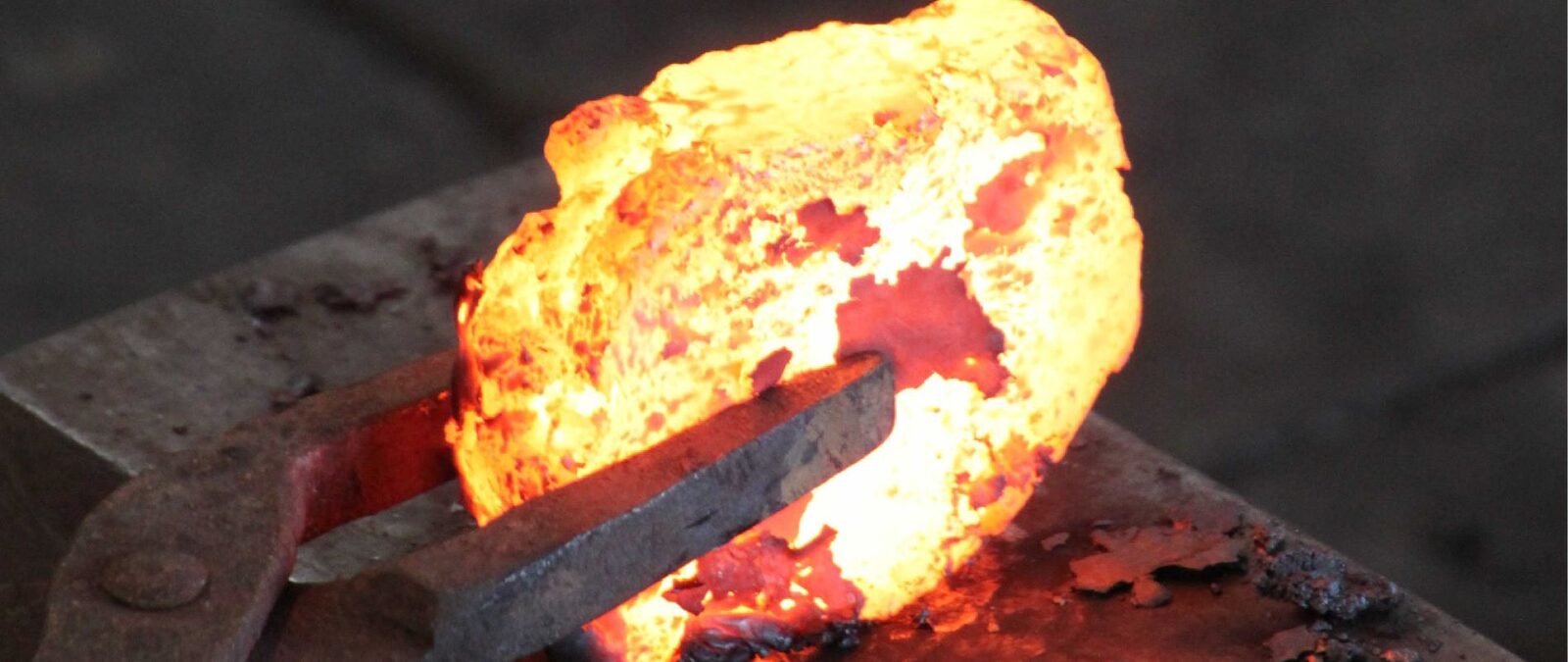
A glowing piece in the tongs. Photo: the smith himself 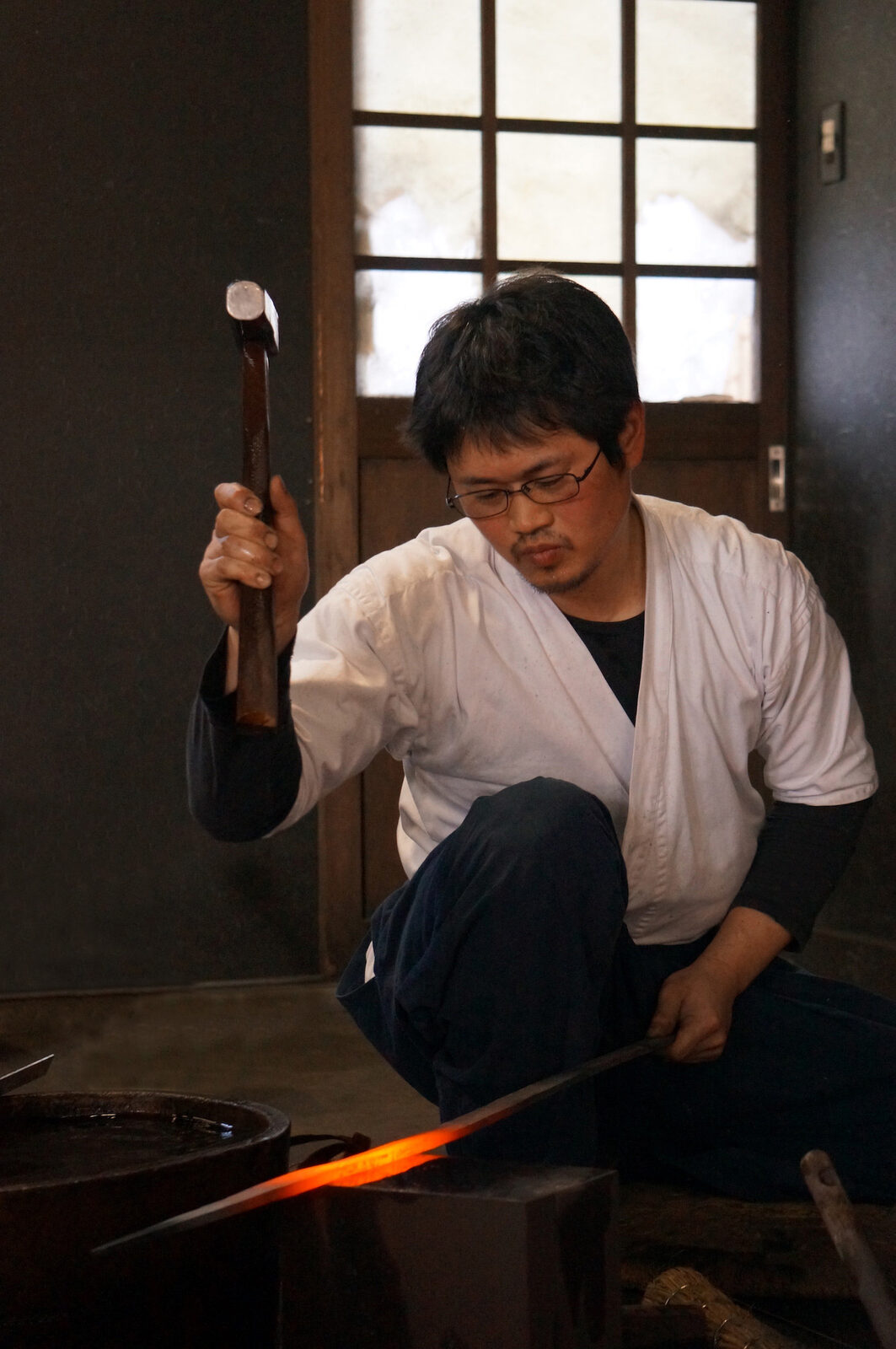
Forging with the hammer. Photo: the smith himself 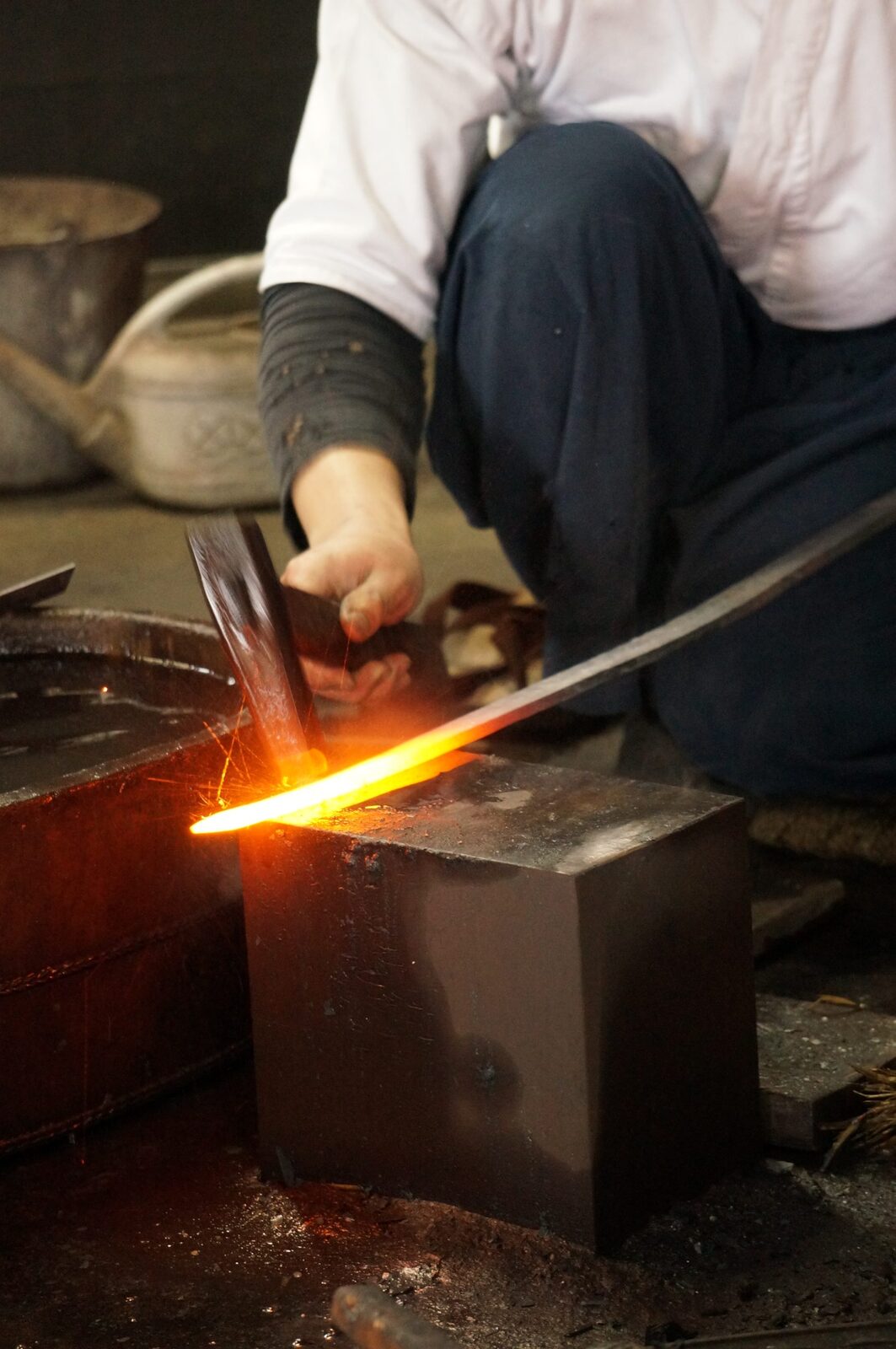
The hammer over a red-hot blade. Photo: the smith himself 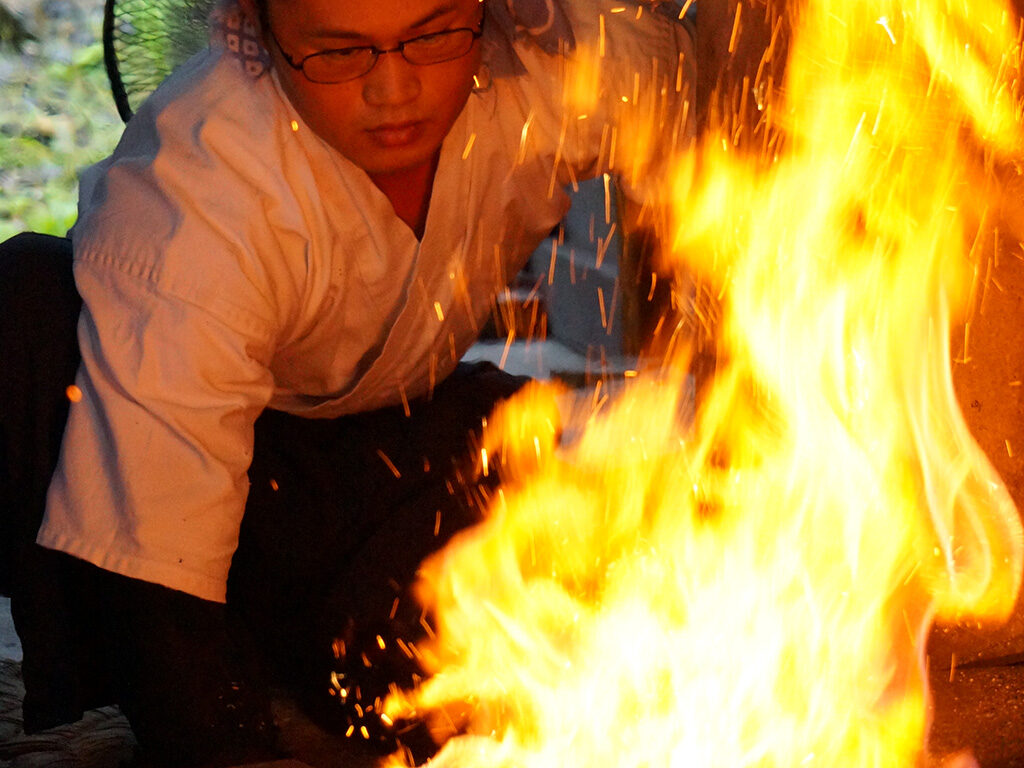
Amid the flames of the forge. Photo: the smith himself