On this page
The vocation and the apprenticeship
He was born in 1985 in the city of Fukuoka and finished high school in 2003. At high school, on an outing with the photography club, he visited the smithy 大庭鍛冶工場 (Ōba kaji kōjō) and was struck by the craft. His family were not smiths; his mother, who practises the tea ceremony, encouraged him to try crafts and arts.
In 2005 he entered the workshop of the 25th Fujiwara Kanefusa (藤原兼房日本刀鍛錬所, Fujiwara Kanefusa Nihontō Tanrenjo), in Seki; in 2010 the Agency for Cultural Affairs gave him the approval to forge, and in October 2011 he became independent.
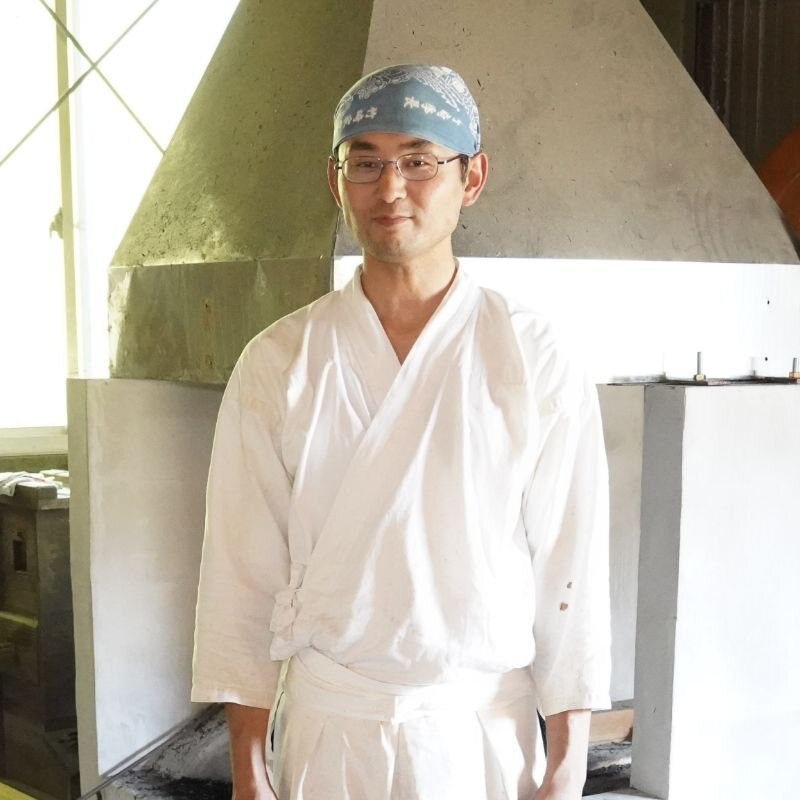
The Shitsuno workshop
His workshop, 福留房幸日本刀鍛錬場 (Fukudome Fusayuki Nihontō Tanrenjō), is in Shitsuno (志津野, Shitsuno), in Seki. In 2021 he was converting an old factory with living quarters into the new smithy, with a power hammer, and meanwhile worked mostly on engraving. He opened it with the fire-lighting ceremony, the 火入式 (hiire-shiki), on 30 November 2024.
Museums and offerings
He collaborated with the Yale Peabody Museum of Natural History on its 2015 “Samurai” exhibition, where he gave a lecture and to which he lent an uchigatana of his from 30 March 2015 to 3 January 2016. He also collaborated with the Gifu Prefectural Museum on the Kanesada exhibition (2018) and on that of the swordsmen and Mino swords of the Bakumatsu (2019), and in 2020 he offered a sword to the Atsuta shrine (熱田神宮, Atsuta Jingū) with a group of volunteers.
In a Gifu Prefectural Museum series in which each guest chose their favourite sword from the collection, he picked a blade with the red-lacquer signature 朱銘 兼氏 (shu-mei Kaneuji), for its hamon close to hitatsura with tobiyaki, its regular double hi and its fine iron despite the wear.
The Hotarumaru project
In 2015 he founded, and chairs, the association 一般社団法人蛍丸記念刀剣文化遺産伝承会 (Ippan shadan hōjin Hotarumaru Kinen Tōken Bunka Isan Denshōkai), created to reconstruct the Hotarumaru, the lost ōdachi of the Aso shrine (Kumamoto). According to Kōroki Fusaoki, his fellow apprentice, who was a co-founder, the crowdfunding campaign passed its goal in five hours. It ran from 1 November 2015 to 29 January 2016 and raised 8.2 times the goal.
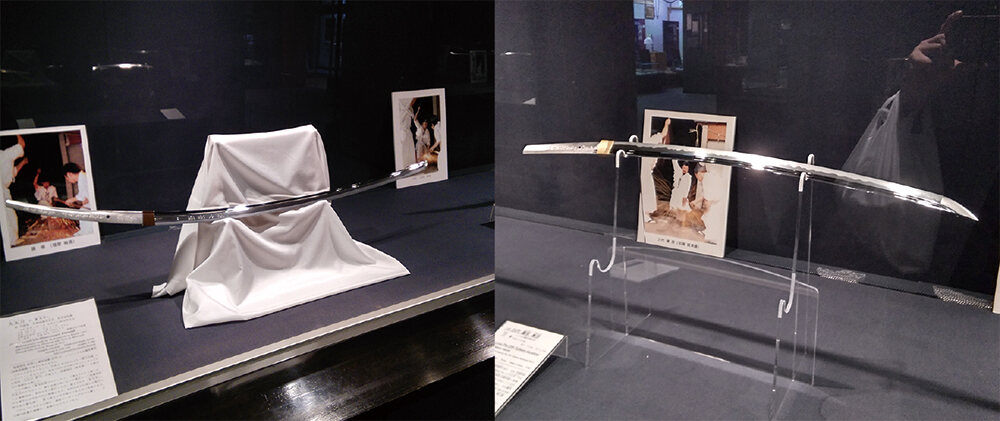
The two carried out a ritual forging at the shrine on 27 February 2016, the city of Aso filmed the hardening of the replica in August 2016, and on 17 June 2017 they offered it to the shrine. The reserve copy, the 影打 (kageuchi), they donated in 2017 to the 関鍛冶伝承館 (Seki Kaji Denshōkan), the Seki forging museum, where it is on permanent display. In October 2023, the delivery of the mounting was planned for 18 November 2023 at Aso, and with it the project would close.
The archer
He practises kyūdō (弓道, kyūdō), with the title of renshi (錬士, renshi) and 5th dan, and the standing shooting of the Ogasawara style (小笠原流, Ogasawara-ryū). That is why he forges many tantō and maezashi for archers, and also arrowheads.