His blades
- Uchigatana (打刀, uchigatana) with a daikissaki and the shape of the swords of the Keichō era (慶長新刀, Keichō shintō): nagasa of 2 shaku 3 sun 8 bu (about 72 cm) and sori of a little over 6 bu (about 1.8 cm); ko-itame jihada (小板目, ko-itame) and gunome-chōji midare hamon (互の目丁子乱れ, gunome chōji midare). It is the one he lent to the Yale Peabody Museum.
- Long wakizashi: nagasa of 1 shaku 8 sun (about 54.5 cm) and sori of a little over 3 bu (close to 1 cm); ko-itame jihada and gunome midare hamon (互の目乱れ, gunome midare).
- Tantō, his first work: nagasa of 8 sun 1 bu (about 24.5 cm), with no sori; masame jihada (柾目, masame) mixed with itame (板目, itame) and gunome midare hamon.
All three are in ko-itame or masame and in gunome: a style of Mino and Seki, that of his school.
The engraver
He engraves the horimono (彫物, horimono) of the blade himself: bonji (梵字, bonji), the Sanskrit letters of the Buddhas, and figures.
Arrows and knives
He forges karimata (雁股, karimata) arrowheads, forked, with a heart-shaped inome (猪目, inome) openwork, and a 7-sun yanagiba knife with iron of 64 layers and steel of more than 1,024.
The replica of the Hotarumaru
The Hotarumaru-utsushi is an ōdachi of about 136 cm and 2.5 kg, some two and a half times a sword of today. Without the original, which was lost, Fukudome and Kōroki worked from documents and from an oshigata kept at a crafts centre in Kumamoto; the hardest part, they said, was erasing their own habits as smiths and not knowing the thickness of the blade.
His favourite stage is the hardening, the yaki-ire (焼き入れ, yaki-ire). He dreams of forging on the Moon one day and of making his own steel (自家製鉄, jika seitetsu), and believes a sword is better when it has a clear purpose, for use or for art.
Gallery

Uchigatana of Keichō-shintō shape (慶長新刀, Keichō shintō) with a daikissaki, of about 72 cm. Photo: Kei Nakamura (Spare Time Studio) · © Kei Nakamura (Spare Time Studio) 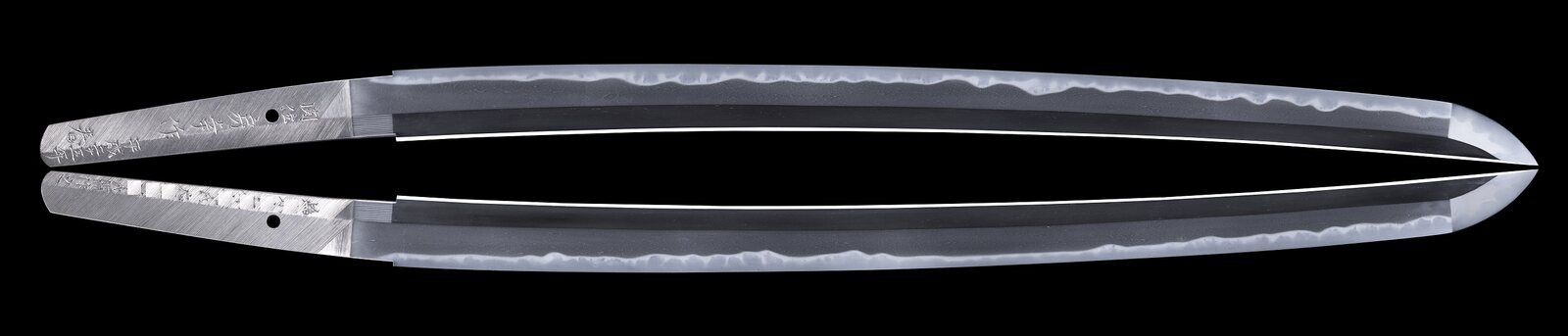
Long wakizashi, of about 54.5 cm. Photo: the smith himself 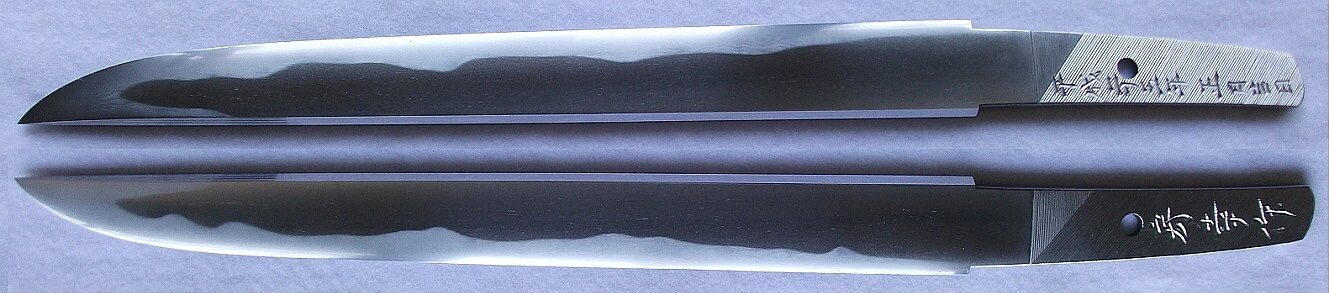
Tantō, his first work, of about 24.5 cm. Photo: the smith himself 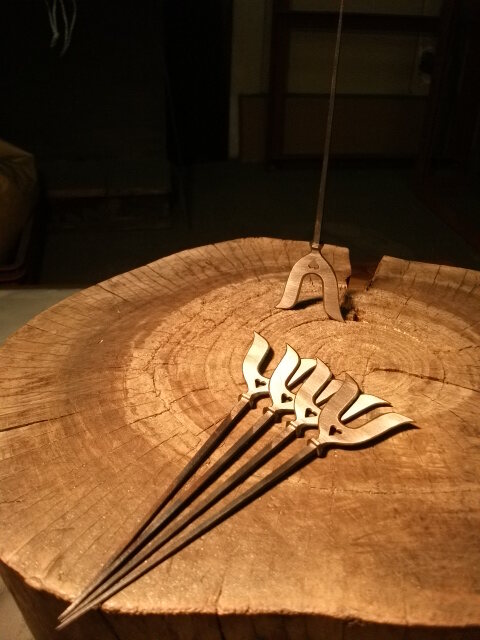
Karimata (雁股, karimata) arrowheads with inome (猪目, inome) openwork. Photo: the smith himself 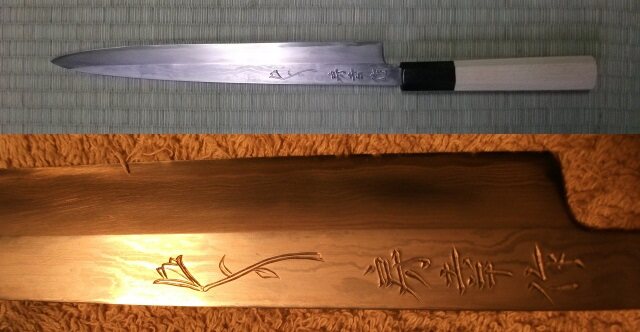
Yanagiba knife (柳刃, yanagiba) with an iris engraved on the sheath. Photo: the smith himself 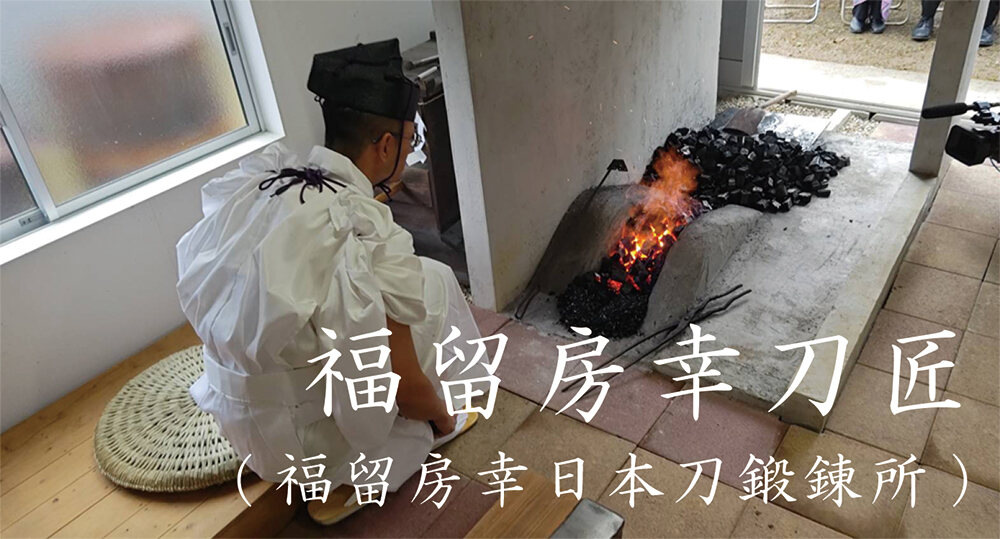
Fukudome Fusayuki in ceremonial dress before the forge. Photo: dealer in Japan 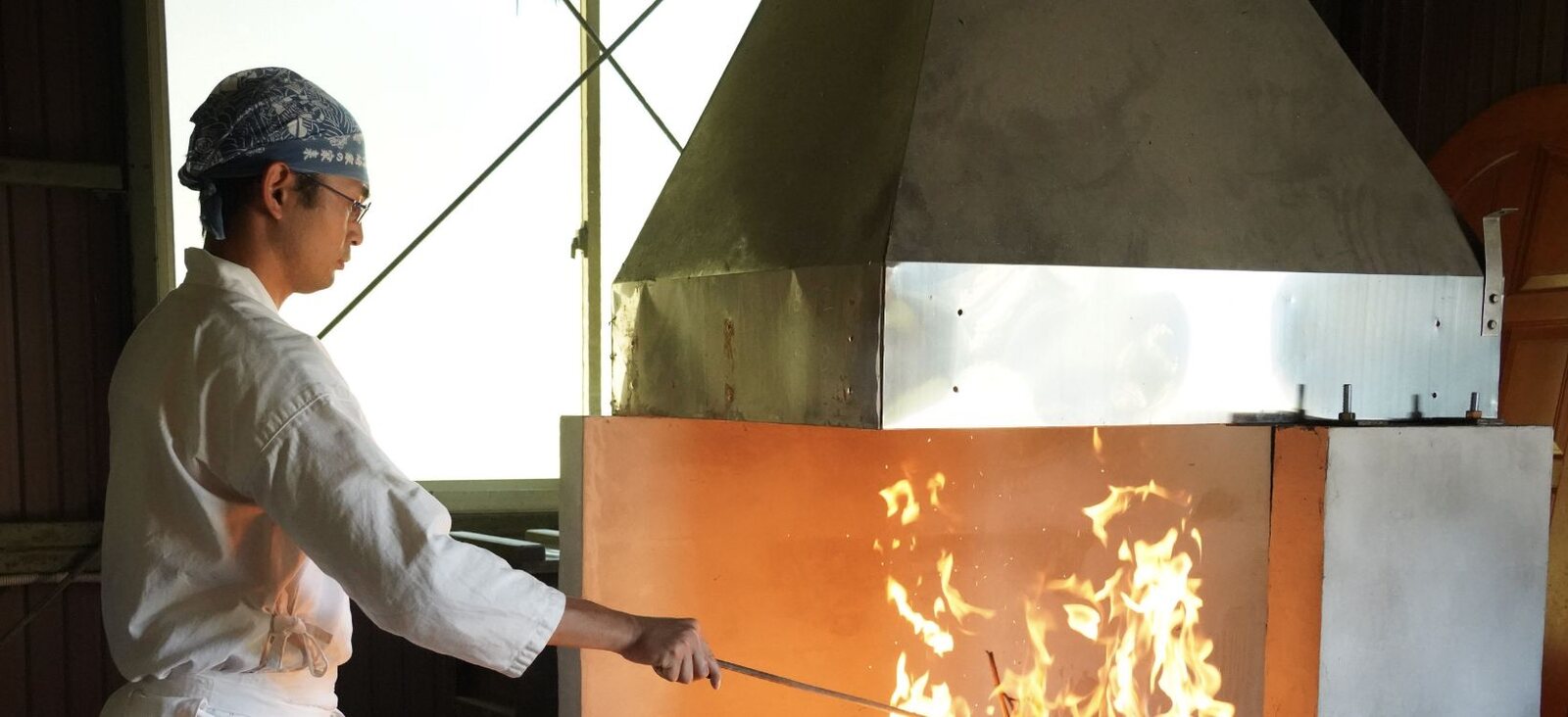
Tending the fire of the forge. Photo: the smith himself 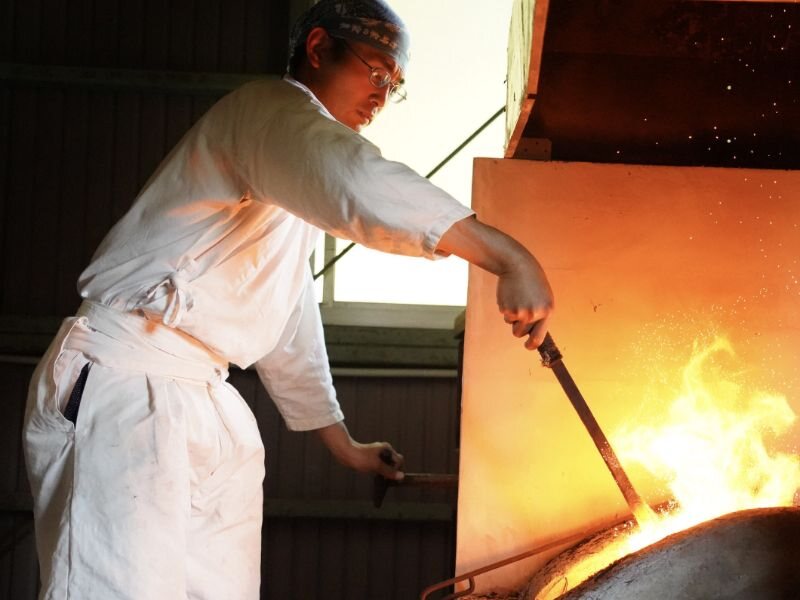
Before the forge, under the hood. Photo: the smith himself 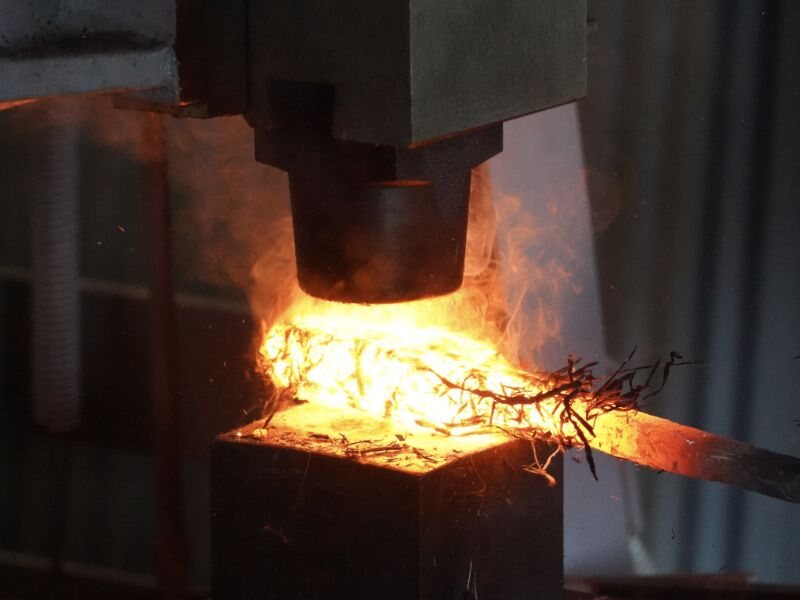
The power hammer on a red-hot bar. Photo: the smith himself 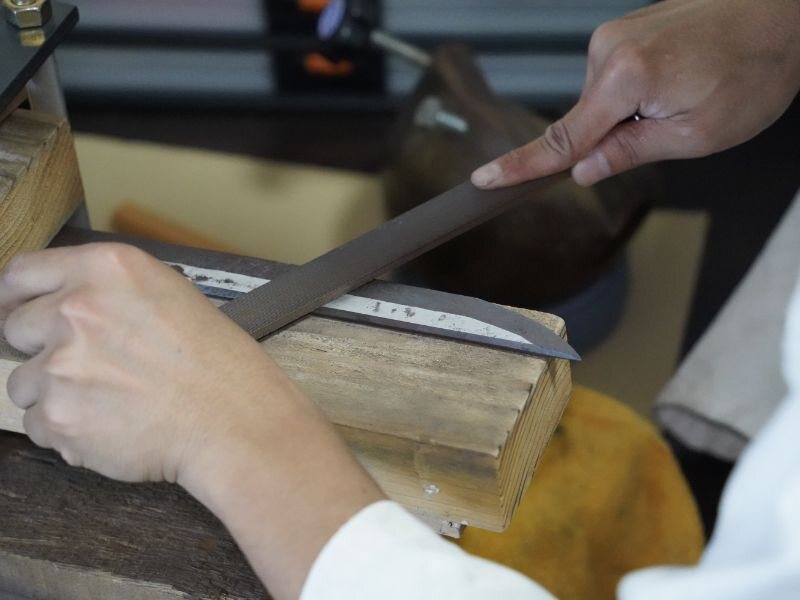
Filing a blade at the bench. Photo: the smith himself