On this page
In the Kyōhō meibutsuchō
- The 享保名物帳 (Kyōhō meibutsuchō) records twenty-two pieces of his, eleven surviving and eleven burned, against fifty-nine by Masamune and thirty-four by Awataguchi Yoshimitsu: they are the three greats (meibutsu sansaku).
- Neither he, nor Masamune, nor Yoshimitsu are in the wazamono lists from the cutting tests of Yamada Asaemon; the reason put forward is that their blades were treasures of daimyō and could not be tested.
His designated works and those in museums
| Work | Designation | Where it is |
|---|---|---|
| 稲葉江 (Inaba-gō) | National Treasure, 1951 | Kashiwabara Museum, Iwakuni |
| 富田江 (Tomita-gō) | National Treasure | Maeda Ikutokukai foundation |
| 桑名江 (Kuwana-gō) | Important Cultural Property, 29 August 1950 | Kyoto National Museum |
| 松井江 (Matsui-gō) | Important Cultural Property, 20 March 1954 | Sano Museum, Mishima |
| 村雲江 (Murakumo-gō) | Important Cultural Property, 29 March 1952 | Private collection, Osaka |
| 五月雨江 (Samidare-gō) | Important Cultural Property | Tokugawa Art Museum, Nagoya |
| 豊前江 (Buzen-gō) | Important Cultural Property | Whereabouts unknown since the State survey of 2014 and 2015 |
| Katana 無銘 伝義弘 (mumei, den Yoshihiro), 71.5 cm | Important Cultural Property | Tokugawa Art Museum |
| Katana 郷義弘 (Gō Yoshihiro) | Important Art Object | Tokyo National Museum |
| 名物 北野江 (meibutsu Kitano-gō) | Not listed in ColBase | Tokyo National Museum |
| Katana 金象嵌銘 義弘 薫山 (kinzōgan-mei Yoshihiro, Kunzan) | Not listed in ColBase | Kyoto National Museum |
The whereabouts of the Buzen-gō and the Murakumo-gō have not been confirmed, and it is not known whether the attributed katana at the Tokugawa Art Museum is the Samidare-gō.
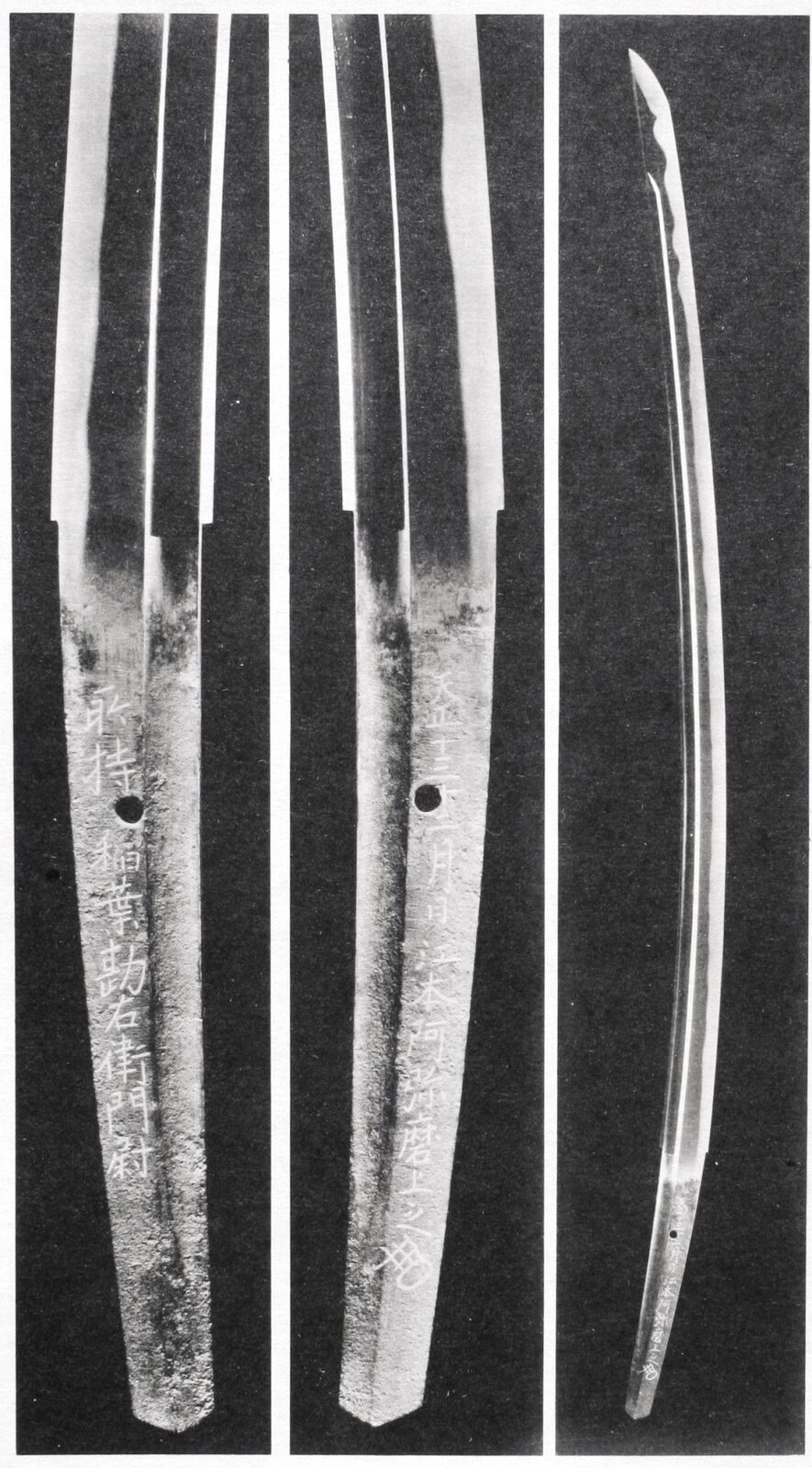
The Inaba-gō
- Hon'ami Kōtoku shortened and attributed it in 1585. It passed to Inaba Shigemichi, although Fukunaga Suiken thinks rather of his son Michimichi; then to Tokugawa Ieyasu, in 1600 to Yūki Hideyasu and to the Matsudaira of Tsuyama until 1945.
- It became an Important Art Object in 1933, a National Treasure under the old law in 1936 and under the new one on 9 June 1951. In 2015 the Agency for Cultural Affairs listed it as lost; it reappeared in May 2016, when its owner reported it, and in March 2019 it was bought by Kashiwabara Corporation, which donated it to the Kashiwabara Museum in Iwakuni.
- Very tight ko-itame with fine, dense ji-nie; ko-notare with gunome, ashi, deep nioi with ko-nie, sunagashi and hotsure; an almost ichimai bōshi; bōhi.

The others, by their owners
- Kuwana-gō. After Honda Mino no Kami Tadamasa, lord of Kuwana. Hon'ami Kōtoku attributed it in gold; 69.3 cm, wide suguha with thick chōji-ashi and an ichimai bōshi. It was shortened by Umetada Myōju, according to tradition.
- Matsui-gō. After Matsui Okinaga. Hon'ami Kōjō appraised it in red lacquer; in 1685 it was Tsuruhime’s wedding gift to Tokugawa Tsunanori, of Kii. Its tight suguha is rare in him; the State record sees his hand in the fine steel and the deep, clear nioi. Today it is at the Sano Museum.
- Samidare-gō. Hon'ami Kōshitsu attributed it; it passed through Kuroda Nagamasa, Tokugawa Hidetada and Iemitsu to the Tokugawa of Owari, and was donated to the Tokugawa Art Museum in 1944. 71.8 cm, notare with ko-midare.
- Murakumo-gō. After a phrase attributed to Hideyoshi: its nie looks like billowing clouds.
- Kitano-gō. After a cutting test by Maeda Toshitsune at Kitano, in Kyoto; the Maeda gave it to the Emperor Meiji in 1910 and today it is at the Tokyo National Museum, which describes its wide notare with plenty of nie, influenced by Sagami.
- The katana 郷義弘 (Gō Yoshihiro) of the Tokyo National Museum. It belonged to the Tokugawa of Kii and, according to tradition, was the everyday sword of their second lord, Mitsusada.
Gallery
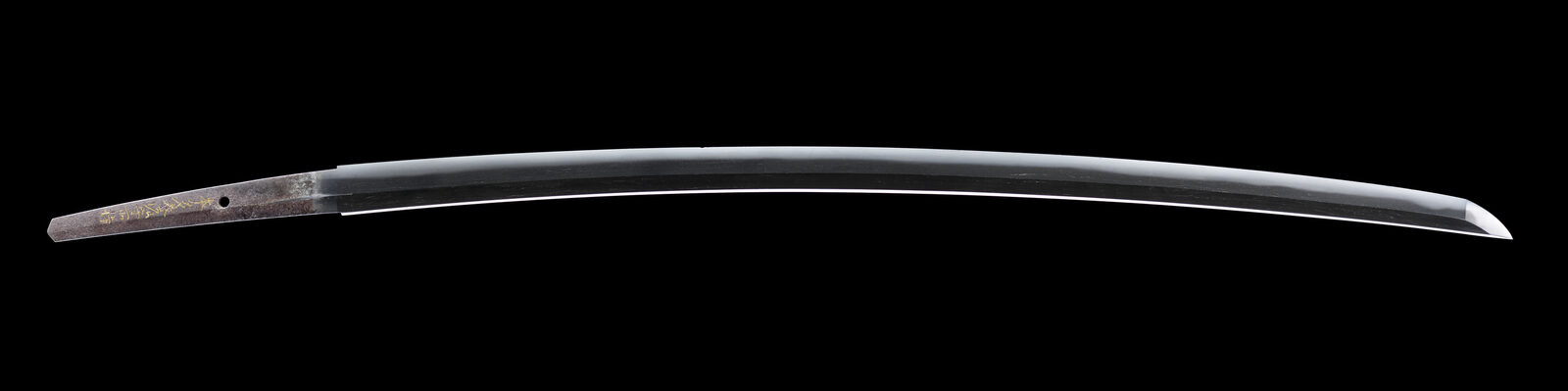
The Kuwana-gō, whole. Kyoto National Museum, via ColBase (photo: 岡田愛, Okada Ai) · ColBase terms of use · source 
The Kitano-gō, whole. Tokyo National Museum, via ColBase · ColBase terms of use · source 
Katana 郷義弘 (Gō Yoshihiro) of the Tokyo National Museum, whole. Tokyo National Museum, via ColBase · ColBase terms of use · source