Gotoba-in
後鳥羽院 (Gotoba-in)
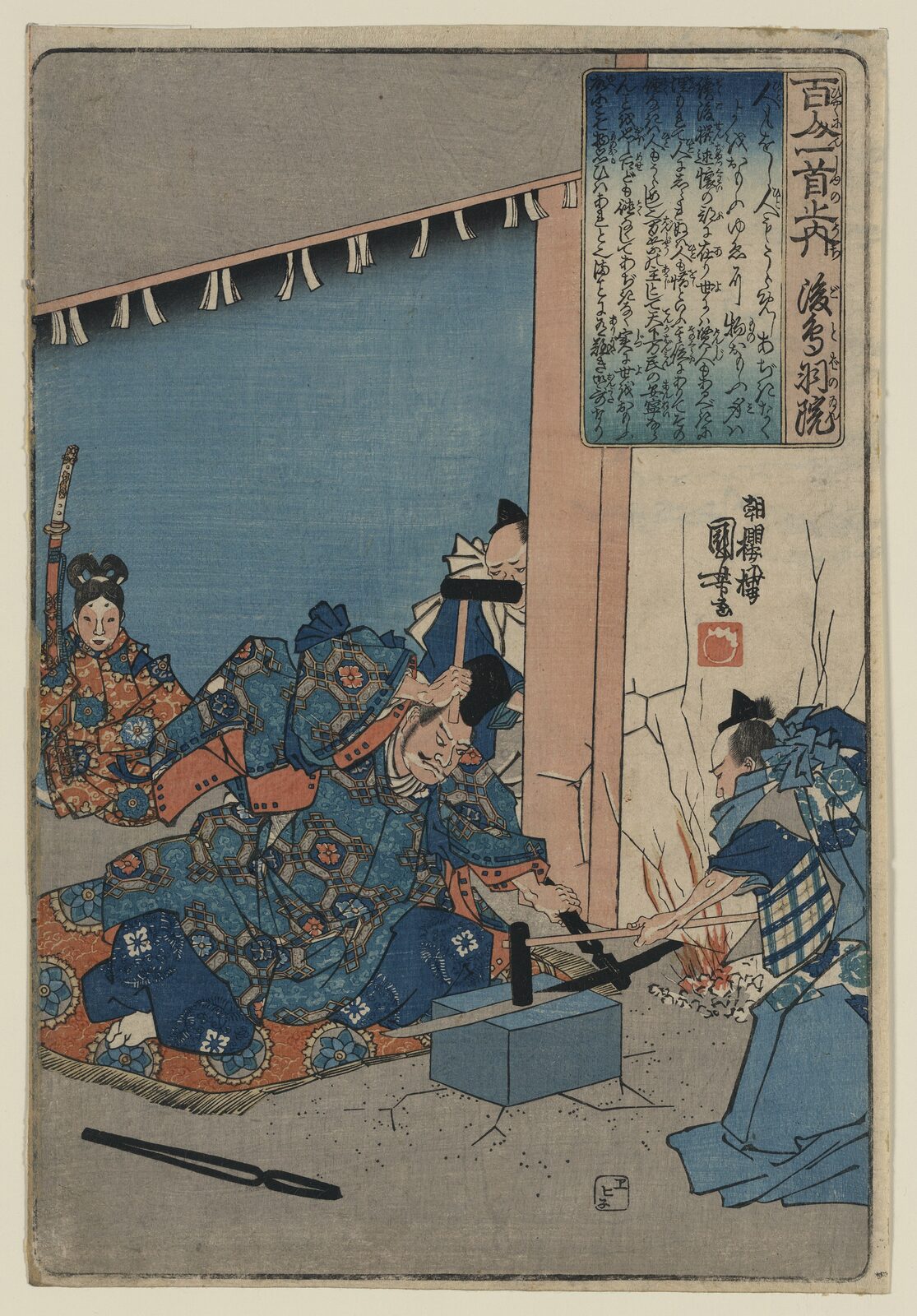
The retired emperor Go-Toba (1180-1239). Tradition credits him with gathering smiths from several provinces in monthly rotations and with tempering blades himself, marked with a chrysanthemum.
Profile
Go-Toba reigned from 1183 to 1198 and kept ruling as retired emperor. He was not a smith by trade, and no document from his time proves that he forged: what follows is tradition, recorded in sword treatises written much later. According to it, he enjoyed forging and summoned smiths from several provinces, starting with Norimune of Bizen, to work in monthly rotations at his Minase palace, the rotating smiths. He is said to have tempered blades himself and engraved them with a chrysanthemum; these blades are called kiku gosaku, and the imperial chrysanthemum would derive from them. Tradition speaks of sixteen petals, but the tachi attributed to him in the Kyoto National Museum bears one with twelve. They must not be confused with kiku-ichimonji, blades by the Ichimonji smiths of the rotation with a chrysanthemum on the tang. In 1221 he rose against the Kamakura shogunate, was defeated and exiled to the Oki islands, where he died in 1239. The list of smiths who supposedly worked for him in exile is held to be invented.
Monograph
Gotoba-in (後鳥羽院)
Who he was, what is known about him and what is only tradition, told with the level of evidence of each fact.
Read the monograph
Notable works
- Kiku gosaku tachi in the Kyoto National Museum, with a chrysanthemum for a signature: Important Cultural Property since 1950. Attributed to him by tradition.