On this page
Documented works
| Work | Designation | Where it is |
|---|---|---|
| Wakizashi by the first generation, of 1621 (Genna 7), signed with his age, 60, and made in Nagoya | No designation stated | Nagoya City Museum |
| Tantō of 1630 (Kan'ei 7), signed 伯耆守藤原朝臣信高 (Hōki no Kami Fujiwara no Ason Nobutaka) and 美濃守藤原政常 (Mino no Kami Fujiwara Masatsune) | No designation stated | Nagoya City Museum |
| Katana by the third generation, of 1665 (Kanbun 5), signed 河村三之丞信高作之 (Kawamura Sannojō Nobutaka kore wo saku) | No designation stated | Nagoya City Museum |
| Wakizashi by the third generation, of 1667 (Kanbun 7), with the cutting test 以此釼二胴落 (kono ken wo motte nidō otosu), “with this sword two bodies were cut through” | No designation stated | Nagoya City Museum |
| Katana by the second generation, of 1678 (Enpō 6), signed 伯耆守信高入道 生年七十六歳造之 (Hōki no Kami Nobutaka nyūdō shōnen shichijūroku-sai kore wo tsukuru) | No designation stated | Nagoya City Museum |
| Katana by the second generation, of 1681 (Enpō 9), signed 前伯刕藤原信高入道閑遊 (saki no Hakushū Fujiwara Nobutaka nyūdō Kan'yū), at the age of 79 | No designation stated | Nagoya City Museum |
| Wakizashi signed 伯耆守藤原信高 (Hōki no Kami Fujiwara Nobutaka) | No designation | Tokyo National Museum (F-228) |
| Straight double-edged blade of 30.1 cm, with the inscription 祈武運長治 (buun chōji o inoru), from the 17th century | No designation | Kyūshū National Museum (F10) |
Two pieces
The wakizashi of 1621 in the Nagoya City Museum is the most complete document of the first generation: it gives his age, his Seki lineage and the place where he worked.
The wakizashi of 1667 bears an inscribed cutting test: two bodies in one stroke.
In the lists
In the 『懐宝剣尺』 (Kaihō Kenjaku), the Yamada cutting list of 1797, the English Wikipedia places the first Nobutaka and the second among the 業物 (wazamono), the fourth of its four grades. In Tomita Kiyama’s ranking of shintō swordsmiths, of 1933 and published in 1935, which the Japanese Sword Index reproduces, “Hoki no kami Nobutaka (Owari)” is maegashira of the western side.
No work of his with a State designation is recorded in the sources consulted.
Gallery
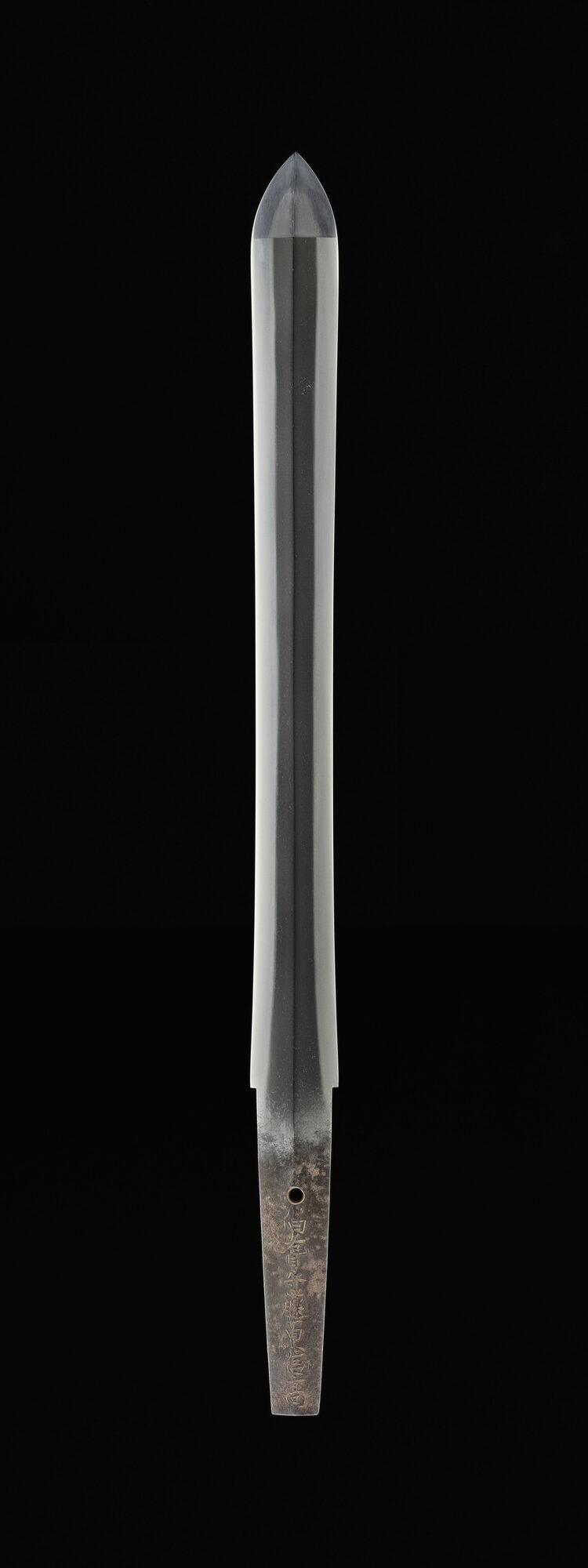
Straight double-edged blade (剣, ken) of 30.1 cm, from the 17th century, with the signature on the tang. Kyūshū National Museum. Kyūshū National Museum, via ColBase · ColBase terms of use · source 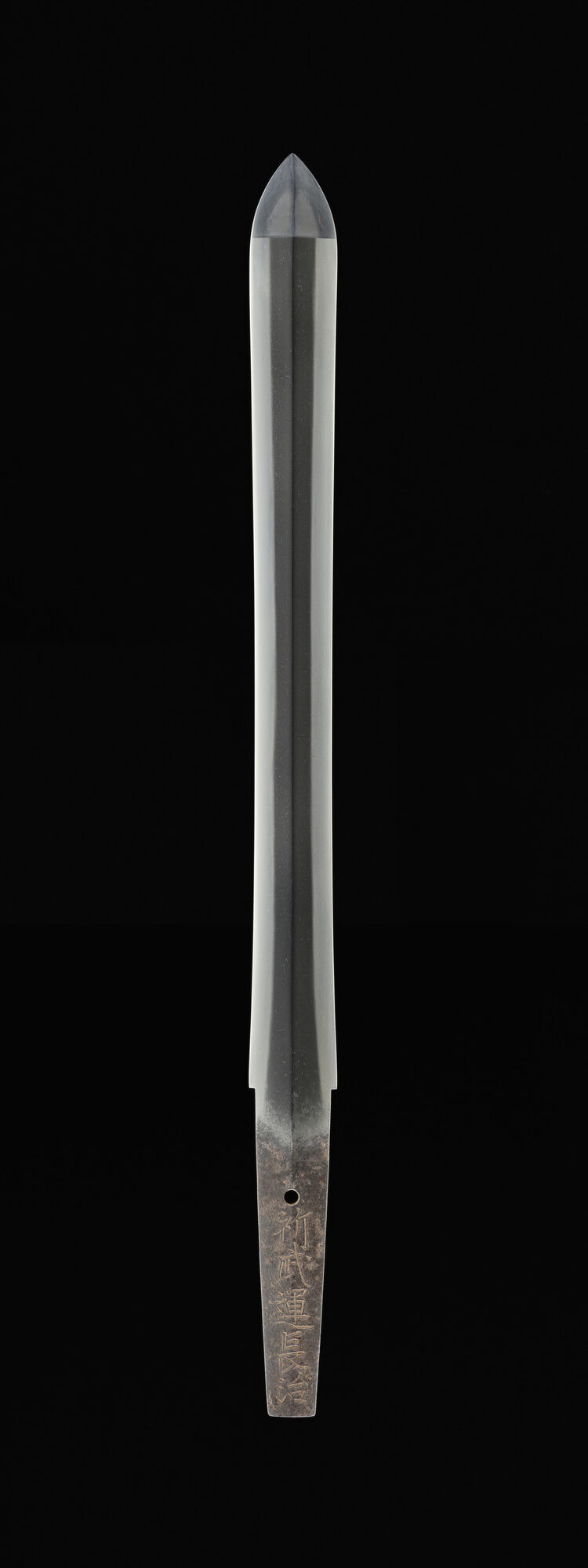
The other side of the tang, with the inscription 祈武運長治 (buun chōji o inoru), a prayer for fortune in arms. Kyūshū National Museum, via ColBase · ColBase terms of use · source