On this page
Kantei keys
What the NBTHK describes for the school, in issue 779 of its journal (December 2021):
| Key | What distinguishes it |
|---|---|
| Jihada | Regular masame, the typical Yamato masame; sometimes with small splits (masa-ware) that are considered not a flaw but a trait |
| Hamon | Narrow suguha (chū-suguha) with a dense nioiguchi, with hotsure, uchinoke, nijūba, kuichigaiba, yubashiri and kinsuji intertwined with the hada; more nie, and coarser, from the monouchi to the point; ashi |
| Bōshi | Almost always yakizume, with strong hakikake; on tachi it may be komaru on one side and yakizume on the other |
| Sugata | Above all signed tantō; signed tachi are extremely rare |
| Nakago and mei | Ending in kiri, with higaki file marks; many signatures with reversed chisel strokes (gyaku-tagane) |
The Hōshō masame
- For Markus Sesko, the most evident masame is found in Hōshō blades and in those of the shintō lineage of Sendai Kunikane.
- The NBTHK gives the key to tell them apart: in a Hōshō blade, the masame of the shinogi-ji fades out on reaching the yokote; in those of Sendai Kunikane it goes past the yokote and rises sharply to the mune.
- The works of the school are so homogeneous that it is hard to tell one smith from another.
Gallery
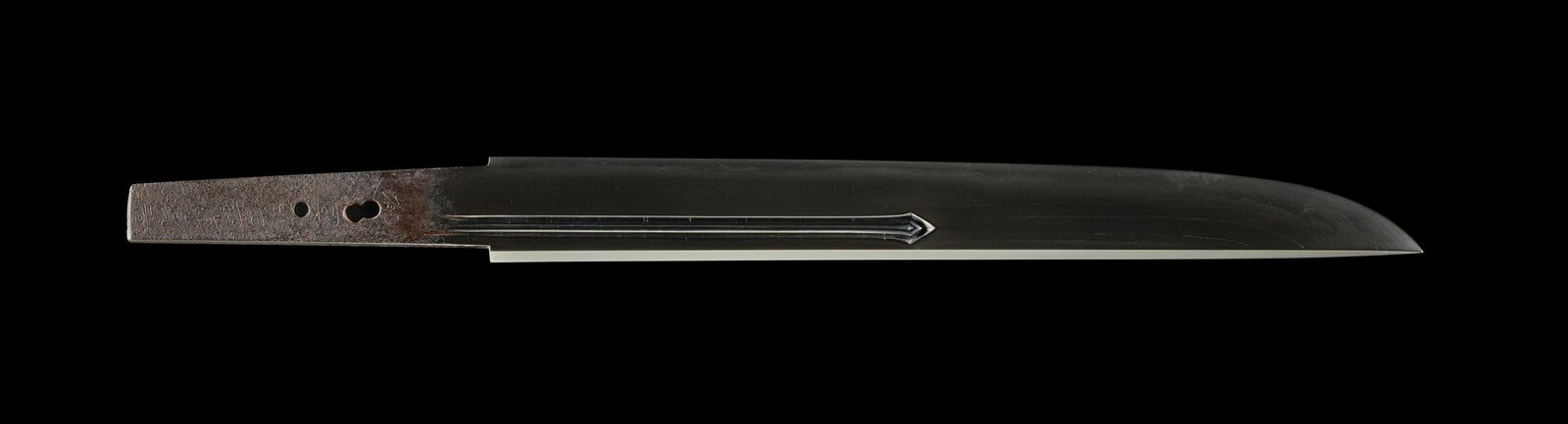
The tantō 大保昌 (Ōhōshō), by Sadayoshi, another smith of the school, in the Tokyo National Museum: one side, with its bōhi. Tokyo National Museum, via ColBase · ColBase terms of use · source 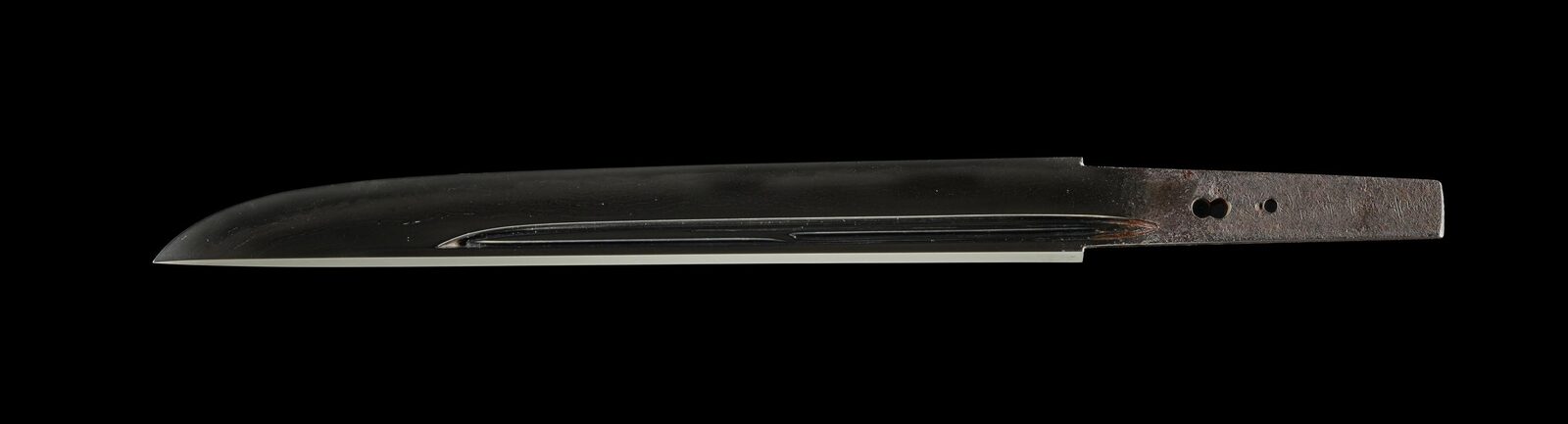
The Ōhōshō, the other side: the masame of the school and the tang ending in kiri. Tokyo National Museum, via ColBase · ColBase terms of use · source 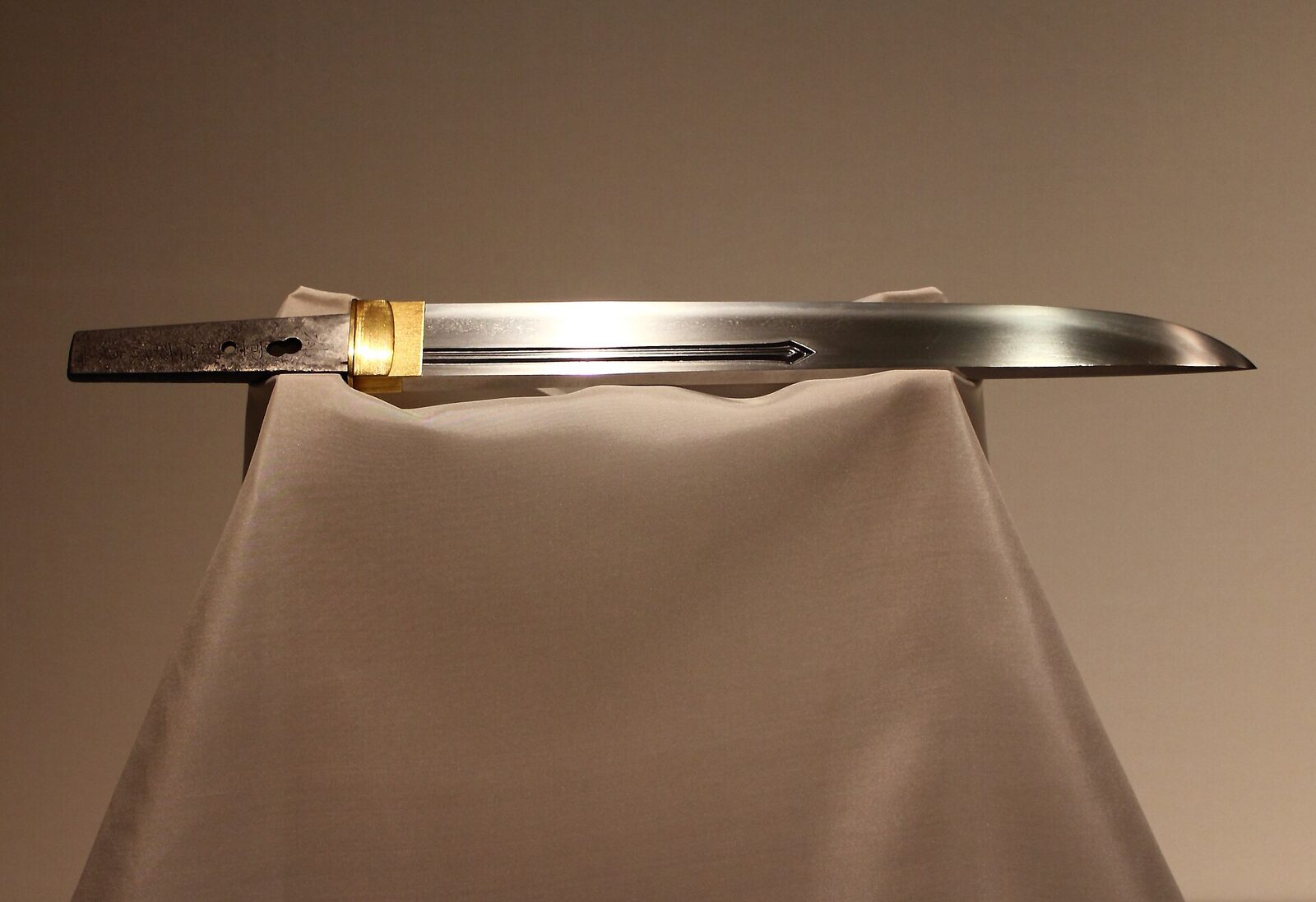
The Ōhōshō on display with its habaki. Kakidai, via Wikimedia Commons · CC BY-SA 3.0 · source
