On this page
Documented works
| Work | Designation | Where it is |
|---|---|---|
| Katana by the first generation signed 伊賀守藤原金道 (Iga no Kami Fujiwara Kinmichi), of 70.2 cm and 1.6 cm of curvature | Tokubetsu jūyō tōken of the NBTHK | Owner not stated |
| Tantō signed 伊賀守金道 (Iga no Kami Kinmichi), of 33 cm, from the Momoyama period or the 17th century | No designation | Kyoto National Museum (E甲322) |
| Naginata signed 伊賀守金道 (Iga no Kami Kinmichi) | No designation | Kyoto National Museum (E甲443) |
| Tantō signed 日本鍛冶宗匠伊賀守藤原金道 (Nihon kaji sōshō Iga no Kami Fujiwara Kinmichi), with the chrysanthemum and 除雷 (probable reading: jorai), of 1829 (Bunsei 12), in its black lacquer mounting | No designation | Tokyo National Museum (F-309) |
| Wakizashi signed 日本鍛冶宗匠伊賀守藤原金道 (Nihon kaji sōshō Iga no Kami Fujiwara Kinmichi), of 1835 (Tenpō 6) | No designation | Tokyo National Museum (F-20035) |
| Iron tsuba in mokkō shape, engraved in line, signed 伊賀守金道 (Iga no Kami Kinmichi) | No designation | Tokyo National Museum (F-19743) |
Two pieces
According to the NBTHK, the tokubetsu jūyō katana it discussed in 2019 is one of the three known blades of the first generation that add 藤原 (Fujiwara) to the signature. The commentary records that it was one of the favourite swords of Tani Kanjō, who defended Kumamoto castle against Saigō’s army.
The tantō of 1829 in the Tokyo National Museum bears the house’s title and the chrysanthemum in the signature, and its mounting, chrysanthemums on the scabbard and on the hilt: the mark of the title of Nihon kaji sōshō two centuries after the first generation.
In the lists
In the 『懐宝剣尺』 (Kaihō Kenjaku), the Yamada cutting list of 1797, the Japanese Wikipedia places the first Iga no Kami Kinmichi among the 業物 (wazamono), the fourth of its four grades, together with Izumi no Kami Kinmichi, the first and the second of that name.
No work of his designated a National Treasure or an Important Cultural Property is recorded in the sources consulted.
Gallery

Tantō signed 伊賀守金道 (Iga no Kami Kinmichi), from the Momoyama period or the 17th century, of 33 cm. Kyoto National Museum. Kyoto National Museum, via ColBase · ColBase terms of use · source 
Naginata signed 伊賀守金道 (Iga no Kami Kinmichi). Kyoto National Museum. Kyoto National Museum, via ColBase · ColBase terms of use · source 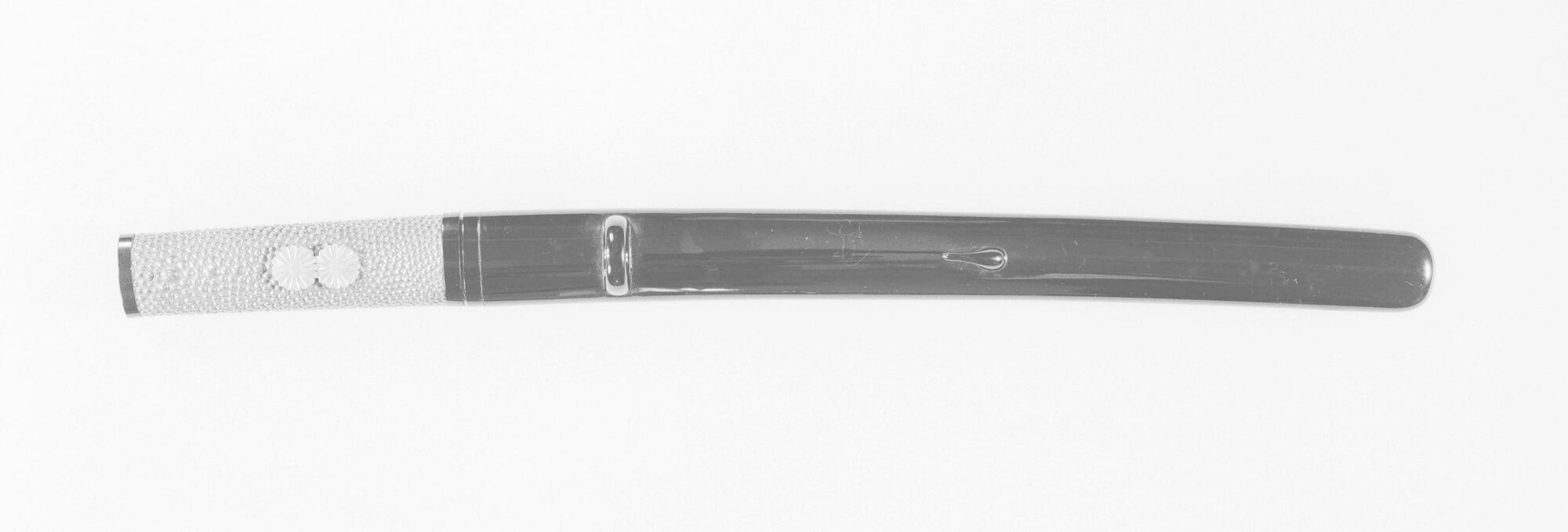
The black lacquer mounting without a guard (合口拵, aikuchi-goshirae) of the tantō of 1829 signed 日本鍛冶宗匠伊賀守藤原金道 (Nihon kaji sōshō Iga no Kami Fujiwara Kinmichi). Tokyo National Museum. Tokyo National Museum, via ColBase · ColBase terms of use · source 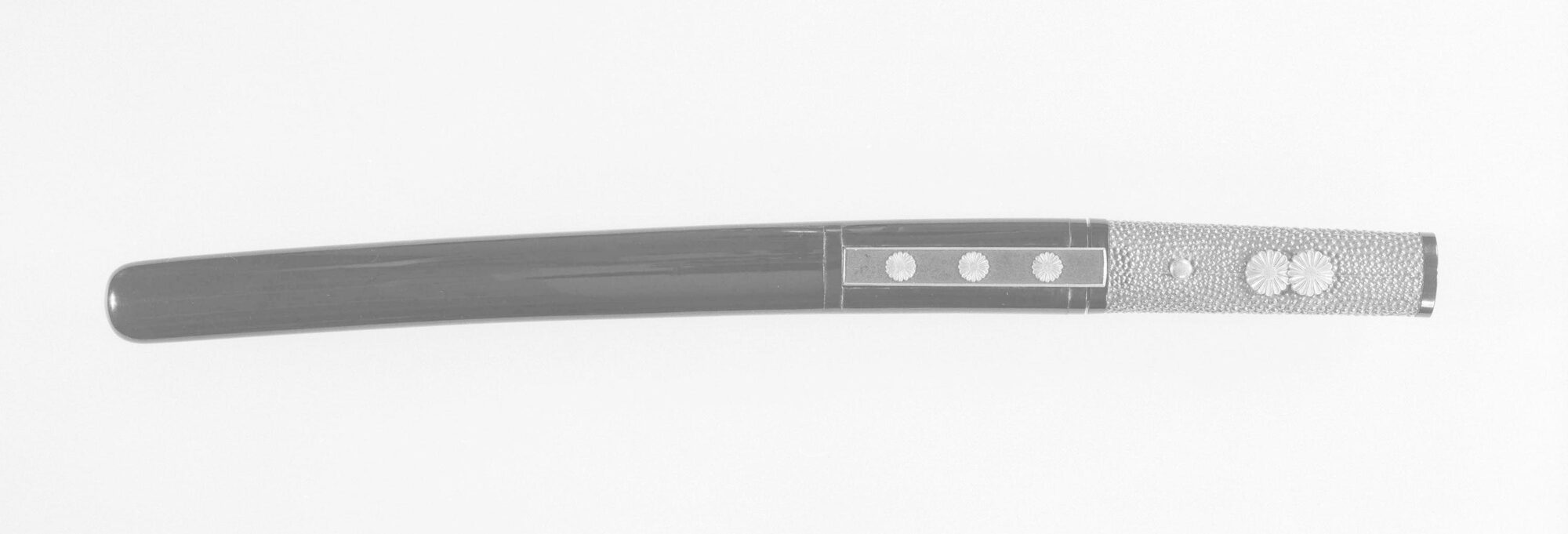
The same mounting, from the other side, with the chrysanthemums. Tokyo National Museum, via ColBase · ColBase terms of use · source