
On this page
Quick profile
- Name
- Kagemitsu, of Osafune; in the signature of a tachi of 1329 he styles himself 左兵衛尉 (Sahyōe-no-jō) HD
- Kanji and reading
- 景光 (Kagemitsu) HD
- Period
- Late Kamakura period; dated blades from Kagen 4 (1306) to Kenmu 1 (1334) AT
- Province
- Bizen (備前, Bizen), in Osafune (長船, Osafune), today Setouchi, in Okayama Prefecture AT
- School
- Osafune (長船派, Osafune-ha), third generation after Mitsutada and Nagamitsu AT
- Lineage
- Son of Nagamitsu (長光, Nagamitsu) and father of Kanemitsu (兼光, Kanemitsu), according to the traditional filiation of the school AT
- Documented fact and tradition
- Documented: signed and dated blades, three of them National Treasures. Tradition: his kinship with Kagemasa and that he invented the katai-ochi gunome AT
In short
He was the head of the Osafune school after Mitsutada and Nagamitsu, and the main line of the school descends from him and his son Kanemitsu. He made tachi, many tantō, naginata and ken; his very dense ko-itame, with a crisp midare-utsuri, is held to be the finest jigane of Osafune, and his hardening is more restrained than that of his elders.
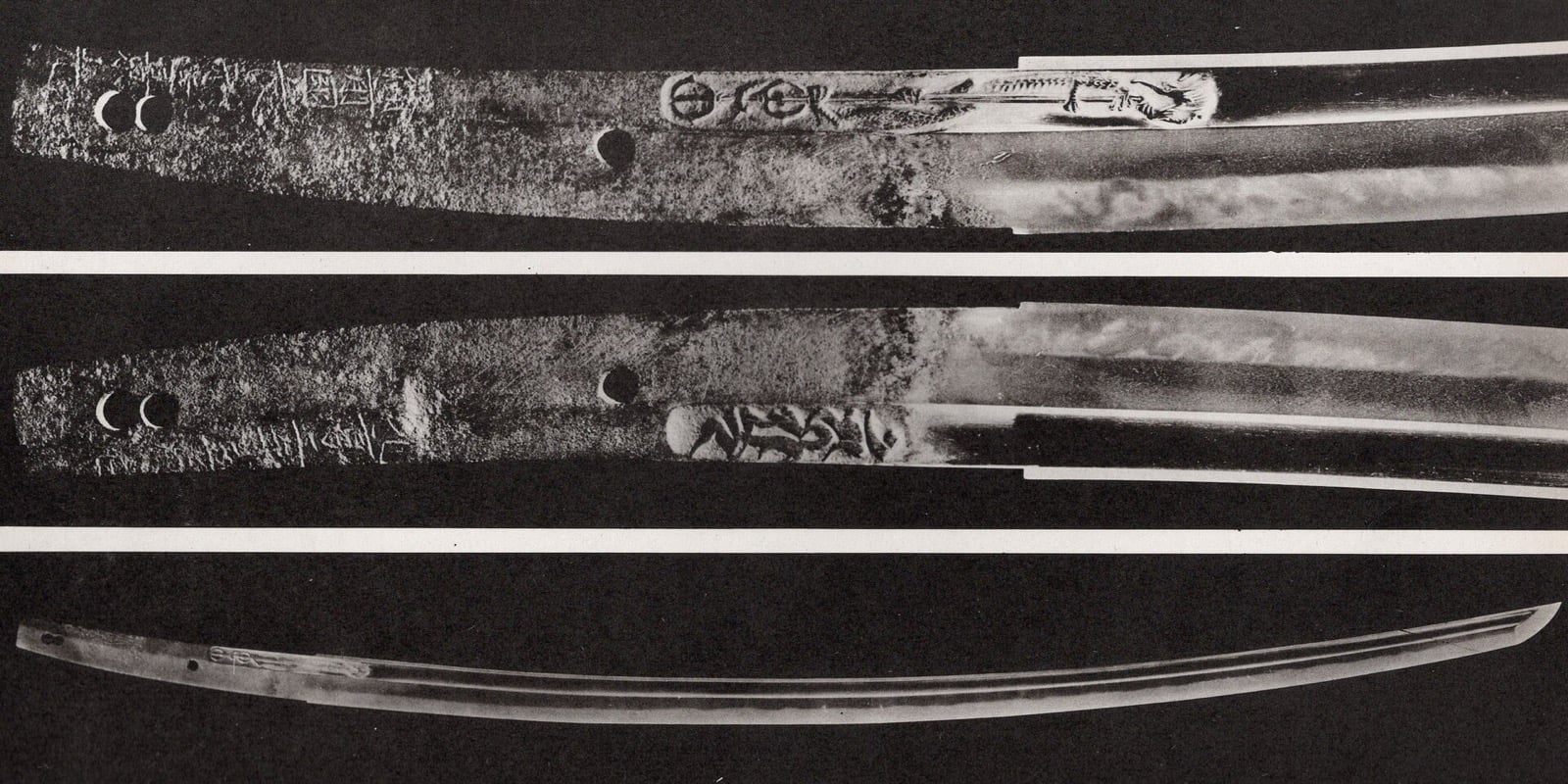
Three of his works are National Treasures (国宝, kokuhō) according to the official database of cultural properties: the tachi Koryū Kagemitsu, of 1322, in the Tokyo National Museum; the tantō Kenshin Kagemitsu, of 1323, and the tachi he signed with Kagemasa in 1329, both in the Saitama Prefectural Museum of History and Folklore. Japanese Wikipedia counts two: it leaves out the tachi with Kagemasa.
Sections
-
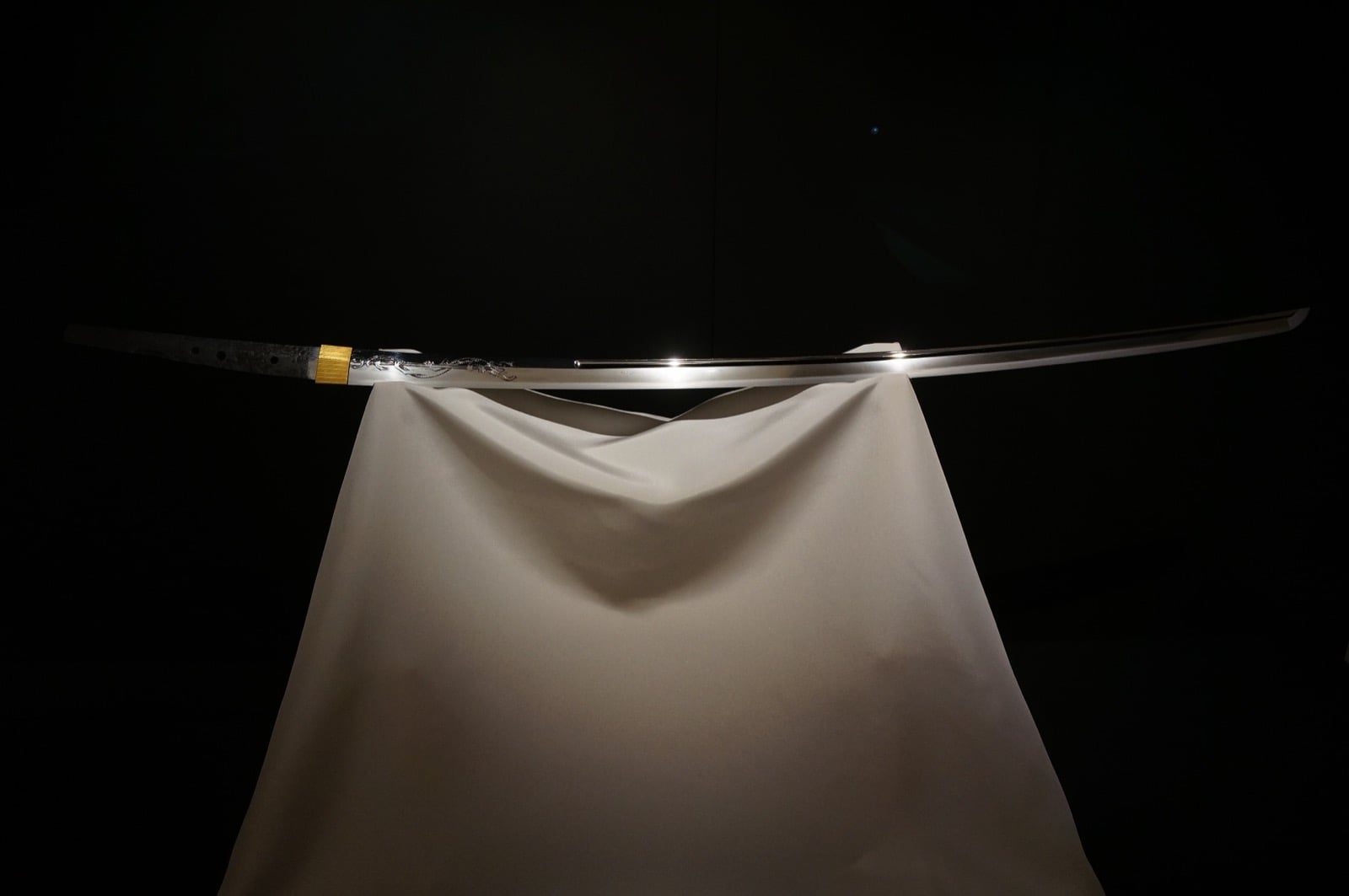 Between Nagamitsu and Kanemitsu
Life and times
The Osafune school, Kagemasa and the warriors who commissioned swords from him.
-
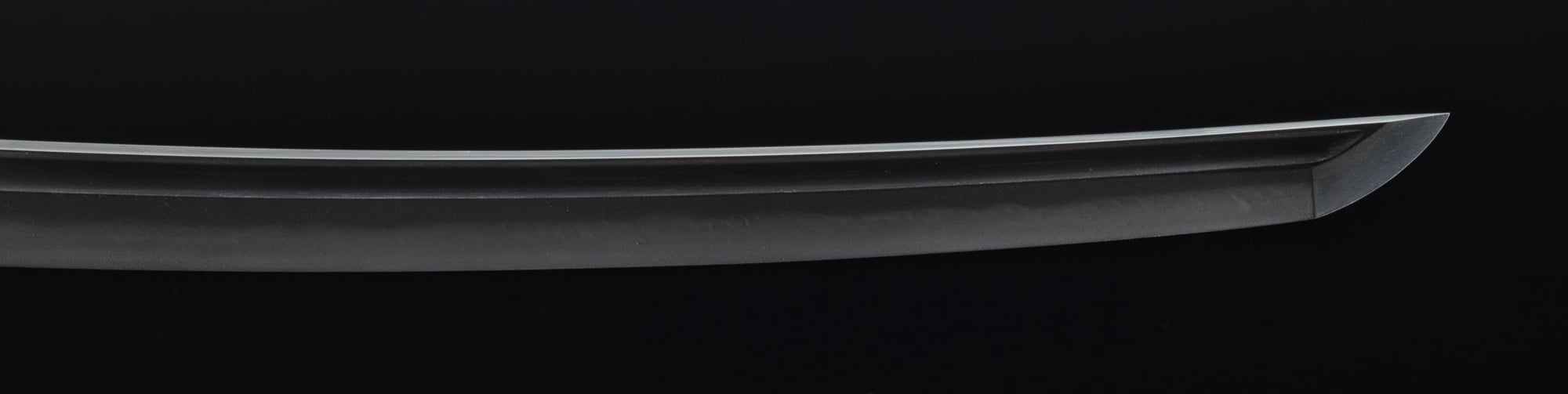 The finest jigane of Osafune
Work and style
Sugata, jihada, hamon, bōshi, nakago and mei: the keys to recognising him.
-
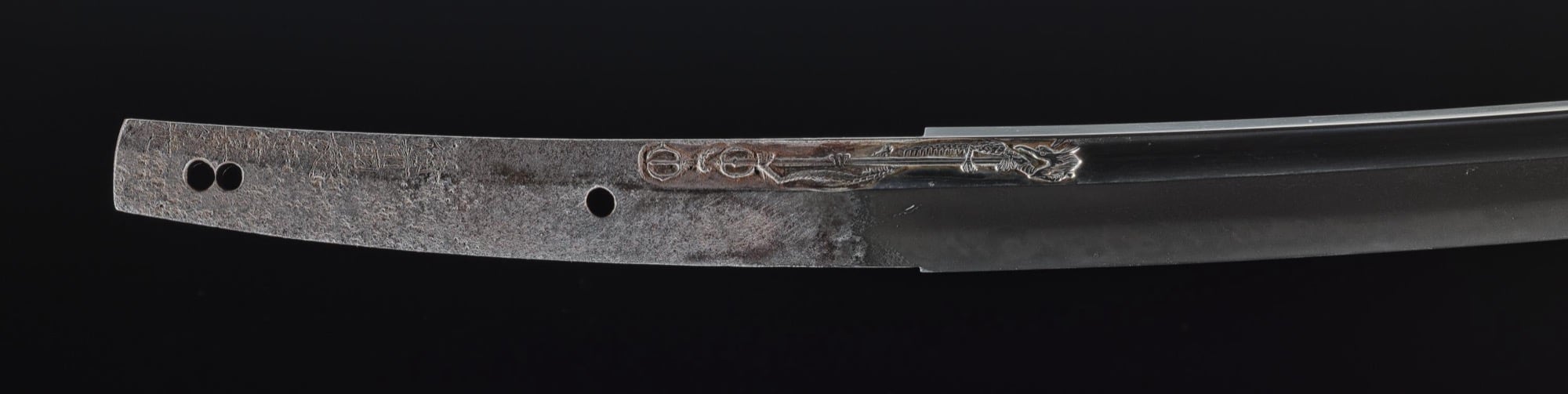 Three National Treasures
Famous works
The Koryū Kagemitsu, the Kenshin Kagemitsu, the tachi with Kagemasa and other works in museums and shrines.
-
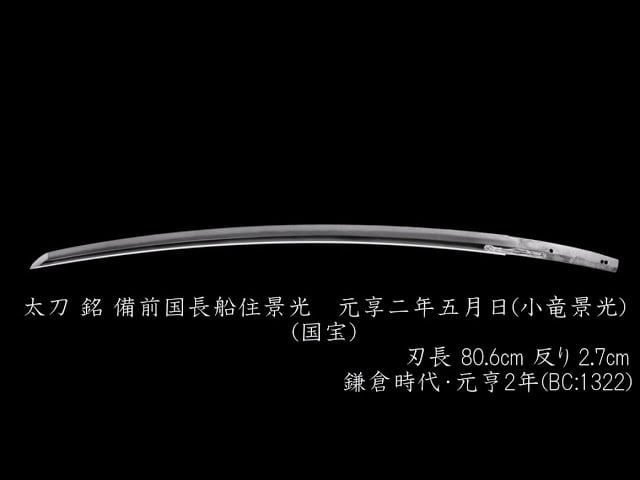 His National Treasures, on display
Videos
Three videos of his works on display.
-
 Bibliography and credits
Sources
The sources consulted and the image credits.