On this page
Kantei keys
- Sugata
- Tachi with funbari and a high koshizori, without the curve dying away towards the tip, of normal width and kissaki for the end of the Kamakura period. Many tantō, rare in his father’s work, of normal width and length and often with a furisode nakago; also naginata, ken and ko-dachi AT
- Jihada
- Very dense ko-itame, with a crisp midare-utsuri; held to be the finest jigane of the Osafune school AT
- Hamon
- Fewer ups and downs than in Mitsutada and Nagamitsu: suguha with ko-notare, suguha with ko-chōji, ko-gunome and katai-ochi gunome (片落ち互の目, katai-ochi gunome), a gunome with one sloping side AT
- Bōshi
- In the Koryū Kagemitsu, a somewhat pointed ko-maru HD
- Nakago
- In the Koryū Kagemitsu, shortened (suriage), 17.3 cm long and with three mekugi-ana; in the tachi with Kagemasa, intact (ubu), with a single mekugi-ana and a kurijiri tip HD
- Mei
- 備前国長船住景光 (Bizen no kuni Osafune-jū Kagemitsu) or 備州長船住景光 (Bishū Osafune-jū Kagemitsu) HD
In the museum records
The official record of the Koryū Kagemitsu describes a chū-suguha with ko-chōji and gunome, plenty of ashi and, overall, sakaashi, with a tight nioiguchi, and a somewhat pointed ko-maru bōshi. That of the Tokyo National Museum, in ColBase, speaks of a very compact ko-itame and of a suguha with slanting ashi, and points out in the hardening some semicircular shapes with one angular side, frequent in Kagemitsu and his pupils.
The record of the Koryū Kagemitsu in e-Museum sums it up like this: he differs from his father Nagamitsu in being less showy, but the brilliance of his jigane is remarkable.
Did he invent the katai-ochi gunome?
The sources disagree: the Japanese Wikipedia article on Kagemitsu says he is considered its creator; the one on the Kenshin Kagemitsu, that his father Nagamitsu created it and he perfected it.
The Koryū Kagemitsu, up close
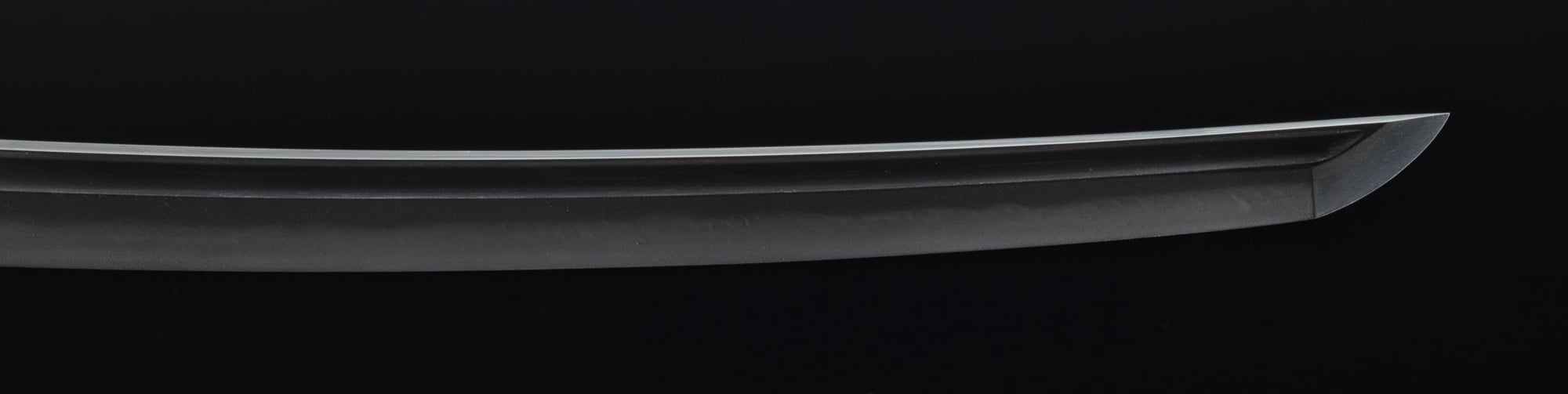
The Koryū Kagemitsu: the tip and the bōshi, omote side. Tokyo National Museum, via ColBase · ColBase terms of use · source 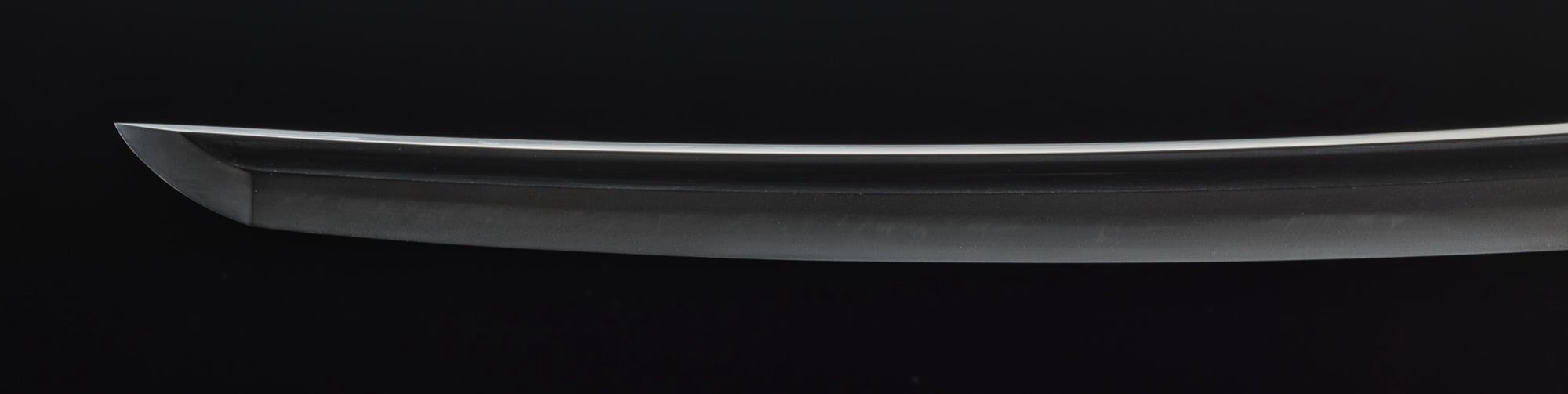
The Koryū Kagemitsu: the tip and the bōshi, ura side. Tokyo National Museum, via ColBase · ColBase terms of use · source 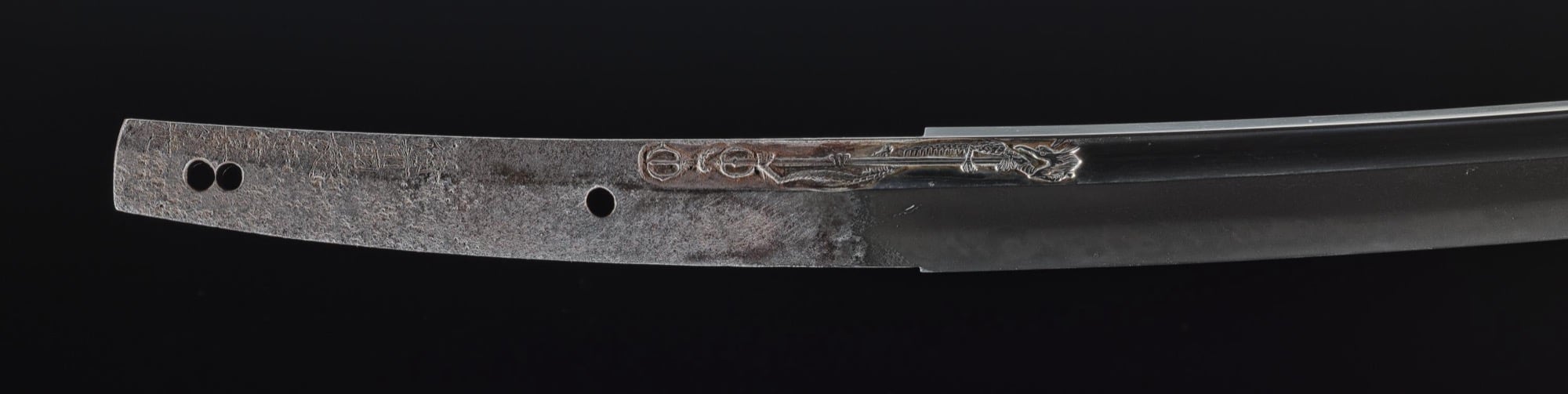
The Koryū Kagemitsu: the shortened tang and the kurikara dragon in relief, omote side. Tokyo National Museum, via ColBase · ColBase terms of use · source 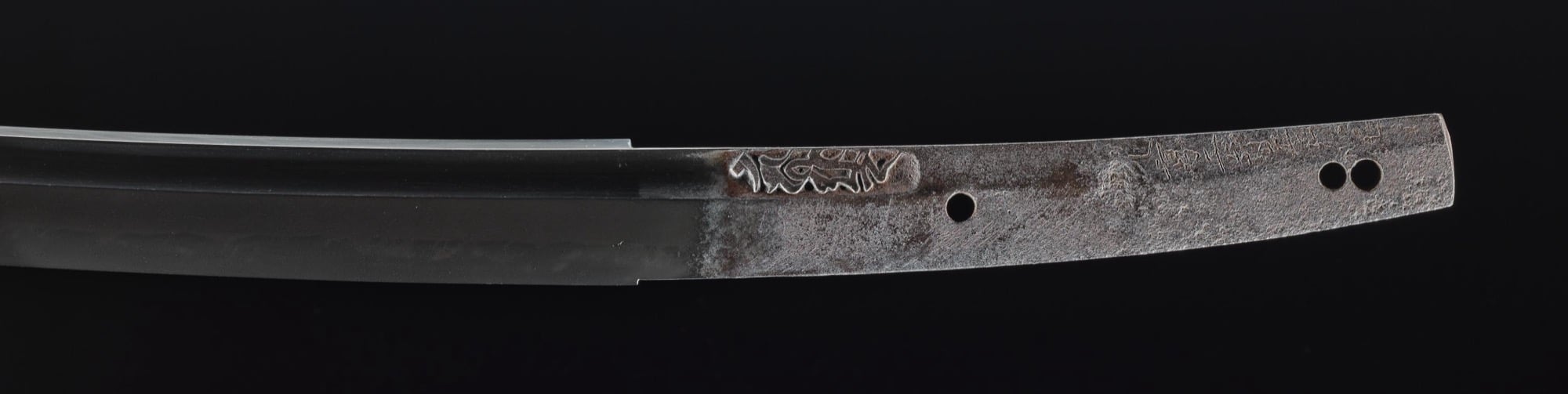
The Koryū Kagemitsu: the tang and the bonji in relief, ura side. Tokyo National Museum, via ColBase · ColBase terms of use · source