On this page
Koryū Kagemitsu (小竜景光)
Tachi signed 備前国長船住景光 (Bizen no kuni Osafune-jū Kagemitsu) and dated in the fifth month of Genkō 2 (1322). A National Treasure since 1952, in the Tokyo National Museum. The official database gives it a blade of 73.6 cm and a sori of 3.0 cm; it has been shortened, and in the groove (hi) of the front it bears a kurikara dragon in relief and on the back, a bonji. The measurements do not agree: Japanese Wikipedia gives a blade of 73.93 cm, and the e-Museum record, 80.6 cm.
It is also called 楠公景光 (Nankō Kagemitsu) and 覗き竜景光 (Nozoki-ryū Kagemitsu). Tradition makes it the sword of Kusunoki Masashige, which Fukunaga considers highly doubtful; it passed through Yamada Asaemon and Ii Naosuke, reached Emperor Meiji in 1873 and, after the war, the Tokyo National Museum. That Emperor Meiji wore it is accepted by Satō Kanzan and denied by Fukunaga.
The Koryū Kagemitsu

The Koryū Kagemitsu, ura side. Tokyo National Museum, via ColBase · ColBase terms of use · source 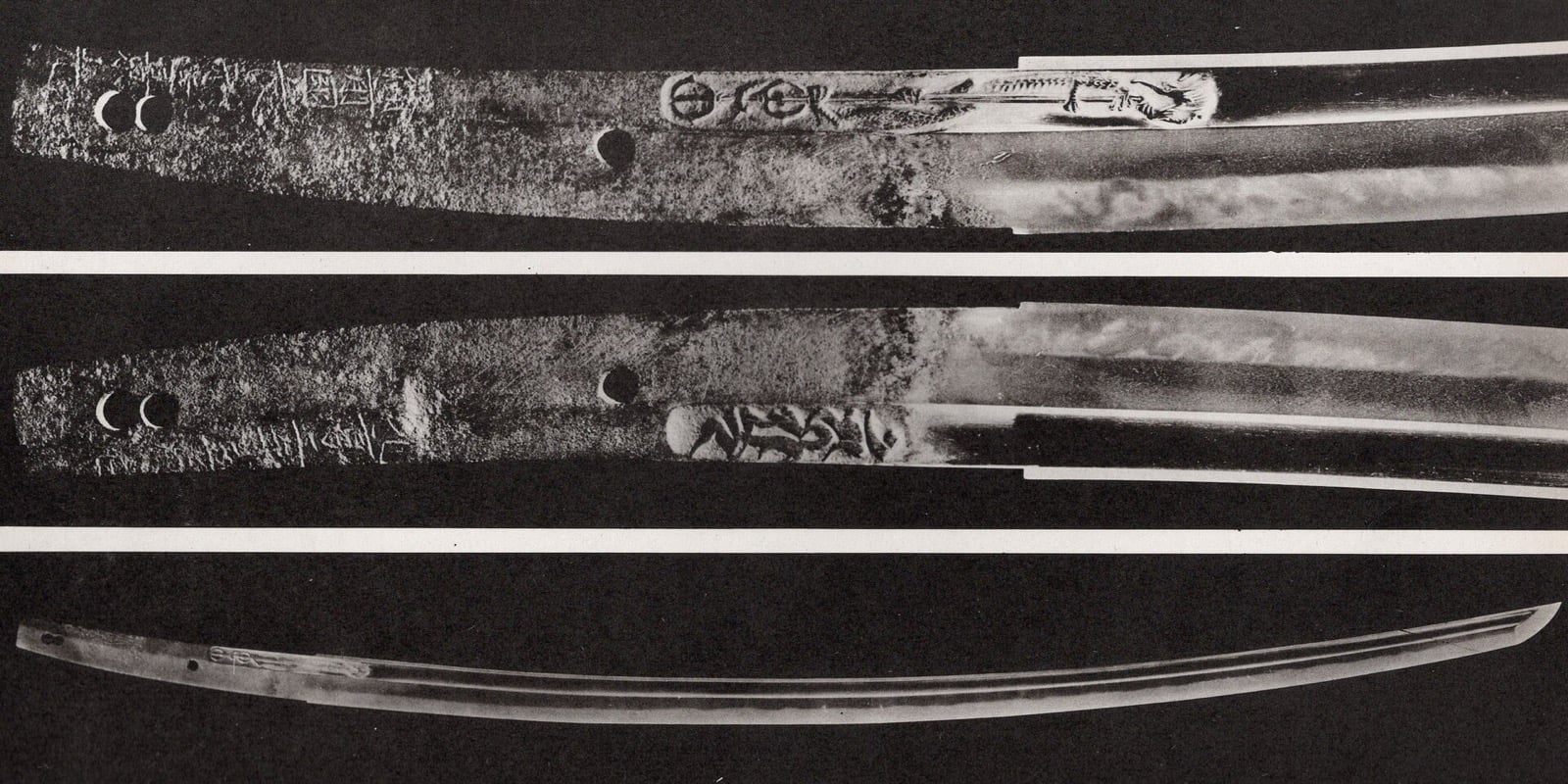
The Koryū Kagemitsu in a plate of the 『国宝図録』 (Kokuhō Zuroku), the 1952 catalogue of National Treasures. 文化財協会 (Bunkazai Kyōkai), public domain, via Wikimedia Commons · Public domain · source 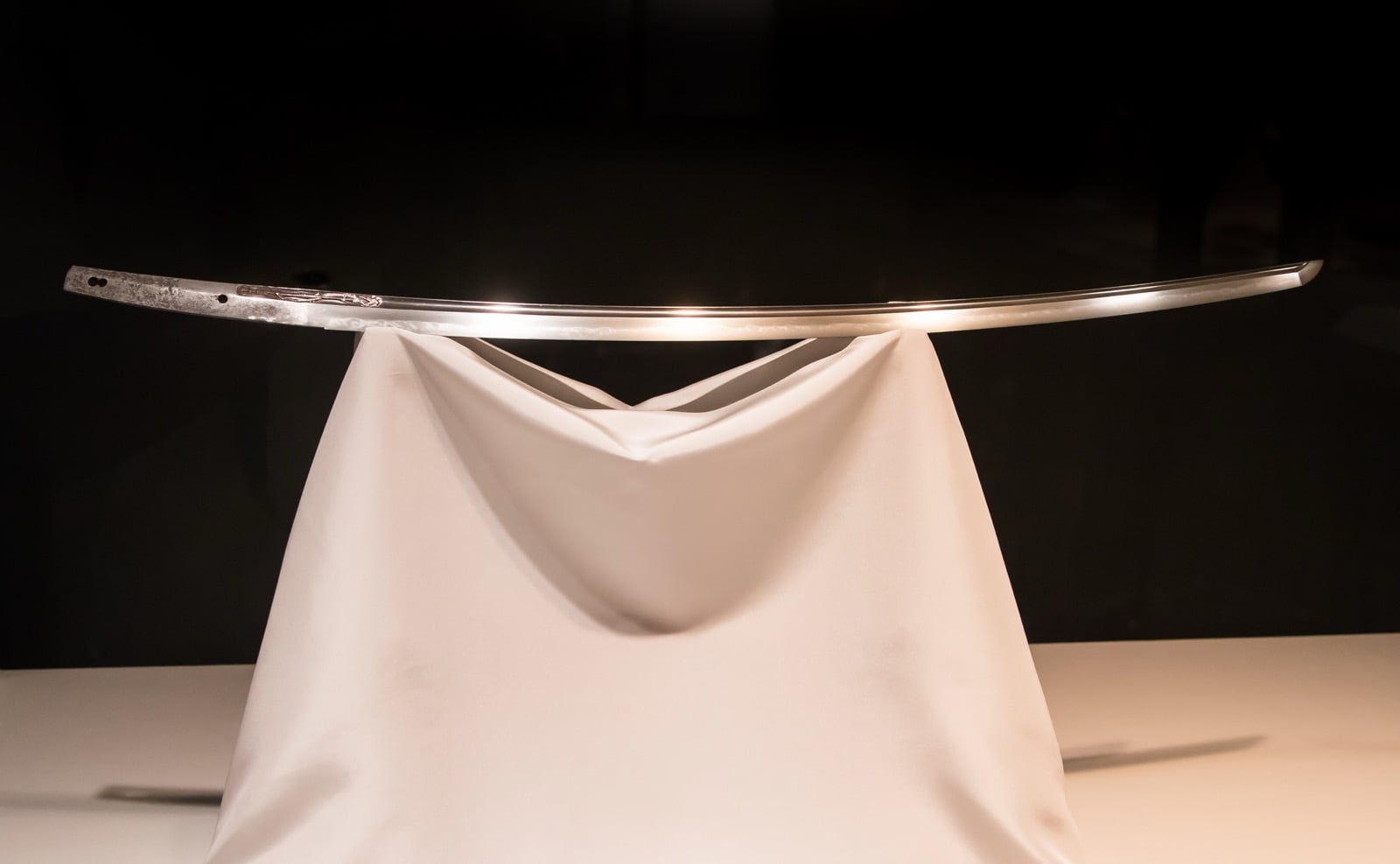
The Koryū Kagemitsu on display at the Tokyo National Museum. Kakidai, CC BY-SA 4.0, via Wikimedia Commons · CC BY-SA 4.0 · source 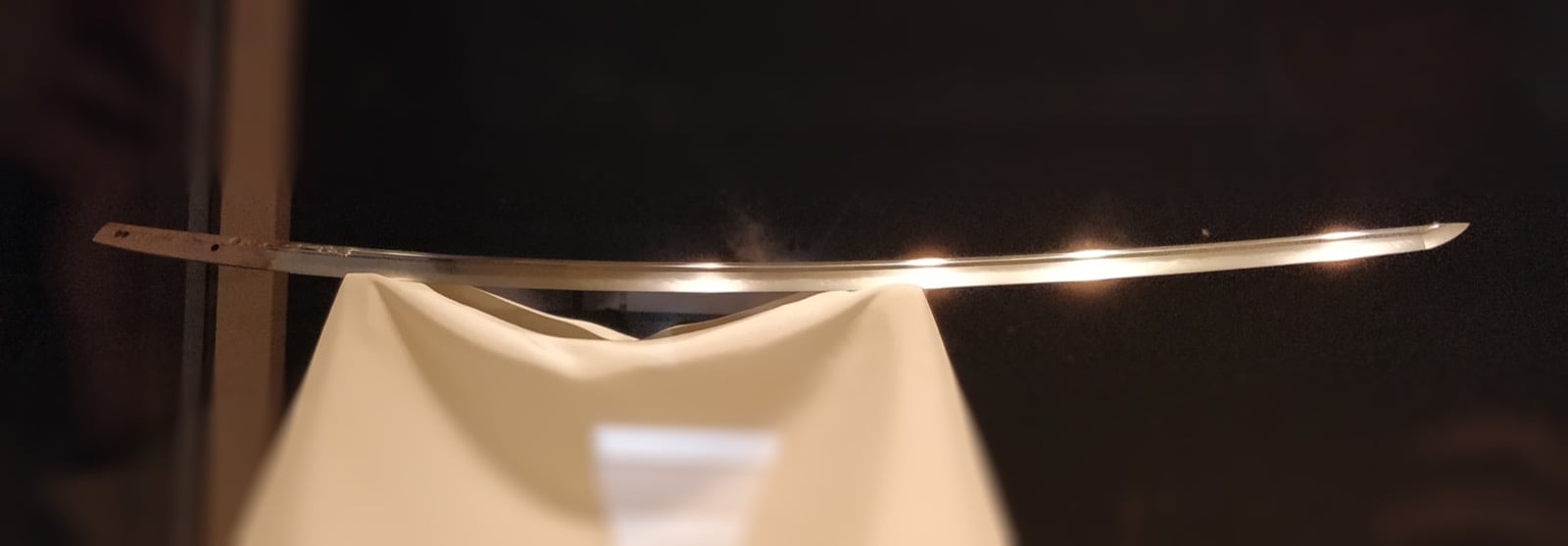
The Koryū Kagemitsu in its display case at the Tokyo National Museum. Underbar dk, CC BY-SA 4.0, via Wikimedia Commons · CC BY-SA 4.0 · source 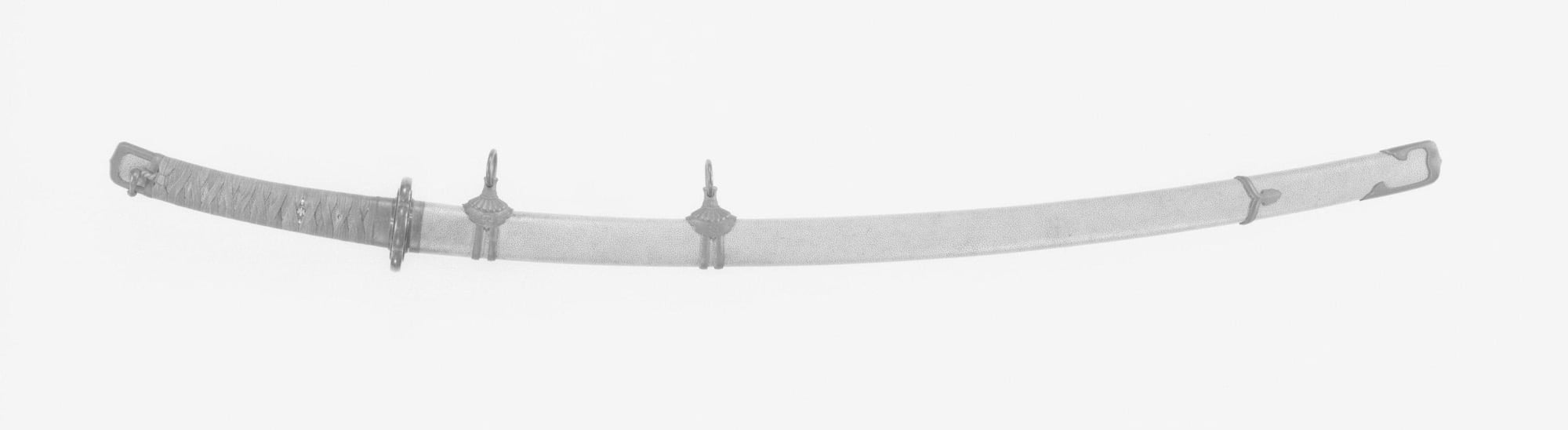
Tachi mounting photographed with the blade, under the same Tokyo National Museum number (F-130). Tokyo National Museum, via ColBase · ColBase terms of use · source


Kenshin Kagemitsu (謙信景光)
Tantō signed 備州長船住景光 (Bishū Osafune-jū Kagemitsu) and dated in the third month of Genkō 3 (1323), with its mounting 小サ刀拵 (chiisa-gatana koshirae). Important Cultural Property in 1952 and National Treasure in 1956; it is in the Saitama Prefectural Museum of History and Folklore.
According to Japanese Wikipedia it measures 28.3 cm, is hira-zukuri with an iori-mune, bears the engraving 秩父大菩薩 (Chichibu Daibosatsu) on the front and the bonji kiriku on the back, and its hardening is a katai-ochi gunome. It was commissioned by Ōkawara Tokimoto; it passed to the Uesugi house, hence its name: Uesugi Kenshin always carried it with him.
The tachi of Kagemitsu and Kagemasa
Tachi signed 備前国長船住左兵衛尉景光 作者進士三郎景政 (Bizen no kuni Osafune-jū Sahyōe-no-jō Kagemitsu, sakusha Shinji Saburō Kagemasa), with the date 嘉暦二二年己巳七月日 (Karyaku ni ni nen tsuchinoto-mi shichigatsu hi), that is, the seventh month of Karyaku 4 (1329). Designated in 1937 under the old law and National Treasure in 1954, in the Saitama Prefectural Museum of History and Folklore. The blade measures 82.7 cm, with a sori of 2.6 cm; it keeps its intact tang, of 23.2 cm, with a kurijiri tip, one mekugi-ana and a signature on both sides. The hardening is straight, with gunome and ashi.
In the imperial collection
The Imperial Household keeps a tachi (御物, gyobutsu) also signed by Kagemitsu and Kagemasa, with 秩父大菩薩 (Chichibu Daibosatsu) and a bonji, which is supposed to have been commissioned at the same time as the Kenshin Kagemitsu. Its date is unclear: Japanese Wikipedia gives Genkō 3 (1323) in the article on Kagemitsu and an inscription of Shōchū 2 (1325) in the one on the Kenshin Kagemitsu.

Other work
Naginata signed 備州長船住景光 (Bishū Osafune-jū Kagemitsu) and dated in the eighth month of Genkō 2 (1322): an Important Cultural Property, in the Tokyo National Museum, with a blade of 51.5 cm and a sori of 2.7 cm. Japanese Wikipedia dates it to 1332, because it confuses that Genkō era (元亨, Genkō) with the other of the same name (元弘, Genkō); the museum gives 1322.
The tachi that Takeda Shingen offered to the Fujisan Hongū Sengen Taisha bears 南无薬師瑠璃光如来 (Namu Yakushi Rurikō Nyorai) on the front, measures 77.3 cm, with a sori of 2.8 cm, has a suguha hardening and keeps its itomaki-tachi mounting, described in the Shūko Jisshu. In 2021 the NBTHK showed in its exhibition 珠玉の名品展 (Shugyoku no meihinten) a tantō of 29.2 cm signed 備州長船住景光 (Bishū Osafune-jū Kagemitsu) and dated Shōkei 1 (1332), from a private collection.
Japanese Wikipedia lists some fourteen Important Cultural Properties (重要文化財, jūyō bunkazai) of his, among them tachi of 1306, 1316 and 1322; several are in private collections and one, whereabouts unknown.
In the old lists
He does not appear in the list of wazamono given by Japanese Wikipedia, and no work of his has been found in the Kyōhō meibutsuchō (享保名物帳, Kyōhō meibutsuchō); this remains to be checked in the text of the register itself.