The Juzumaru
| Work | Rank | Where it is |
|---|---|---|
| Tachi signed “Tsunetsugu”, meibutsu Juzumaru (数珠丸, Juzumaru) | Designated on 13 April 1922 as a National Treasure of the time; today, Important Cultural Property (重要文化財, jūyō bunkazai) | Honkō-ji temple, Amagasaki (Hyōgo) |
- It is one of the meibutsu of the 享保名物帳 (Kyōhō meibutsuchō), the list of celebrated swords of the Kyōhō era.
- It is one of the five swords under heaven (天下五剣, tenka goken), with the Dōjigiri, the Onimaru, the Mikazuki and the Ōdenta. The English Wikipedia relates that of the five, three are National Treasures, one is a property of the imperial household and one, the Juzumaru, is a sacred relic of Nichiren Buddhism.
- The Japanese Wikipedia gives it a length of 83.7 cm.
The tachi of Tsuchiura
A tachi signed “Tsunetsugu” of the Kamakura period, at the Tsuchiura city museum (Ibaraki), has been an Important Cultural Property since 29 August 1950. Its record neither says which school it belongs to nor describes it.
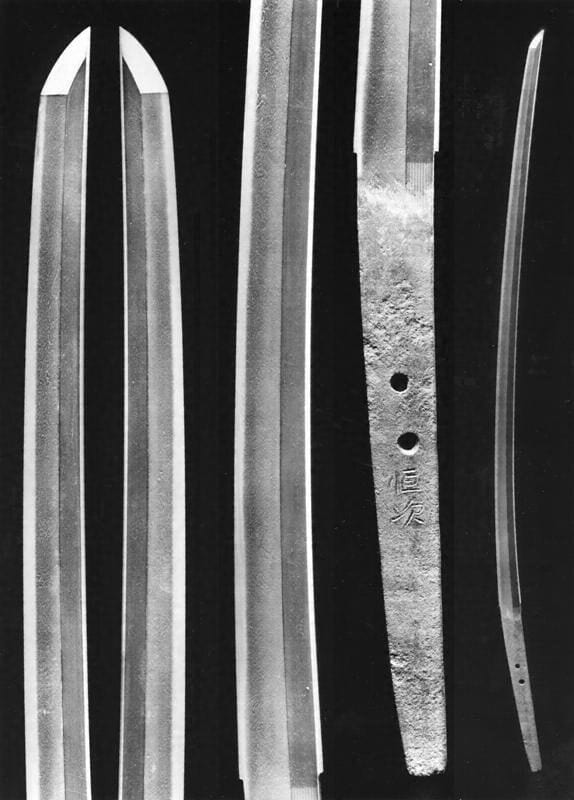
With the same name, but from Aoe
- The tachi signed “Tsunetsugu” at the Kyūshū National Museum, from Bitchū, with no national designation in its record.
- The tachi of Sahyōe-no-jō Tsunetsugu of Manju-shō, in Bitchū, dated 1330, with its katana mounting and a certificate by Hon'ami Kōjō.