On this page
Kantei keys
- Sugata. Toriizori curvature, with normal width and thickness; the museum’s katana has a 70.3 cm blade and 1.5 cm of curvature.
- Jihada. Itame with ji-nie, and masame in the shinogi-ji.
- Hamon. Gunome-midare with points (togari-ba) here and there, and a ko-midare next to the habaki.
- Horimono. On the museum’s katana, a groove on one side and, on the other, a sword with a vajra-shaped hilt (三鈷剣, sankoken) in relief, as can be seen in the museum’s photo.
- Nakago and mei. A single hole (mekugi-ana) and the signature 大和大掾藤原正則 (Yamato Daijō Fujiwara Masanori).
What is not on record
None of the sources consulted describes Masanori’s bōshi or compares his work with that of the second generation; the description of his style comes from a single blade.
Gallery
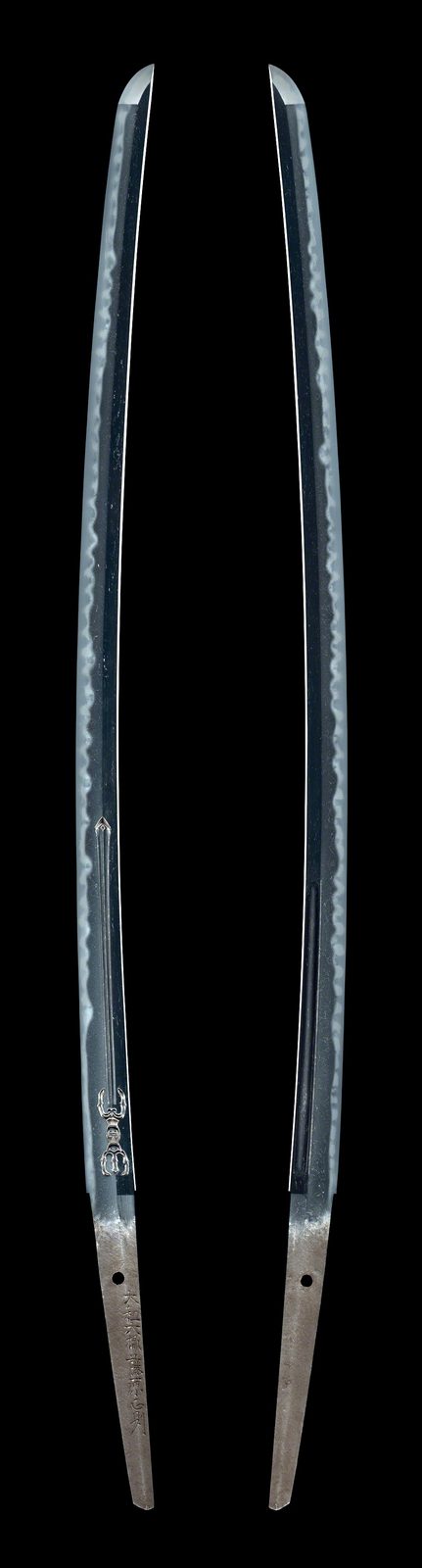
Katana signed 大和大掾藤原正則 (Yamato Daijō Fujiwara Masanori), both sides. Tokyo Fuji Art Museum. Tokyo Fuji Art Museum · CC0 1.0 · source 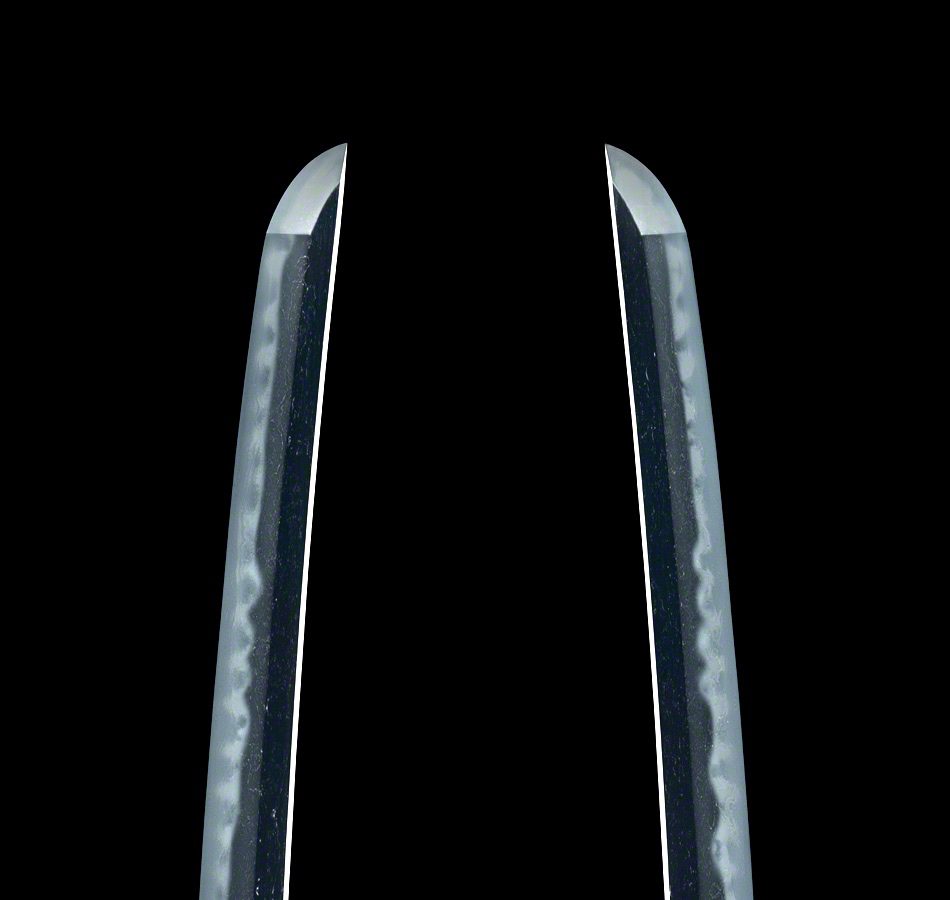
The point of the museum’s katana, both sides. Tokyo Fuji Art Museum · CC0 1.0 · source 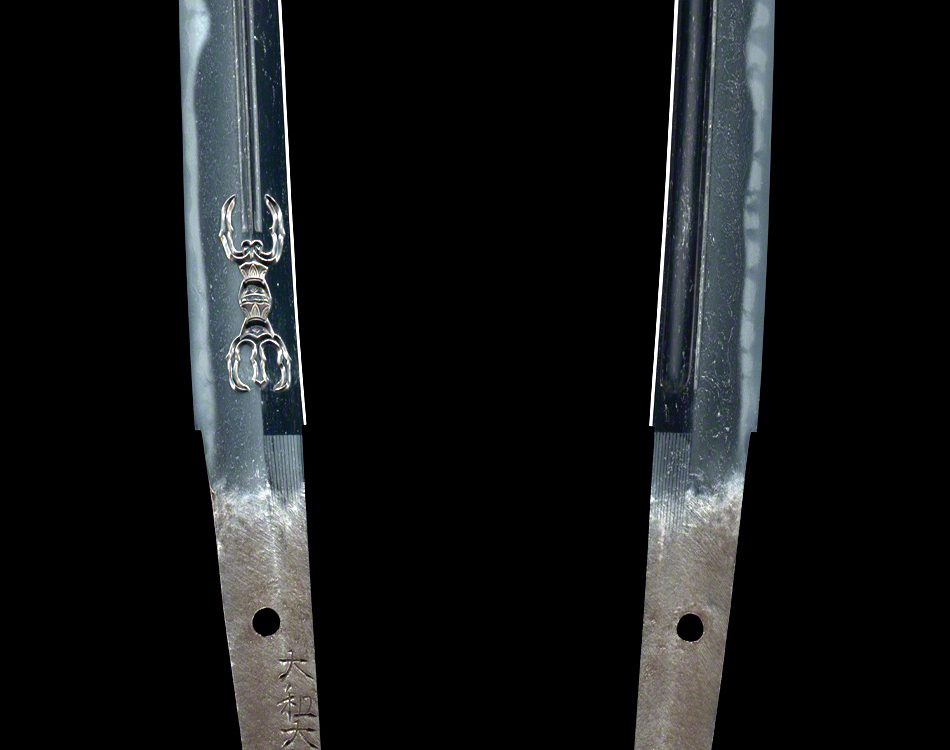
The carvings next to the tang: the sword with a vajra hilt on one side and the groove on the other. Tokyo Fuji Art Museum · CC0 1.0 · source 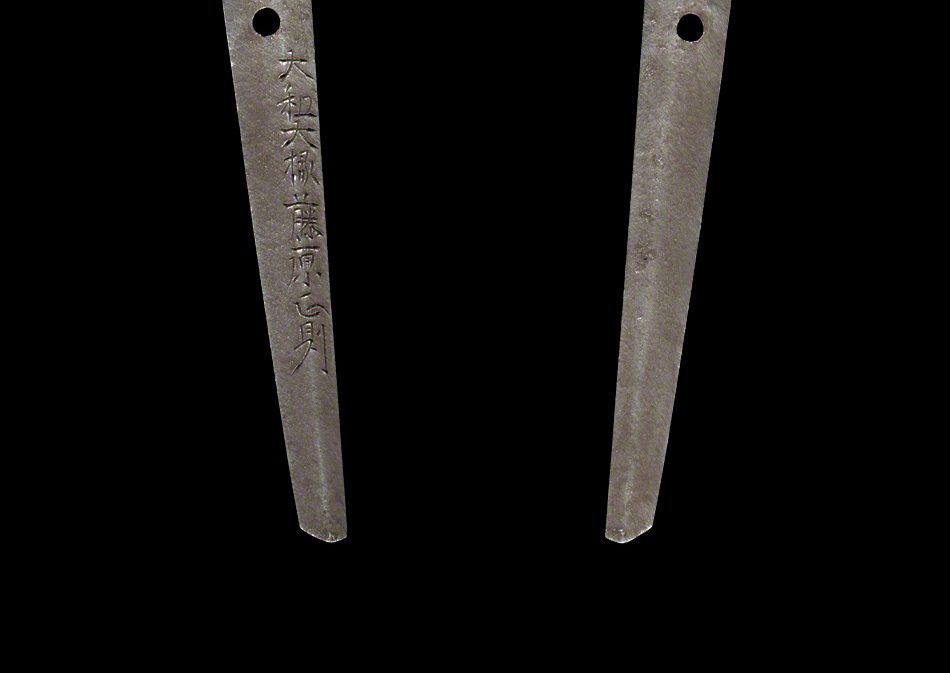
The tang of the museum’s katana, with the signature 大和大掾藤原正則 (Yamato Daijō Fujiwara Masanori). Tokyo Fuji Art Museum · CC0 1.0 · source