On this page
Style
He focused on the Sōshū tradition (相州伝, Sōshū-den) and took Kiyomaro, Sadamune and Kaneuji as his models. In his late work the temper (焼刃, yakiba) is more active, and the steel more open and with more colour. His blades are described as wide and thick, with a refined steel and temper.
His blades
- February 1977. Katana signed 信濃國住宮入清平作 (Shinano no Kuni-jū Miyairi Kiyohira saku) and dated 昭和五十二年二月吉日 (Shōwa gojūni-nen nigatsu kichijitsu). It measures 79 cm.
- A tantō signed 源清宗 (Minamoto Kiyomune), with grooves along the back on both sides. With that signature it is work from 1989 or later.
- A tantō in 冠落造 (kanmuri-otoshi-zukuri) signed 宮入清平作 (Miyairi Kiyohira saku).
- Sacred swords for the Ise shrine, in 1962 and in 1985. They are on record neither at the shrine’s museum nor in the town of Sakaki’s page.
Two of his blades

Katana of February 1977, whole. Photo: dealer in Japan 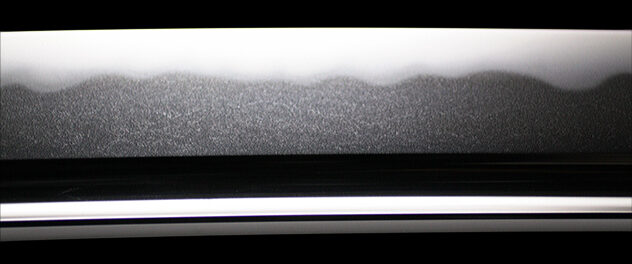
The temper of the 1977 katana. Photo: dealer in Japan 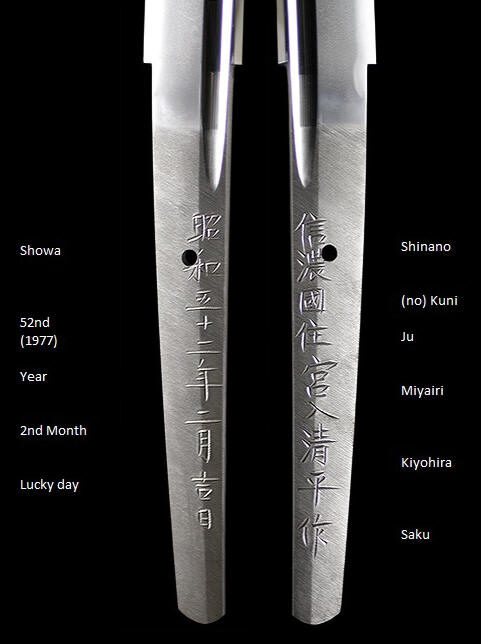
The signature, 信濃國住宮入清平作 (Shinano no Kuni-jū Miyairi Kiyohira saku), and the date, 昭和五十二年二月吉日 (Shōwa gojūni-nen nigatsu kichijitsu): February 1977. Photo: dealer in Japan 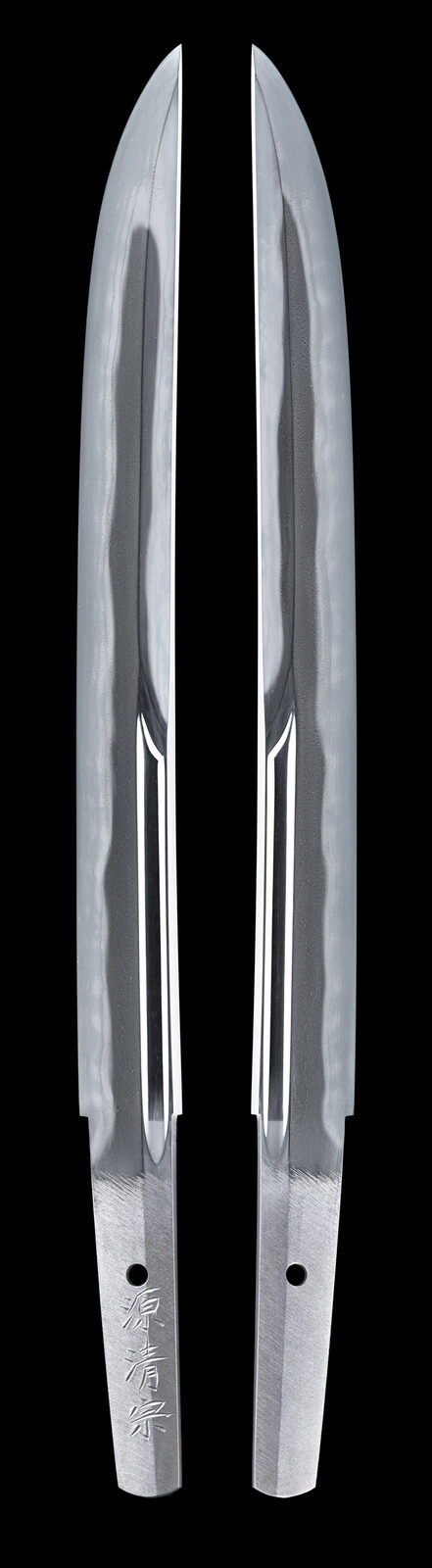
Tantō signed 源清宗 (Minamoto Kiyomune), on both sides. Photo: dealer in Japan 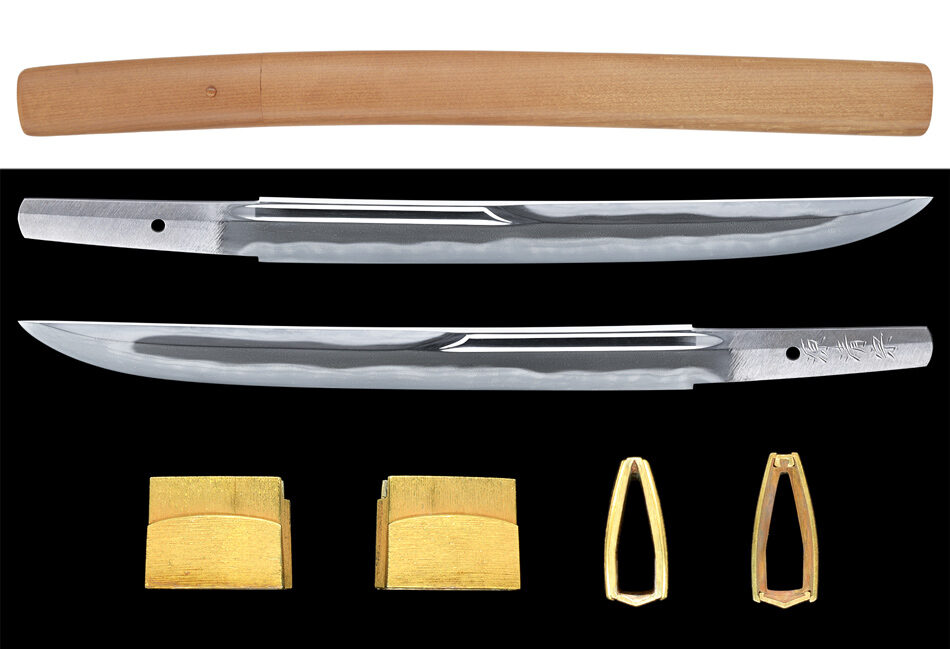
Kiyomune’s tantō with its wooden scabbard and its habaki. Photo: dealer in Japan