On this page
His style
He was strongly marked by 源清麿 (Minamoto Kiyomaro), and he is held to be a master of the Kiyomaro copy (清麿写, Kiyomaro utsushi). His hamon is of gunome midare and of gunome-chōji, round-headed gunome in the manner of chōji, and in the hira-ji the whitish streaks called shirage are often seen.
He is credited with very powerful works in the Sōshū-den and with copies of famous swords: of the 山姥切 (Yamanba-giri) of 長義 (Chōgi), of the tantō 有楽来国光 (Yūraku Rai Kunimitsu), which is a National Treasure, and of single-bevelled katana by 志津三郎兼氏 (Shizu Saburō Kaneuji).
Works
- Katana of March 1984, 74 cm long, signed 源盛吉 (Minamoto Moriyoshi), in a private foundation in Japan.
- Katana of August 1986, 78.8 cm long, signed 肥州八代住源盛吉 (Hishū Yatsushiro jū Minamoto Moriyoshi), in the same foundation.
- Tantō of 27.4 cm, a copy of the tantō 有楽来国光 (Yūraku Rai Kunimitsu), in the same foundation.
- Katana of August 1972, 72.8 cm long, a copy of Chōgi’s Yamanba-giri, made on commission.
- The katana in the photos, 64.6 cm long and single-bevelled (kata-kiriha-zukuri): jihada of itame with mokume and, in places, masame, with thick ji-nie; hamon of koshi-notare with gunome and much sunagashi.
A single-bevelled katana
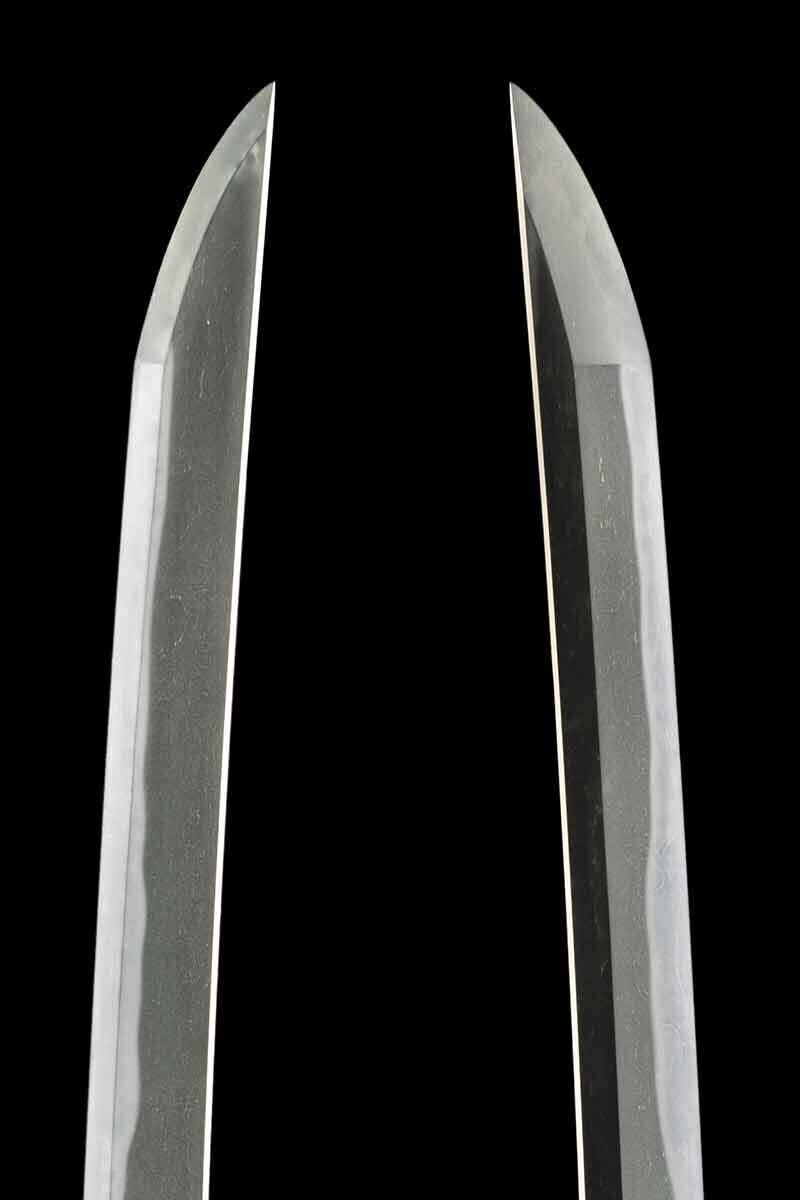
A single-bevelled katana of his (kata-kiriha-zukuri): the point. Photo: dealer in Japan 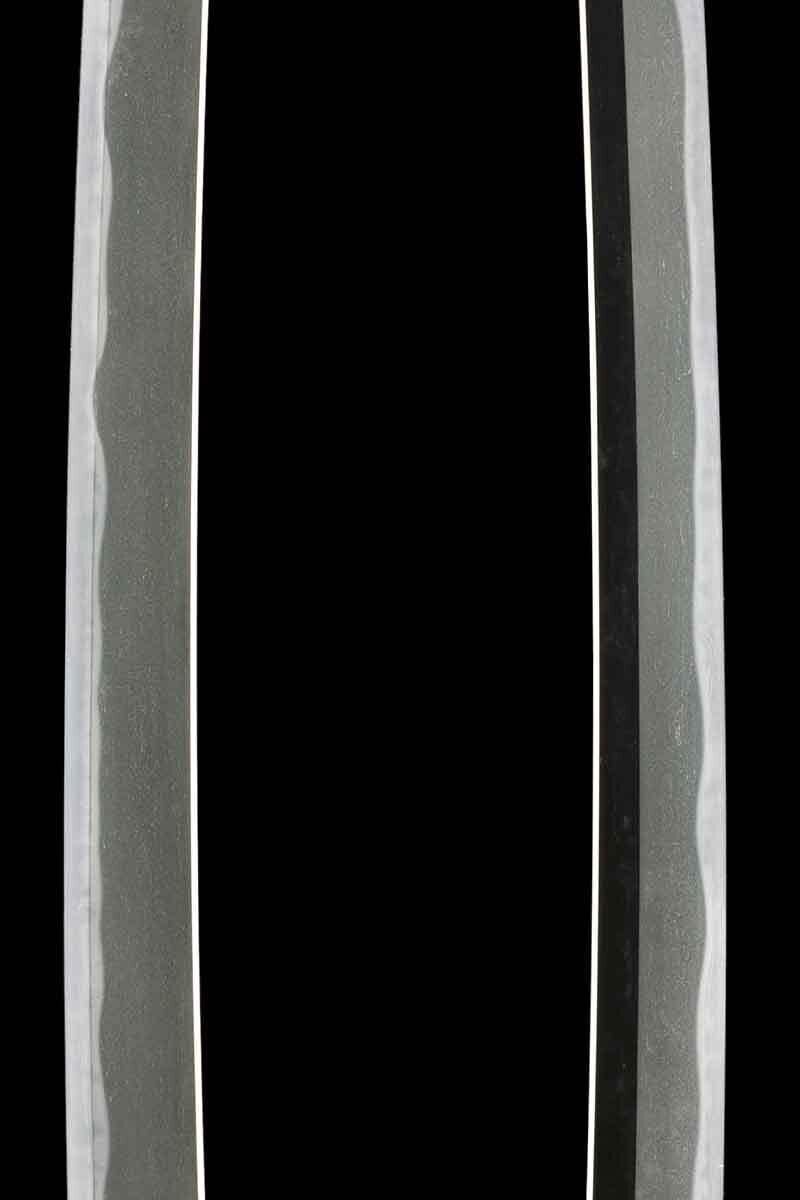
The same katana: the temper line. Photo: dealer in Japan 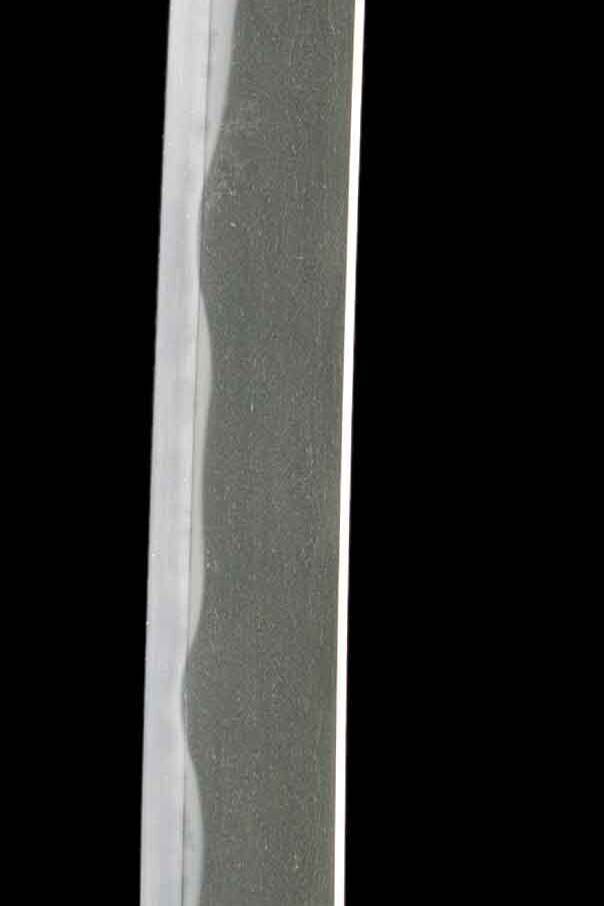
The same katana: the notare of the temper line, close up. Photo: dealer in Japan 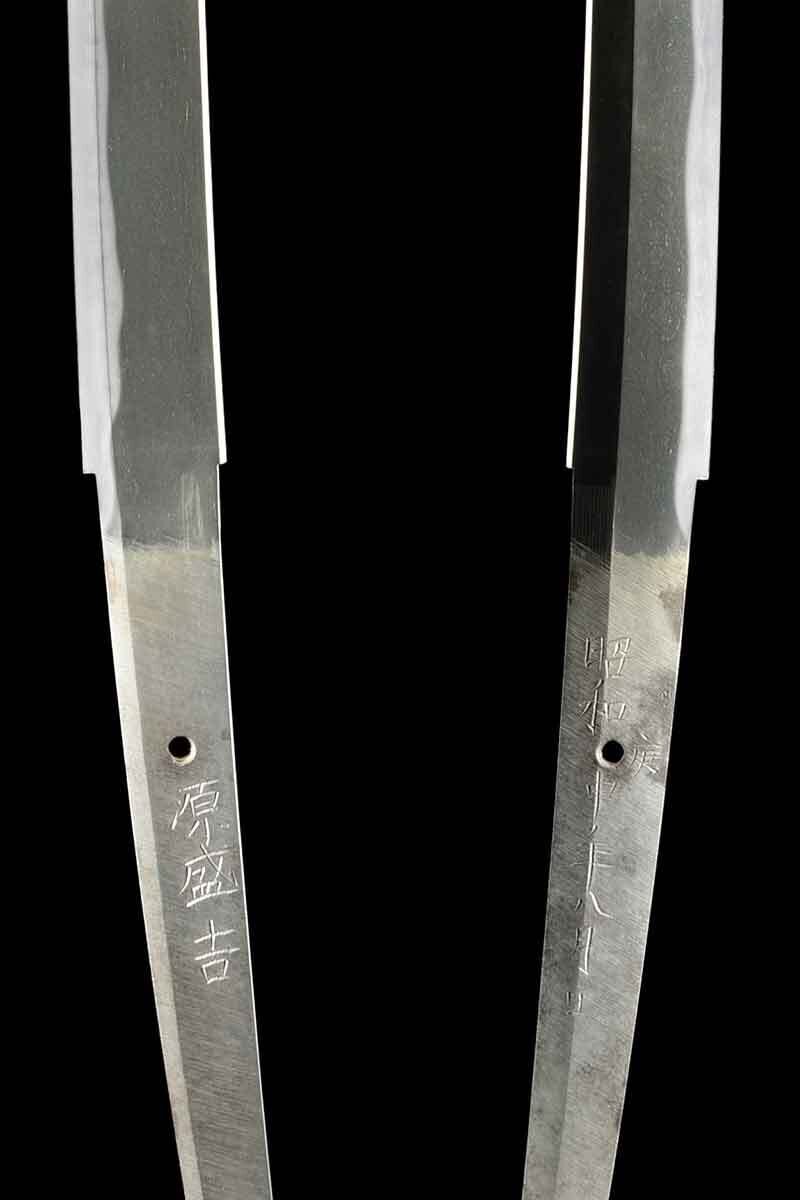
The same katana: the tang, with the signature 源盛吉 (Minamoto Moriyoshi). Photo: dealer in Japan
A kogatana
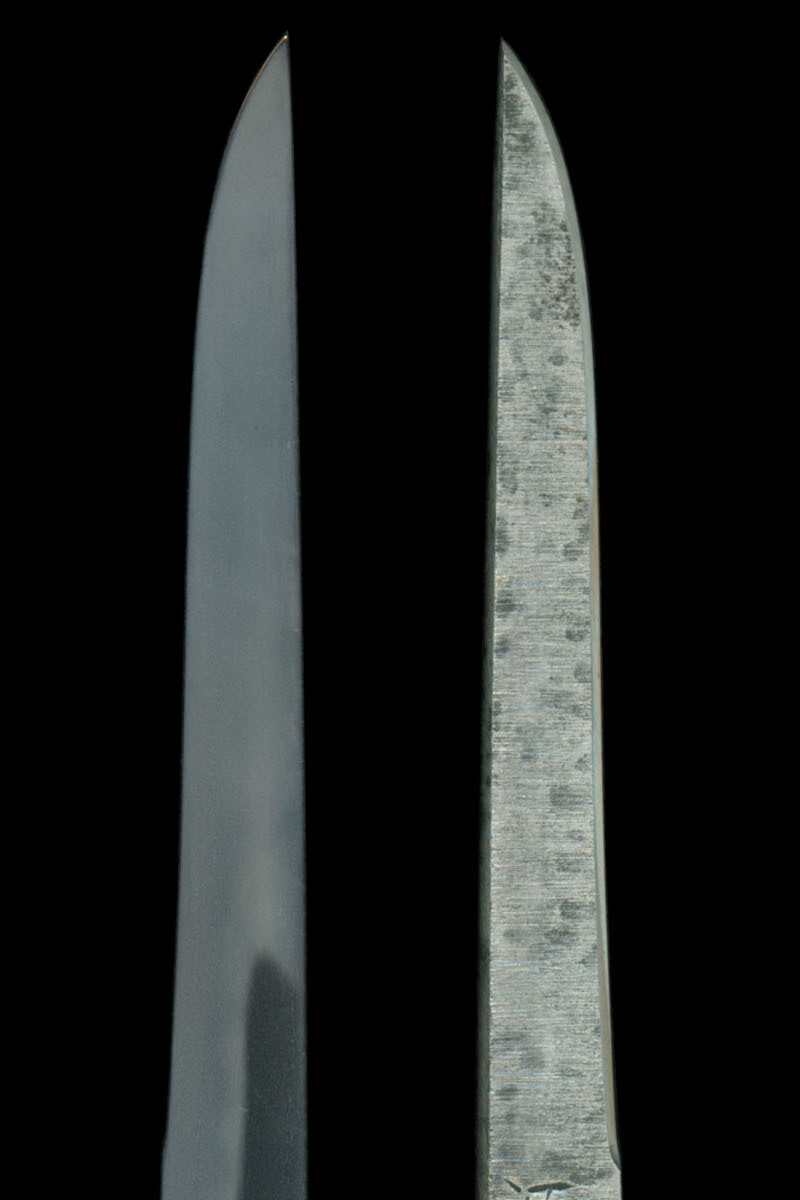
A kogatana of his, the small blade of the scabbard. Photo: dealer in Japan 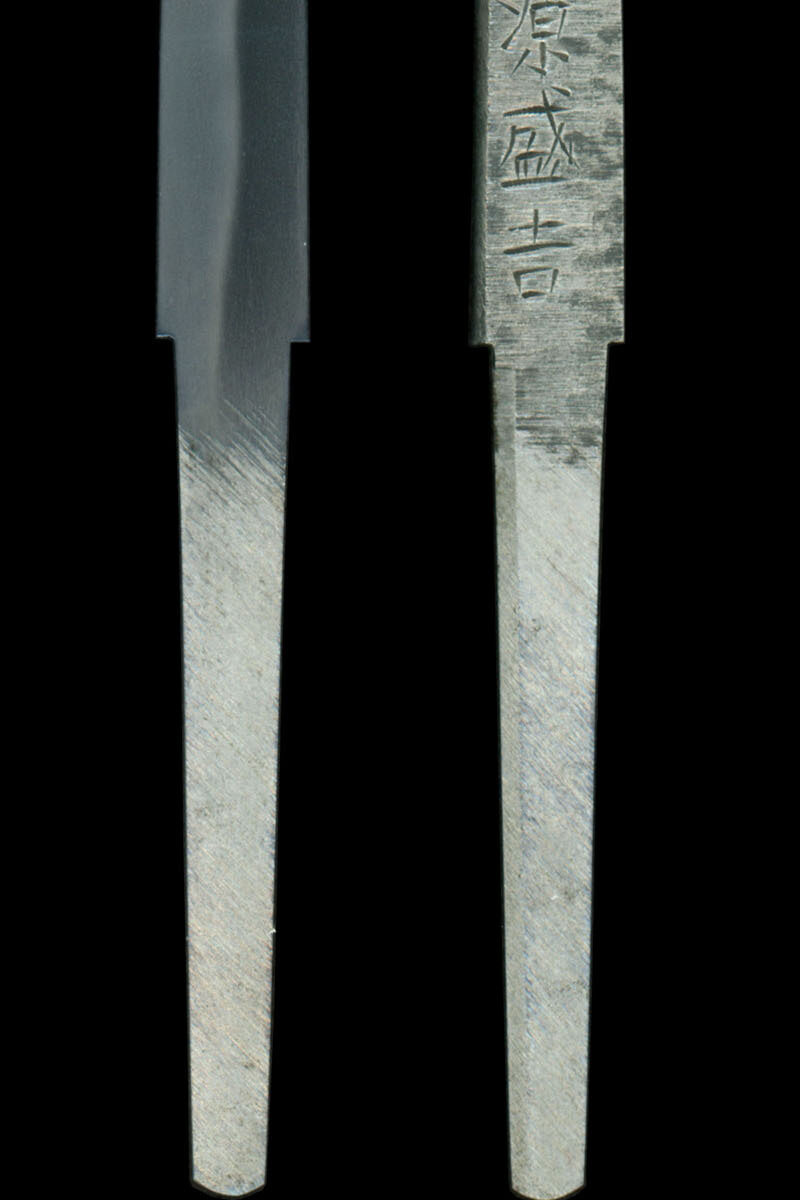
The kogatana: the signature 源盛吉 (Minamoto Moriyoshi). Photo: dealer in Japan