On this page
Kantei keys
- Sugata
- Mostly tachi; also kodachi, naginata and ken, and very few tantō. The shape of the late Kamakura period: deep koshizori, without the curve falling towards the point, with normal width and point; some tachi, sturdy, like the mid-Kamakura ones of his father AT
- Jigane
- Well-tightened ko-itame, with midare-utsuri. The NBTHK notes a visible hada and strong ha-nie on some blades, and a clear midare-utsuri on those with suguha. AT
- Hamon
- Very varied: showy chōji, with 蛙子丁子 (kawazuko-chōji) and 重花丁子 (jūka-chōji), inherited from Mitsutada; a low notare with rounded gunome-chōji, his own; and suguha. For the NBTHK, in his late work he makes narrow blades with a narrow suguha with a tight nioiguchi. AT
- Bōshi
- The 三作帽子 (sansaku-bōshi): a shallow notare, a komaru point and a short turn-back. The NBTHK gives it as a trait of Nagamitsu and Sanenaga; the Japanese Wikipedia attributes it to his pupils. HD
- Nakago and mei
- Two kanji, 長光 (Nagamitsu), the basic signature; or with his residence, 備前国長船住 (Bizen no kuni Osafune-jū); or 左近将監長光 (Sakon-no-shōgen Nagamitsu), in the late work AT
A swordsmith of many styles
- The NBTHK describes him like this: “Nagamitsu is known for the variety of his style within the Osafune school”; his blades can be wide, with kawazuko-chōji, large chōji and a showy hamon, or narrow, with a gentle suguha.
- In one of his late blades with a narrow suguha, the NBTHK sees “an effort to teach us that, besides a showy, elaborate hamon, a simple one can be made, with another kind of beauty”. In his time, the Bizen swordsmiths capable of a clear midare-utsuri, a narrow suguha with a tight nioiguchi and the sansaku-bōshi are he and Sanenaga.
- To tell him apart from his neighbours, the NBTHK gives two clues: in Ko-Bizen, near the point the back leans towards it and the hamon is a classic midare; in Fukuoka-Ichimonji, the gunome does not stand out within the chōji.
Between his father and his son
Of Mitsutada, his father according to the genealogies, the NBTHK highlights the chōji with fukuro-chōji and kawazuko-chōji, in nioiguchi with soft ko-nie, on a ko-itame with a clear midare-utsuri: the basis of Nagamitsu’s showy chōji. His son Kagemitsu inherited the kaku-gunome of Nagamitsu’s tantō, but with a gentler, less showy work.
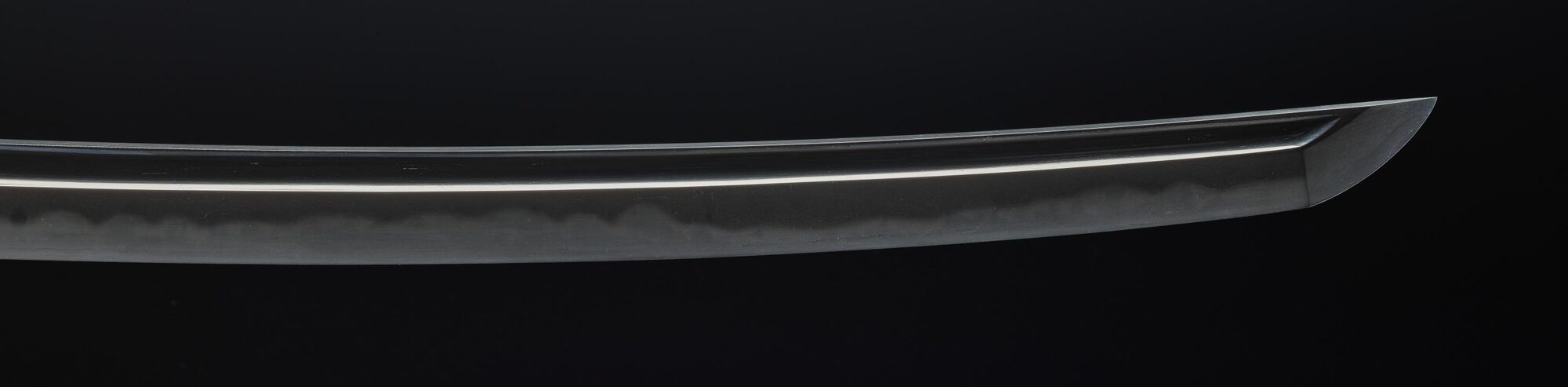
The Daihannya Nagamitsu, close up

The Daihannya Nagamitsu from the other side. Tokyo National Museum, via ColBase · ColBase terms of use · source 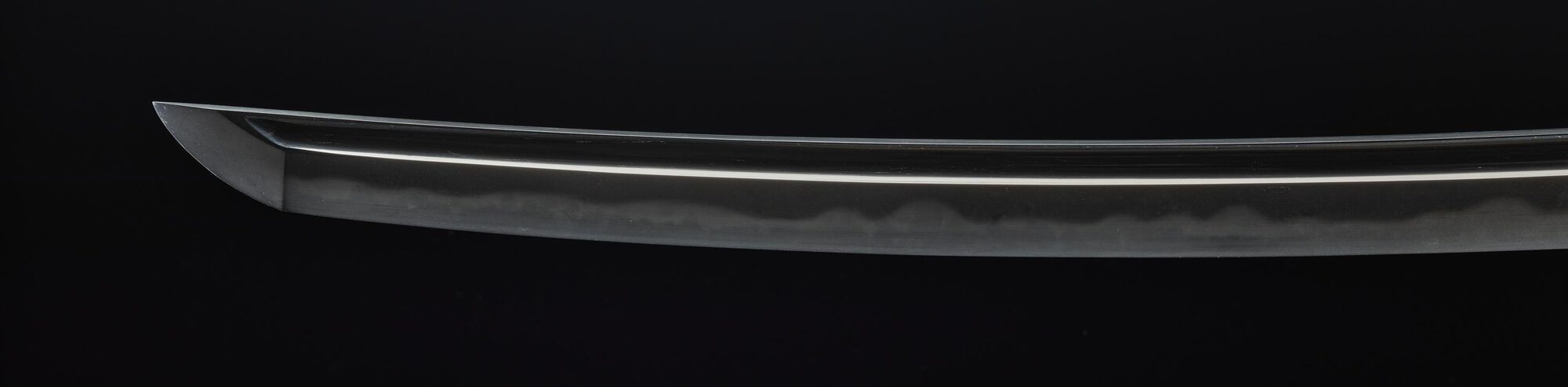
The point and the temper, from the other side. Tokyo National Museum, via ColBase · ColBase terms of use · source 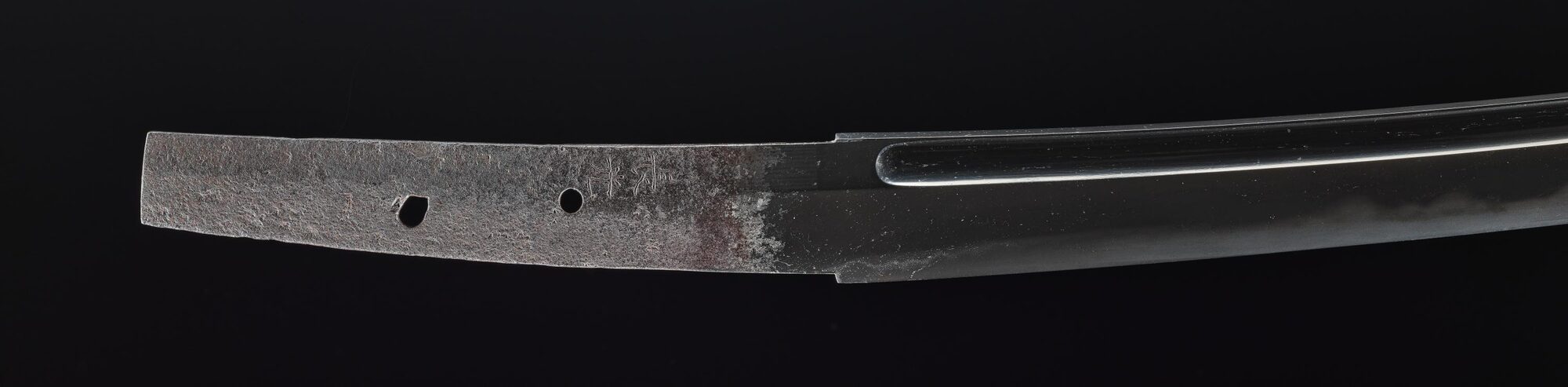
The tang, with the signature 長光 (Nagamitsu), and the start of the bōhi. Tokyo National Museum, via ColBase · ColBase terms of use · source 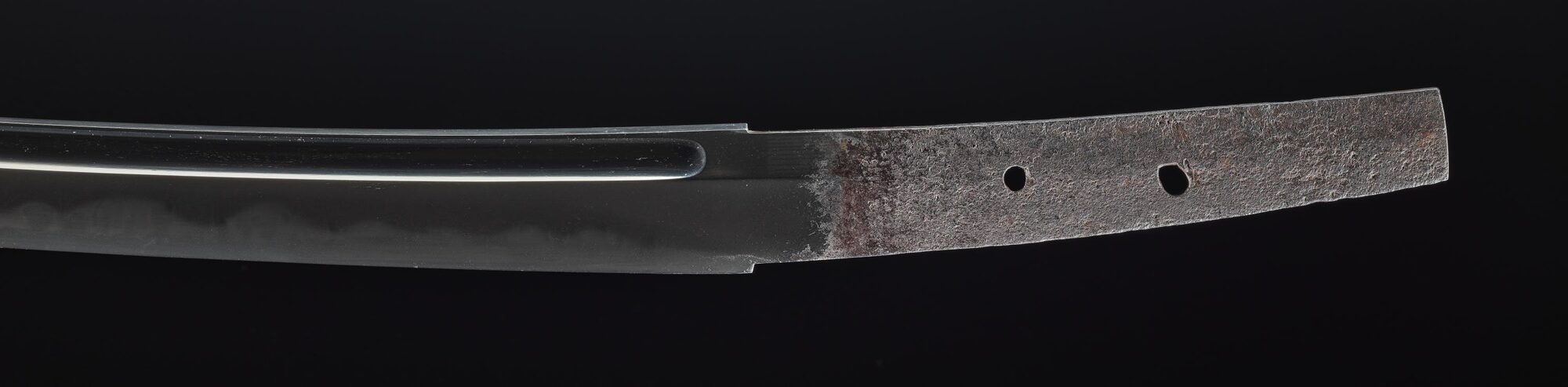
The tang and the start of the temper, from the other side. Tokyo National Museum, via ColBase · ColBase terms of use · source 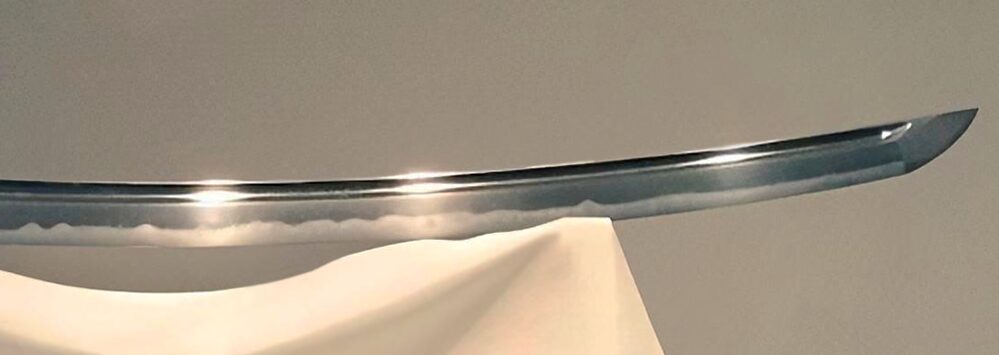
The hamon of the kodachi “Hachiya Nagamitsu”. Artanisen, CC BY-SA 4.0, via Wikimedia Commons · CC BY-SA 4.0 · source
