On this page
His designated works
Kotobank counts one 御物 (gyobutsu), five tachi and one naginata that are National Treasures and 28 Important Cultural Properties. The Japanese Wikipedia gives six National Treasures, 28 Important Cultural Properties and 36 jūyō bijutsuhin in its article on him, but 33 Important Cultural Properties in those on two of his tachi, where it calls him the swordsmith with the most designated works of all. The difference between 28 and 33 has not been resolved: they remain to be counted in the register of the Agency for Cultural Affairs.
His National Treasures
| Work | Designation | Where it is |
|---|---|---|
| Tachi 大般若長光 (Daihannya Nagamitsu), signature 長光 (Nagamitsu) | Designated in 1931 under the old law; National Treasure on 9 June 1951 | Tokyo National Museum |
| Tachi 遠江長光 (Tōtōmi Nagamitsu), signature 長光 (Nagamitsu) | Important Cultural Property in 1953; National Treasure on 20 March 1954 | Tokugawa Art Museum, Nagoya |
| Tachi 熊野三所権現長光 (Kumano Sansho Gongen Nagamitsu) | National Treasure in 1931 and again, under the current law, in 1952 | Private collection, Osaka |
| Tachi with the signature 備前国長船住左近将監長光造 (Bizen no kuni Osafune-jū Sakon-no-shōgen Nagamitsu tsukuru) | National Treasure | Hayashibara Museum of Art, Okayama |
| Tachi with the signature 長光 (Nagamitsu) | National Treasure in 1955 | Tokyo National Museum |
| Naginata with the signature 備前国長船住人長光造 (Bizen no kuni Osafune-jūnin Nagamitsu tsukuru) | National Treasure | Sano Art Museum, Mishima (Shizuoka) |
The Daihannya Nagamitsu
- A tachi 73.6 cm long with 2.9 cm of curvature: shinogi-zukuri, iori-mune, high koshizori, a medium point in inokubi, ko-itame with midare-utsuri and a hamon of large chōji mixed with gunome, with bōhi on both sides. It bears the signature 長光 (Nagamitsu).
- Its name comes from the valuation it was given in the Muromachi period, 600 貫 (kan), the same number as the scrolls of the sutra 大般若経 (Daihannya-kyō). For the Agency for Cultural Affairs it was already then one of the most celebrated named swords.
- It belonged to the Ashikaga shōgun and to Miyoshi Nagayoshi; later to Oda Nobunaga, who gave it to Tokugawa Ieyasu for the battle of Anegawa, and he to Okudaira Nobumasa for that of Nagashino. It then passed to Matsudaira Tadaaki and his house, in the Oshi domain. In the Taishō era Count Itō Miyoji bought it; the Great Kantō earthquake bent the blade, which was restored, and in 1939 it entered the Imperial Museum, today the Tokyo National Museum.
The Tōtōmi Nagamitsu
A shortened tachi (suriage), with a hamon of chōji and kawazuko-chōji with a tight nioiguchi. The designation record gives it 72.1 cm in length and 2.3 cm of curvature; the Japanese Wikipedia, 71.8 cm, and the database 文化遺産オンライン (Bunka Isan Online), 72.4 cm. Its name is that of an owner: it passed from Oda Nobunaga to Akechi Mitsuhide, from him to his vassal Tsuda Tōtōmi-no-kami Shigehisa and then to the Maeda, who in 1708 gave it to the shōgun Tokugawa Tsunayoshi; it ended up in the Owari house.
The Kumano Sansho Gongen Nagamitsu
An unshortened tachi (ubu), 75.0 and 2.9 cm in length and curvature, a small point and ko-itame with a lively midare-utsuri; on the tang, also intact, the inscription 熊野三所権現 (Kumano Sansho Gongen) and the signature 長光 (Nagamitsu). According to the foundation that holds it, it was forged for the rites against the Mongol invasions and offered to Kumano. Among its owners were the Kuki, Toyotomi Hideyoshi, the Tokugawa shōgun and, from 1717, Kutsuki Tanemoto, lord of Fukuchiyama.
Important Cultural Properties, in museums and shrines
- In the Hayashibara Museum of Art, a tachi with the Sakon-no-shōgen signature dated 1289 (正応二年十月, Shōō ninen jūgatsu).
- Others, according to the Japanese Wikipedia: tachi in the Tokyo National Museum, the Kyoto National Museum, the Tokugawa Art Museum, the 陽明文庫 (Yōmei Bunko), with suguha, and the Okayama Prefectural Museum; and in shrines: the Hie Jinja (two), the Nezu Jinja, the Tsurugaoka Hachimangū, the Hakusan Hime Jinja, the Atsuta Jingū, the Takiyama Tōshōgū, the Tamukeyama Hachimangū and the Kotohira-gū. There is also a naginata that belonged to the imperial house, in the Tokyo National Museum, and ken in the Tsushima Jinja (Aichi) and in Fukuoka.
- Track has been lost of some, such as that of the Aso Jinja, which the occupation forces took away.
In the old lists
- The Tōtōmi Nagamitsu is in the Kyōhō meibutsuchō (享保名物帳), the shōgun’s register of celebrated swords. The Daihannya Nagamitsu is not, despite its fame: according to the Japanese Wikipedia, some daimyō did not declare all their celebrated pieces to the shōgun.
- He does not appear in the cutting list of Yamada Asaemon, which does include other Osafune swordsmiths.
A legend: the Azuki Nagamitsu
Tradition attributes to Uesugi Kenshin a sword by Nagamitsu called 小豆長光 (Azuki Nagamitsu): a peasant was carrying on his shoulder a sack of azuki beans that split when they brushed the blade. Track of it was lost in 1967. Neither the legend nor that it belonged to Kenshin is documented.
Gallery
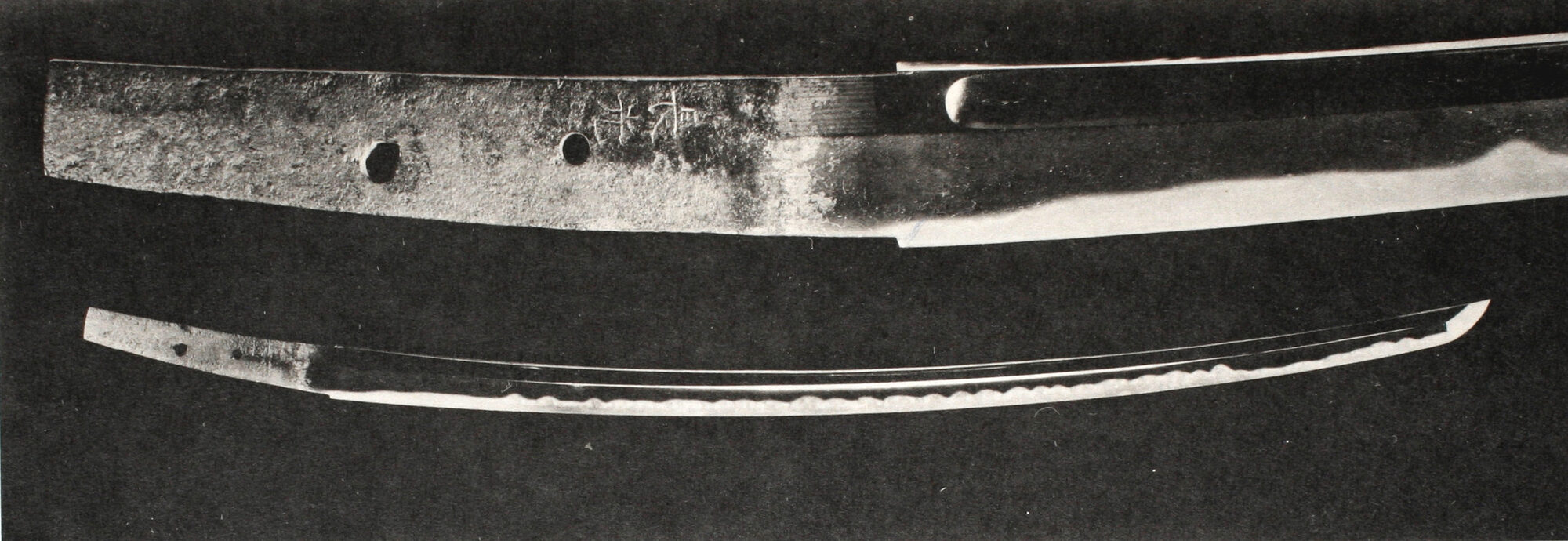
The Daihannya Nagamitsu: the tang with the signature and the whole blade. 文化財協会 (Bunkazai Kyōkai), public domain, via Wikimedia Commons · Public domain · source 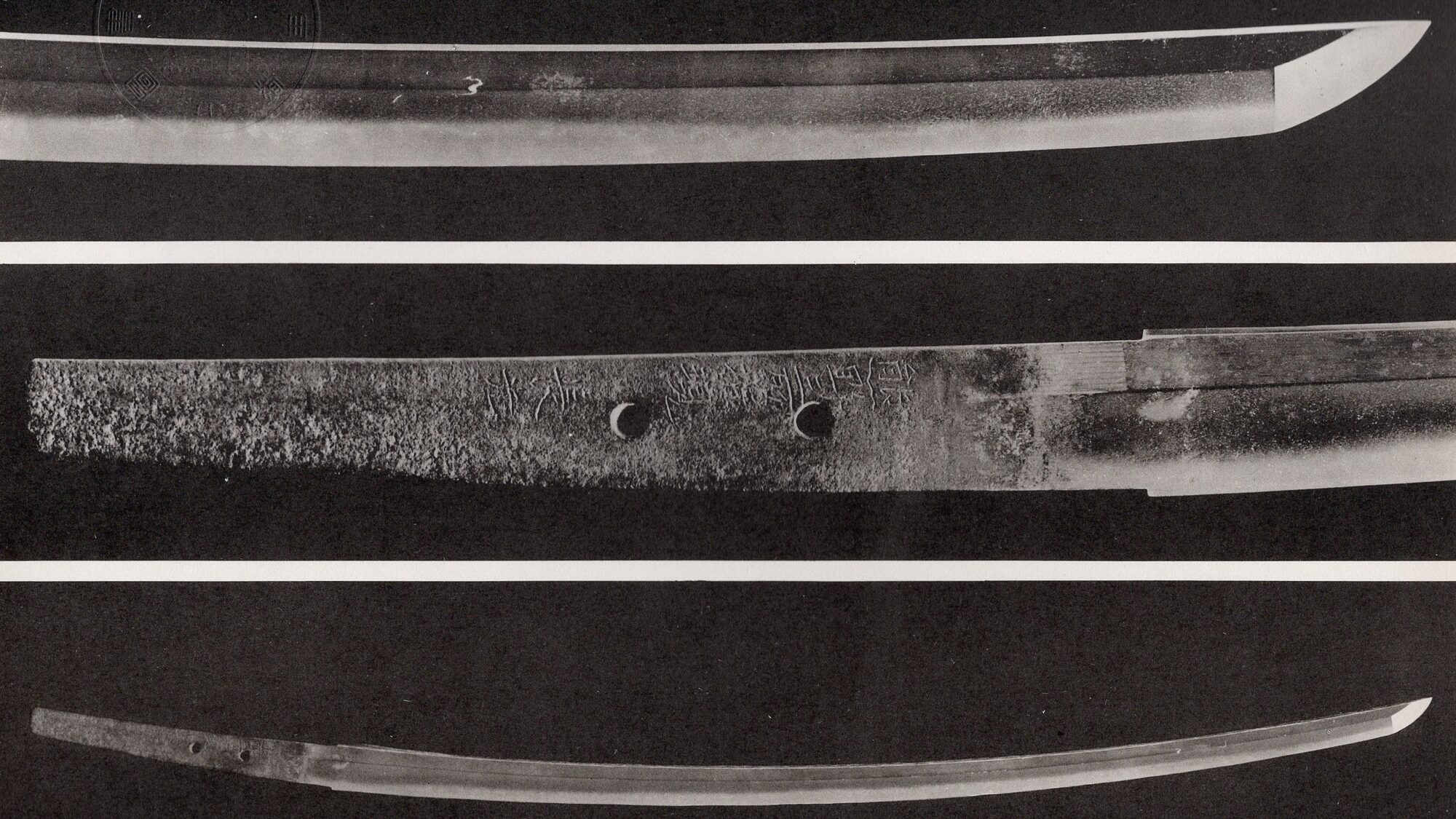
The Kumano Sansho Gongen Nagamitsu. 文化財協会 (Bunkazai Kyōkai), public domain, via Wikimedia Commons · Public domain · source 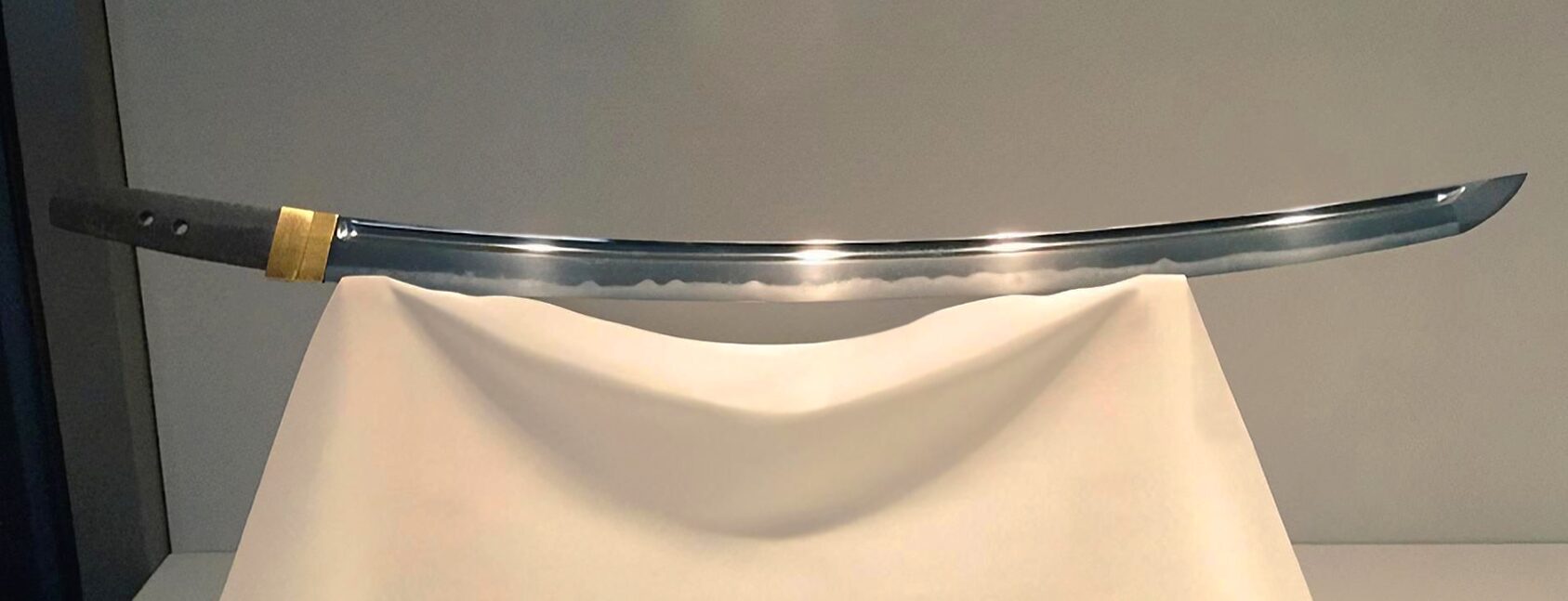
The kodachi “Hachiya Nagamitsu”, of the 13th century, an Important Cultural Property according to the photo caption; it is not recorded in which museum it is. Artanisen, CC BY-SA 4.0, via Wikimedia Commons · CC BY-SA 4.0 · source


