Documented works
| Work | Designation | Where it is |
|---|---|---|
| Tachi signed 康 (Yasu) with the rest illegible, attributed to Yasumitsu | Important Cultural Property | Saga, in the list next to the Yoka shrine; owner to be confirmed |
| Wakizashi 備州長船康光 (Bishū Osafune Yasumitsu) | Cultural property of Okayama Prefecture (1963) | Tamano (Okayama); owner not on record |
| Wakizashi 備州長船康光 (Bishū Osafune Yasumitsu), 1409 (Ōei 16) | No designation | Kyoto National Museum (E甲452) |
| Tachi 康光 (Yasumitsu), with the silver inscription of Horibe Takeyasu | No designation | Tokyo National Museum (F-17057) |
| Tachi 康光 (Yasumitsu), of 77.8 cm | No designation | Tokyo National Museum (F-20011) |
| Wakizashi of the 15th century, with an 18th-century mounting, in a daishō with a katana by Sukemitsu | No designation | Metropolitan Museum, New York |
| Wakizashi | No designation | Bern Historical Museum |
What is on record and what is not
The Important Cultural Property is a tachi whose signature allows only 康 (Yasu) to be read; it appears in the Kyūshū list of the Japanese Wikipedia as attributed to Yasumitsu. No National Treasure of theirs is on record, nor a work in the imperial collection, nor a record of its own for the two designated works.
In the lists
In the Yamada cutting list (懐宝剣尺, Kaihō Kenjaku, 1797), Osafune Yasumitsu is in the second grade out of four, that of ō-wazamono (大業物), together with Morimitsu; the Japanese Sword Index repeats the grade. The ō-wazamono cut through the torso seven to eight times out of ten. In the 誌上鑑定 (Shijō Kantei), the kantei competition of the NBTHK journal, a single blade by Yasumitsu came up between 1998 and 2024. No work of theirs is on record in the Kyōhō meibutsuchō (享保名物帳, Kyōhō meibutsuchō).
Gallery
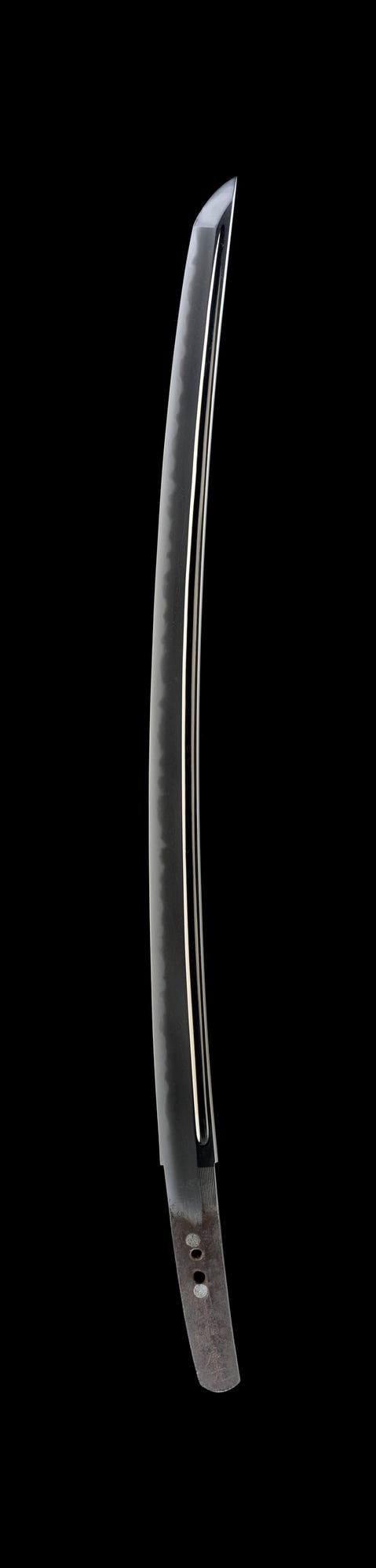
Wakizashi signed 備州長船康光 (Bishū Osafune Yasumitsu) and dated 1409 (Ōei 16). Kyoto National Museum. Kyoto National Museum, via ColBase · ColBase terms of use · source 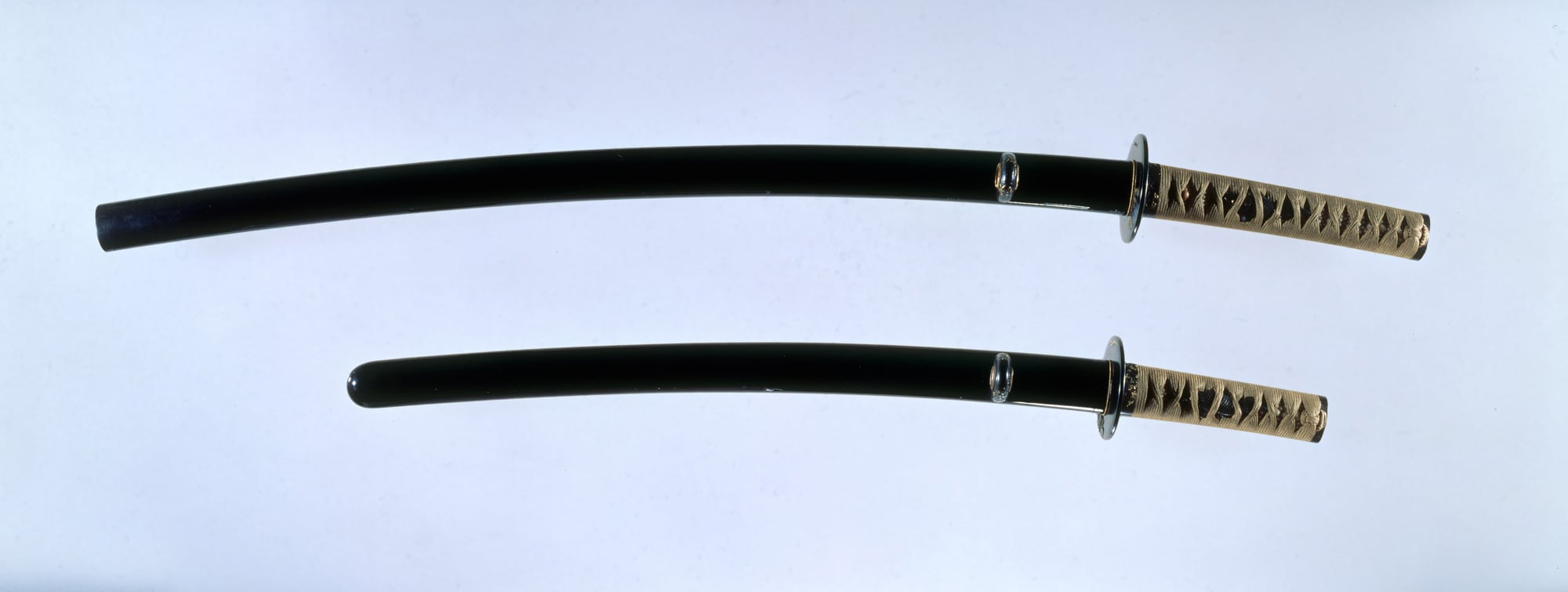
Daishō in the Metropolitan Museum: the wakizashi, below, has a 15th-century blade by Yasumitsu, and the katana, one by Sukemitsu of Bizen of 1440. The Metropolitan Museum of Art, New York · Public domain · source 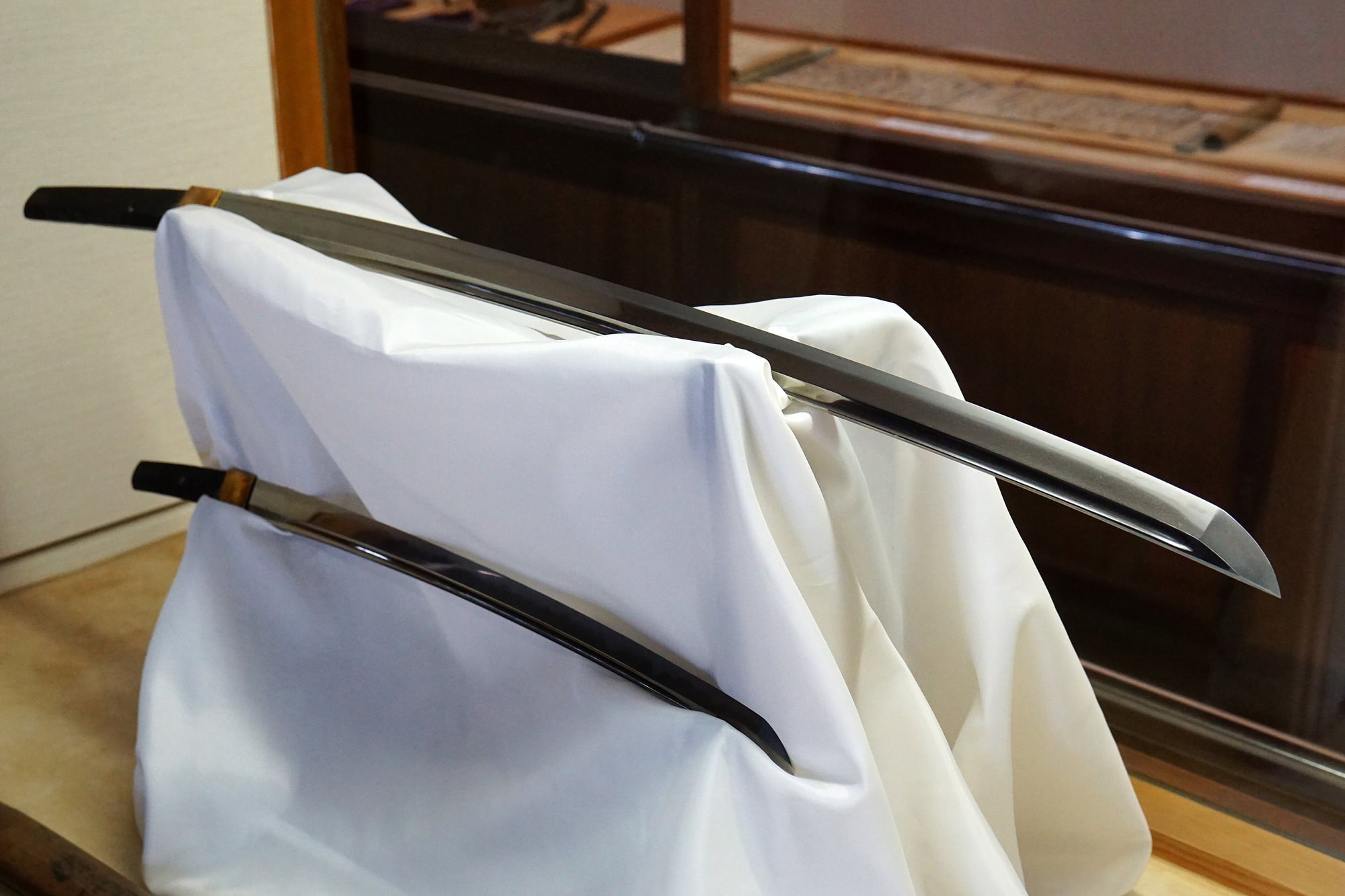
Two blades displayed at the Ōishi shrine in Akō. The description of the photo on Commons gives them as Ōishi Kuranosuke’s daishō by Kiyomitsu and Yasumitsu; it has not been possible to confirm this. 663highland, CC BY 2.5, via Wikimedia Commons · CC BY 2.5 · source
