Sugata
Sesko describes the tachi of the end of the Nanbokuchō and the beginning of the Muromachi, those of Morimitsu and Yasumitsu, with a somewhat shorter nagasa and a slight sakizori: a return to the classical Kamakura tachi. Long ko-wakizashi in hira-zukuri are typical of Ōei-Bizen, of Morimitsu and Yasumitsu.
Jihada
Ōei-Bizen shows a visible ō-mokume, a grain in large burls, in Morimitsu, Yasumitsu and Moromitsu. Straight utsuri (棒映り, bō-utsuri) on tachi and katana is characteristic of Ōei-Bizen and of the Kozori group.
Hamon
Sesko gives suguha in nioi-deki as characteristic of the Ōei-Bizen of Morimitsu and Yasumitsu, and describes the passage from the koshi-no-hiraita of the Kozori group to Ōei-Bizen, with yō, points of nioi separated from the edge of the temper. The Japanese Wikipedia describes Morimitsu, his peer, with itame and mokume, bō-utsuri, suguha in nioi-deki or gunome-chōji and often carvings of a sword (ken) and Sanskrit characters; it does not describe Yasumitsu separately.
Bōshi
The sources consulted do not describe the bōshi of the Yasumitsu.
Nakago and mei
The long signature reads 備州長船康光 (Bishū Osafune Yasumitsu), followed by the date on the 1409 wakizashi in Kyoto. Two tachi in the Tokyo National Museum bear the short signature 康光 (Yasumitsu). One of them also bears a silver inscription, 堀部武庸秘 (Horibe Takeyasu hi), with the name of Horibe Takeyasu. It has not been confirmed that this Horibe Takeyasu is the rōnin of that name.
Details
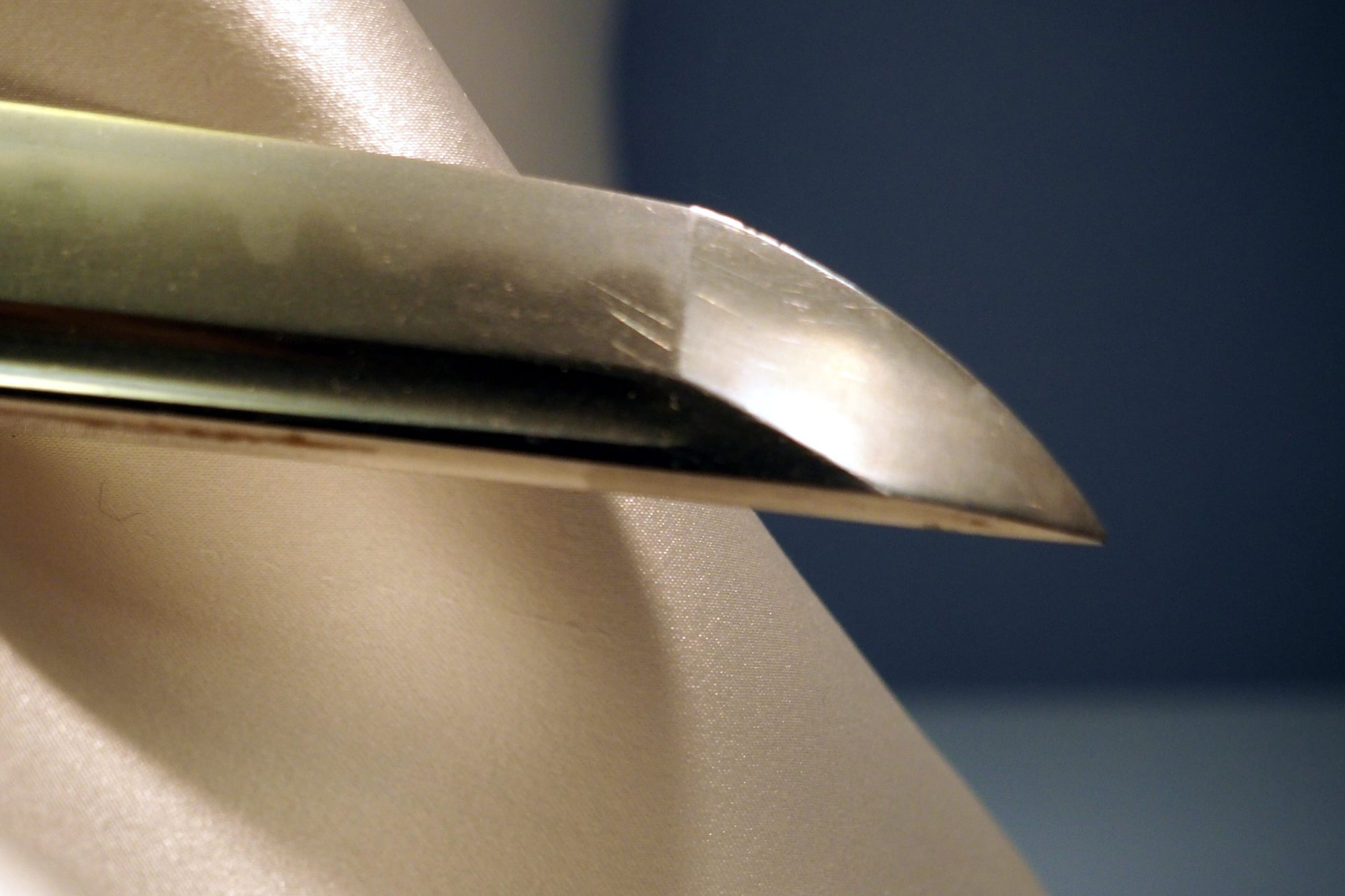
The point of the Bern wakizashi. Rama, CC BY-SA 3.0 FR, via Wikimedia Commons · CC BY-SA 3.0 FR · source 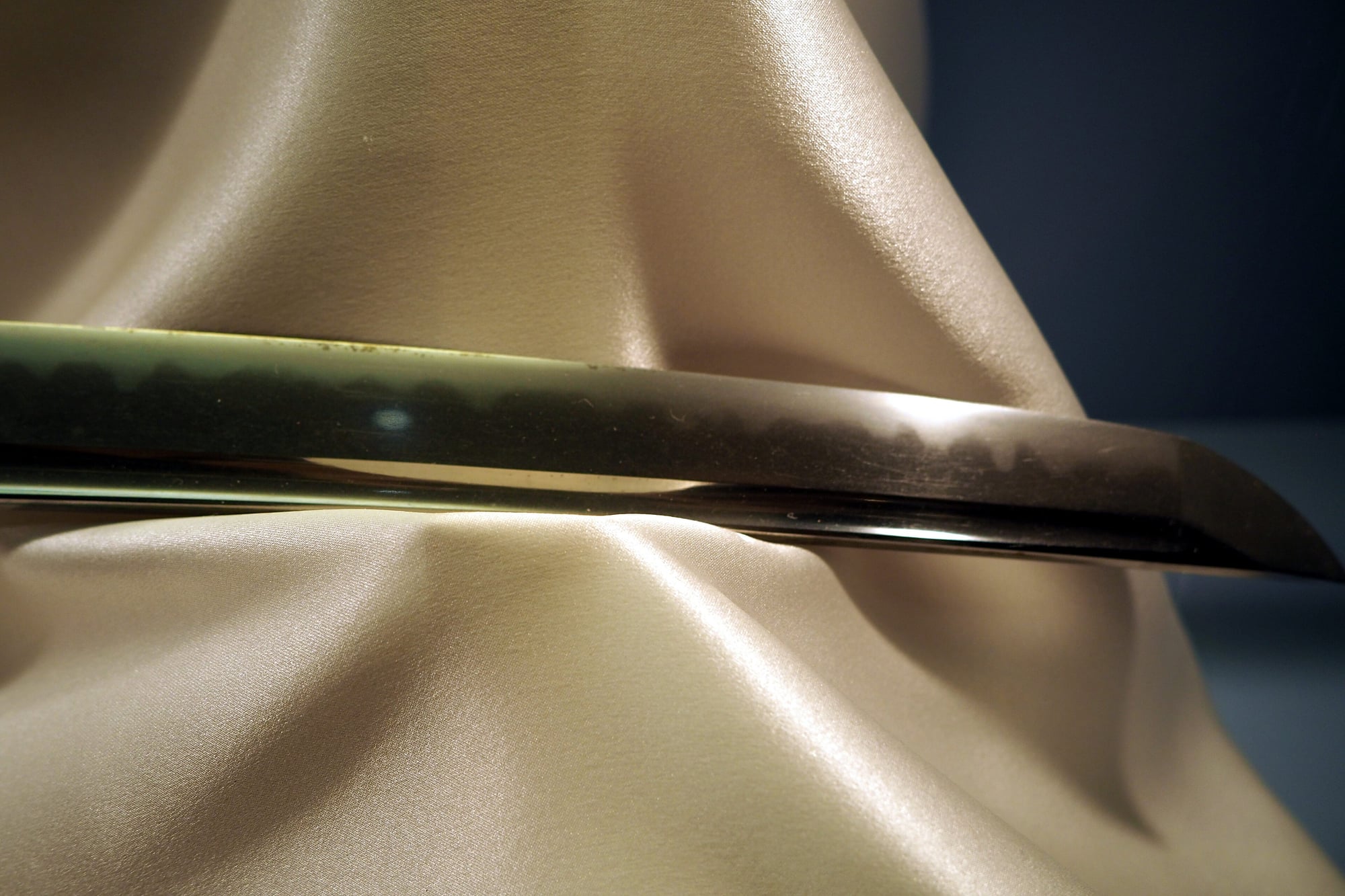
A stretch of the temper of the Bern wakizashi. Rama, CC BY-SA 3.0 FR, via Wikimedia Commons · CC BY-SA 3.0 FR · source 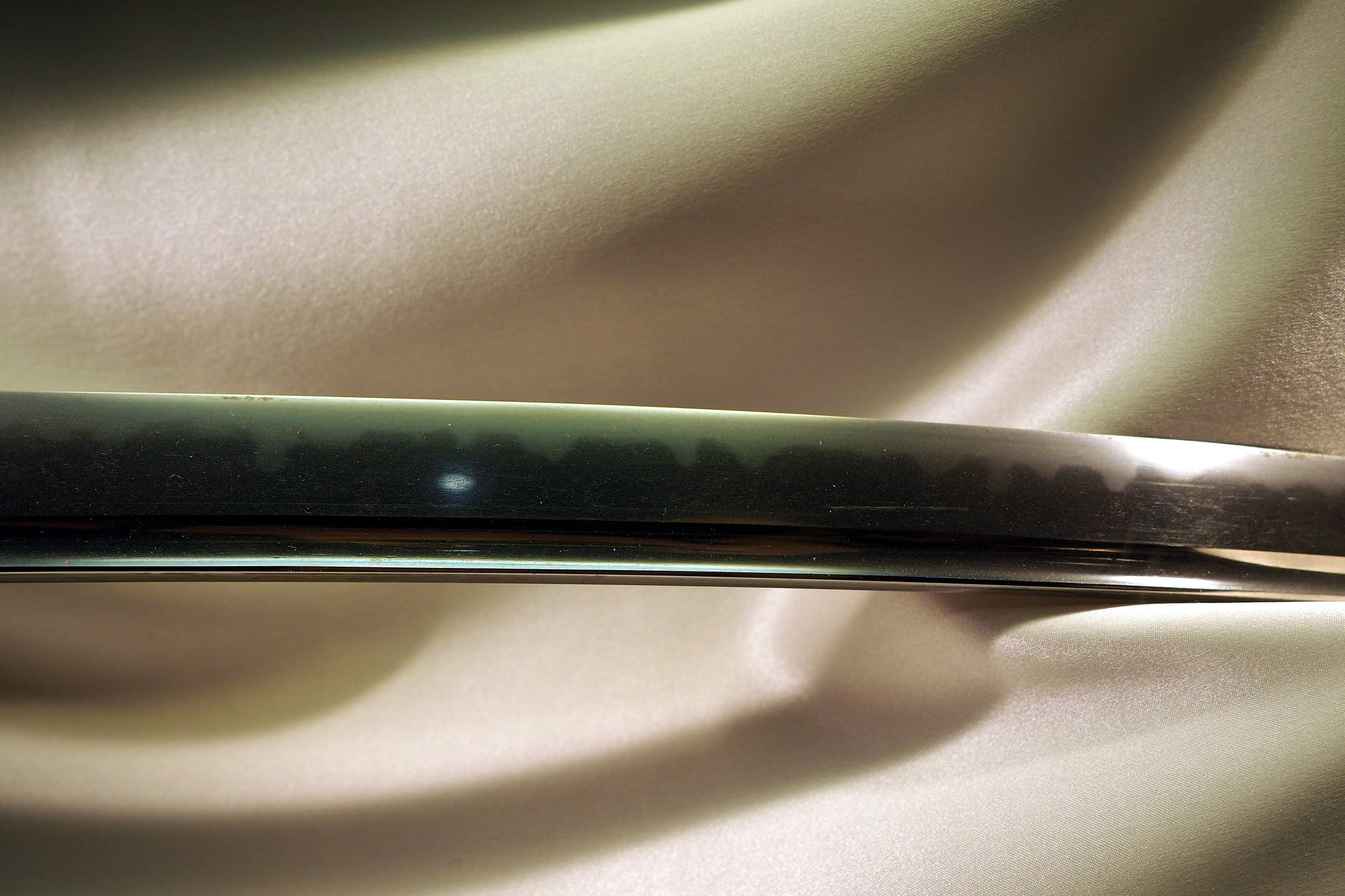
Another stretch of the temper of the Bern wakizashi. Rama, CC BY-SA 3.0 FR, via Wikimedia Commons · CC BY-SA 3.0 FR · source 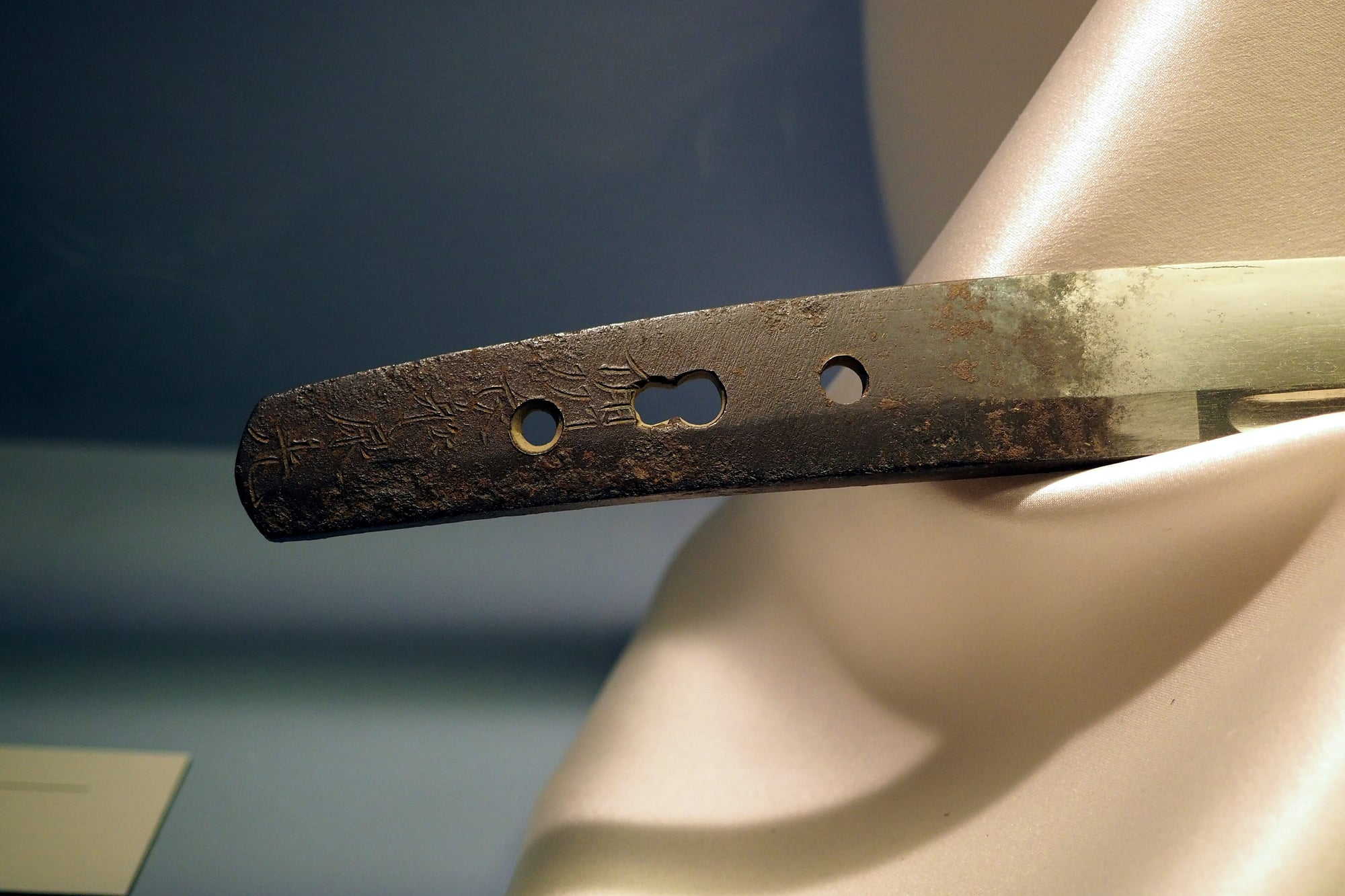
The tang of the Bern wakizashi, with three mekugi holes. Rama, CC BY-SA 3.0 FR, via Wikimedia Commons · CC BY-SA 3.0 FR · source


