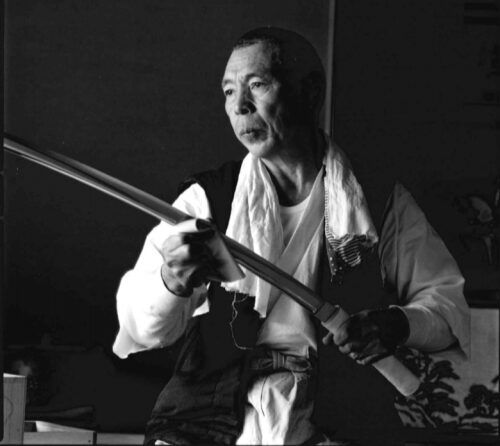
On this page
Quick profile
- Name
- Ōsumi Toshihira AT
- Kanji and reading
- 大隅俊平 (Ōsumi Toshihira) HD
- Birth
- 23 January 1932, in Tomizawa, village of Sawano (today Ōta, Gunma) AT
- Death
- 4 October 2009, at his home in Ōta, aged 77 AT
- Where he forged
- Ōta (Gunma): first in Tomizawa, from 1979 in Yura-chō AT
- Master
- Miyairi Akihira (宮入昭平, Miyairi Akihira), later Yukihira, in Sakaki (Nagano) AT
- School or tradition
- Miyairi school; suguha in the manner of Rai and of the Aoe of Bitchū AT
- Licence
- 1957, from the Ministry of Education AT
- Rank
- Mukansa (無鑑査, mukansa) from 1972; Living National Treasure (重要無形文化財保持者, jūyō mukei bunkazai hojisha) from 1997 AT
In short
At twenty he entered the forge of Miyairi Akihira, in Sakaki, and in 1958 his first work submitted to the NBTHK technical competition won a prize. In 1960 he returned to Ōta to work on his own. From 1965 he exhibited at every edition of the NBTHK competition for new swords until his death; he was mukansa from 1972 and won the Masamune Prize in 1974, 1976 and 1978. He forged chokutō for the Ise shrine and protective swords for the imperial household, and in 1997 he was named a Living National Treasure. The Agency for Cultural Affairs holds a tachi of his from 1998 and a tantō from 1999.
Sections
-
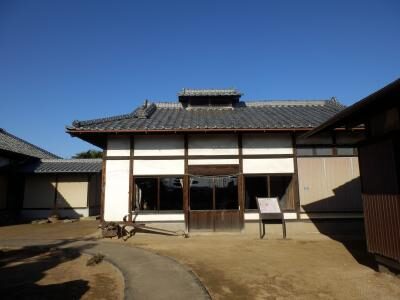 From Sakaki to Ōta
Life and forging
His apprenticeship with Miyairi Akihira, his forge in Ōta, his commissions for Ise and the imperial household, and his museum.
-
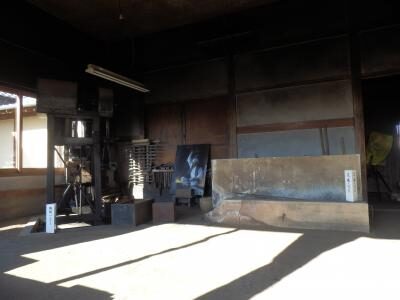 Rai · Aoe · suguha
Work and style
From the Bizen chōji to the suguha of Rai and Aoe, his steel and the works held by the state.
-
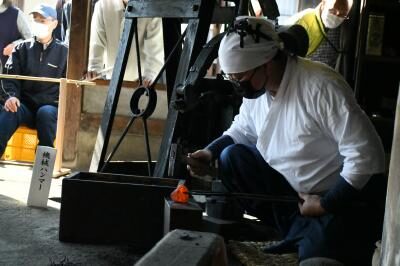 Three Masamune Prizes
Prizes
His prizes year by year, from his debut in 1958 to the title of Living National Treasure.
-
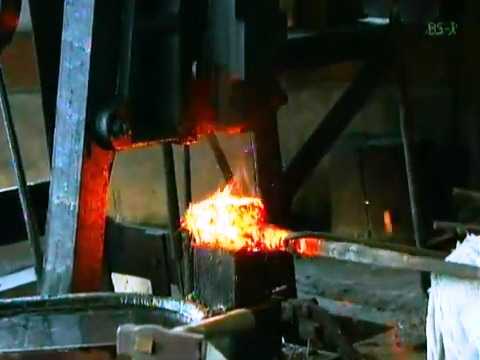 Documentary, museum and forging
Videos
A 2007 television documentary in four parts, a forging session at his museum and a visit.
-
Bibliography and credits
Sources
The sources consulted on 4 October 2026, with their link, and the credit for each image.