On this page
Kantei keys
- Jihada. Very tight itame (板目肌よく約み, itame-hada yoku tsumi), with abundant ji-nie and fine chikei (Japanese Wikipedia). The Kyoto National Museum speaks of thick ji-nie and fine chikei, and of a work “very tight, brilliant and refined”.
- Hamon. Above all notare, with strong nie and a deep, clear and brilliant nioiguchi; at times with gunome. In the Kyūshū tantō, strong kinsuji and sunagashi, “showy”, according to its museum.
- Bōshi. High, it rises (突き上げ, tsukiage) and turns back with a deep kaeri: it is the most typical mark of the school, according to the Japanese Wikipedia.
- Sugata. His tantō have very little fukura, like those of Norishige, according to the researcher Markus Sesko. The usual ones measure about 7.5 sun (about 22.7 cm) of blade, according to the Kyūshū National Museum.
- Nakago. In the tantō Taikō Samonji, an unshortened tang (ubu), with a kurijiri tip, ōsujikai file marks and two holes, according to its official record.
- Mei. 左 (Sa) on the front and 筑州住 (Chikushū jū) on the back, or 筑州住左 (Chikushū jū Sa) in a single line, with a fine chisel.
The tantō Taikō Samonji, according to its official record
Hira-zukuri, mitsu-mune and almost without curvature; a 23.6 cm blade and an 8.8 cm tang. Very tight ko-itame, clear steel, ji-nie and chikei. Hamon of ko-notare with gunome, deep and clear nioi, nie and ashi. The bōshi rises strongly, with a deep yakisage and munayaki. Signed 左 (Sa) and, on the back, 筑州住 (Chikushū jū), with a fine chisel.
The tachi Kōsetsu Samonji, according to its official record
Shinogi-zukuri and iori-mune, wide, with a somewhat elongated kissaki. Ko-itame with thick ji-nie, chikei and tobiyaki. Hamon of ō-midare with ashi and sunagashi, a clear nioiguchi and very deep ko-nie; the bōshi runs into midare, rises and turns back somewhat deep. It bears bōhi on both faces, carved later, and the tang is shortened (suriage), with five holes and the signature cut with a fine chisel. The measurements do not agree: the official record gives a 78.2 cm blade and 2.7 cm of curvature, and the Japanese Wikipedia, 78.1 and 2.4.
Tachi and tantō
The Japanese Wikipedia says that his signed work is relatively abundant, but that the only tachi is the Kōsetsu; the rest are tantō. Sesko calls it “the only surviving signed long sword of Samonji”. That is why the Kyūshū National Museum presents him as a “master of the tantō”.
His son Sa Yasuyoshi made large, wide and elongated tantō (sunnobi), in the fashion of the mid-14th century, with notare of nie; his katana are suriage and unsigned, according to the Tokyo National Museum.
Gallery
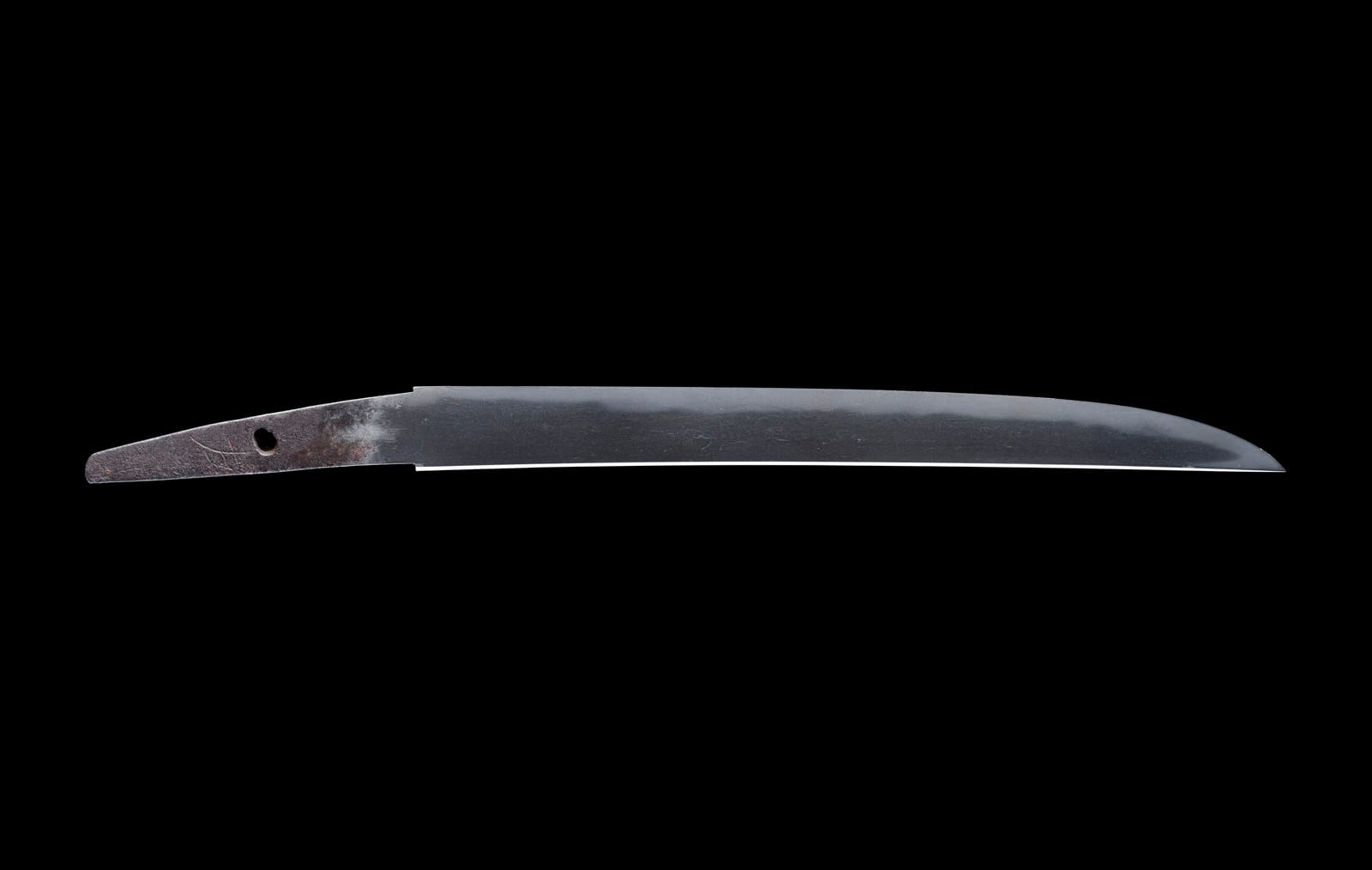
Tantō signed 左 (Sa) and 筑州住 (Chikushū jū), Important Cultural Property, of the Kyoto National Museum. Kyoto National Museum, via ColBase (photo: 岡田愛, Okada Ai) · ColBase terms of use · source 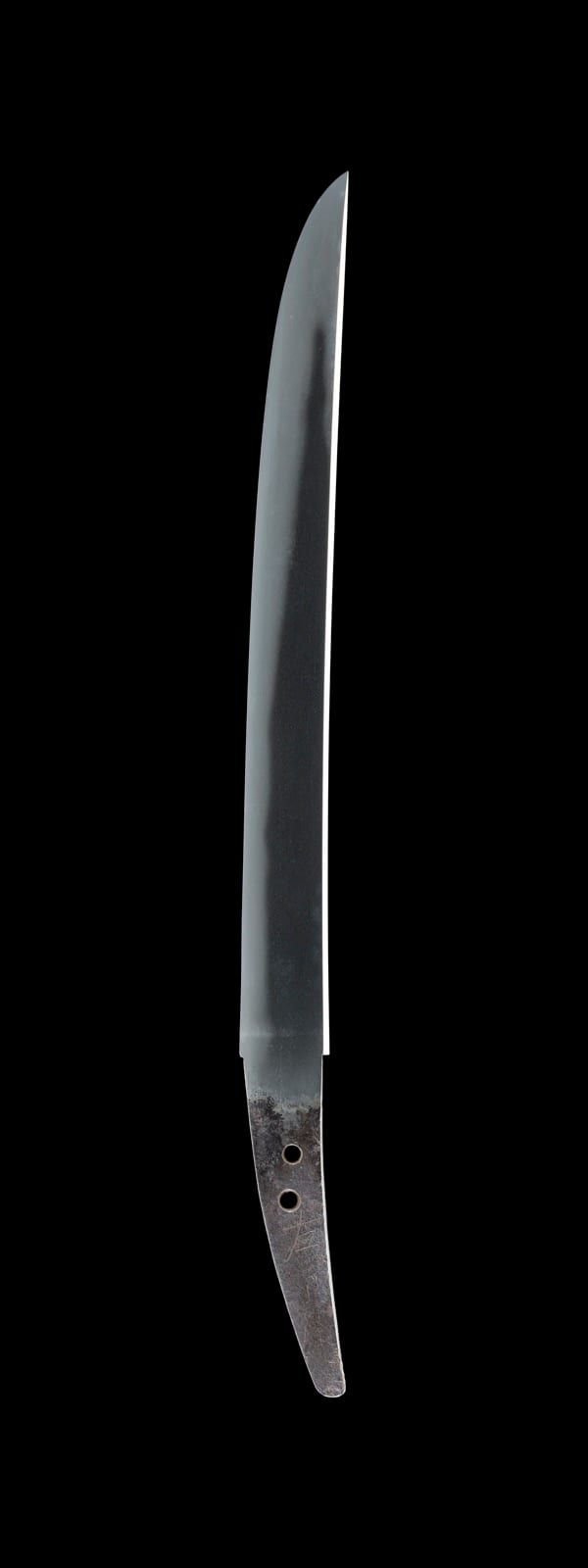
The tantō of the Kyūshū National Museum, the largest known by him: a 25.4 cm blade. Kyūshū National Museum, via ColBase · ColBase terms of use · source 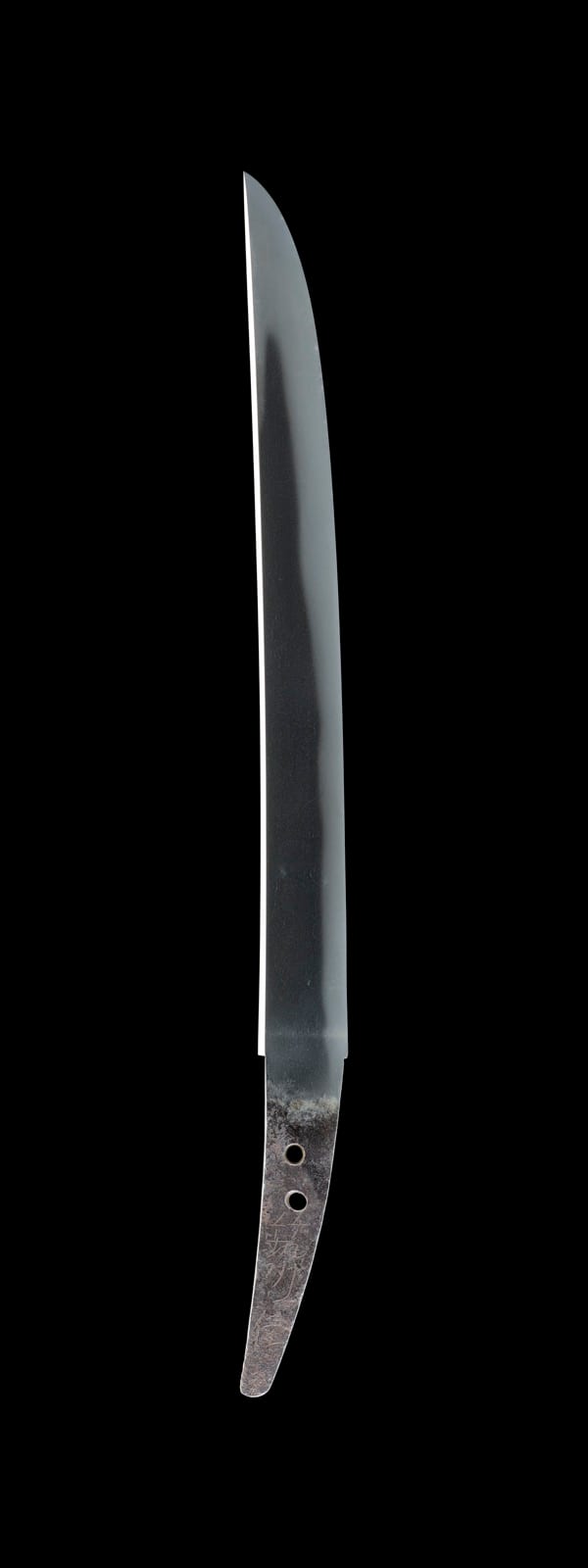
The same tantō from the other face, with the signature on the tang. Kyūshū National Museum, via ColBase · ColBase terms of use · source 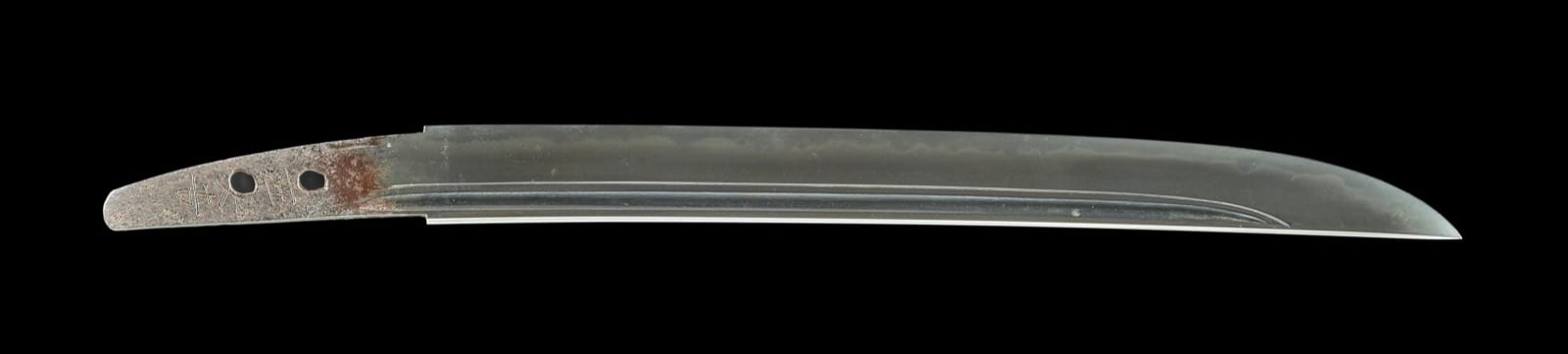
The Hitotsuyanagi Yasuyoshi (一柳安吉, Hitotsuyanagi Yasuyoshi), tantō by his son Sa Yasuyoshi, at the Tokyo National Museum. Tokyo National Museum, via ColBase · ColBase terms of use · source