On this page
Quick profile
- Name
- Samonji or Sa; to tell him apart from the other swordsmiths of the school, 大左 (Ō-Sa, “the great Sa”) AT
- Kanji and reading
- 左 (Sa) · 左文字 (Samonji) · 左衛門三郎 (Saemon Saburō), his common name · 源慶 (Genkei), his Buddhist name AT
- Period
- Late Kamakura and early Nanbokuchō, 14th century; no dated work is known AT
- Province
- Chikuzen (筑前, Chikuzen), in Kyūshū: Hakata, today in the city of Fukuoka HD
- School
- The Samonji school (左文字派, Samonji-ha), of which he is the head HD
- Family
- Son of 実阿 (Jitsua) and father of Sa Yasuyoshi (左安吉, Sa Yasuyoshi), both swordsmiths AT
- Master
- His father, Jitsua; tradition also makes him a pupil of Masamune AT
- Signature
- 左 (Sa) and 筑州住 (Chikushū jū, “resident of Chikuzen”), on one or on both faces of the tang HD
In short
What we know. His blades signed 左 (Sa) and 筑州住 (Chikushū jū) are in Japan’s official databases of cultural properties: two of them, the tachi Kōsetsu Samonji and the tantō Taikō Samonji, are National Treasures, and others are Important Cultural Properties in the national museums of Kyoto and Kyūshū.
How we know it. His family, his names and his place in Hakata are given by the NBTHK, the national museums and the Japanese Wikipedia, which follow old treatises and tradition.
What we do not know. When he was born and when he died: there is no dated work of his. That he learned with Masamune is tradition, not a documented fact.
Sections
-
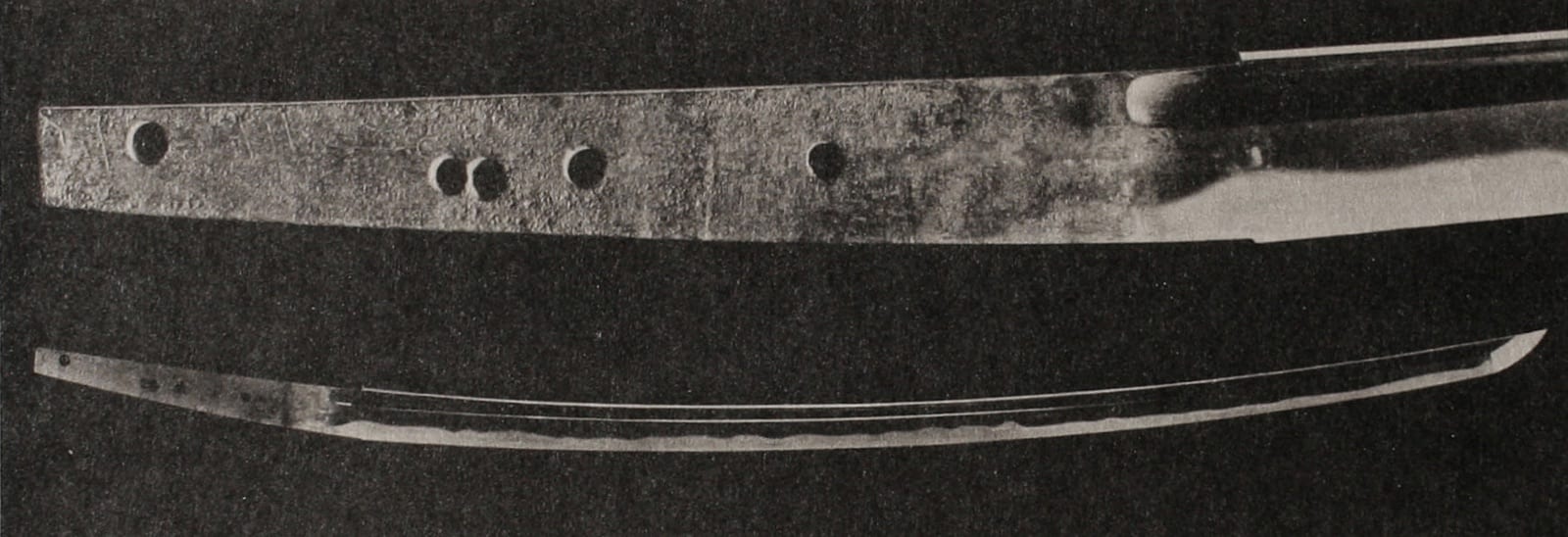
 Hakata · the lineage · Masamune
Life and times
His names, his family of swordsmiths, where the name “Samonji” comes from and what tradition says of his master.
-
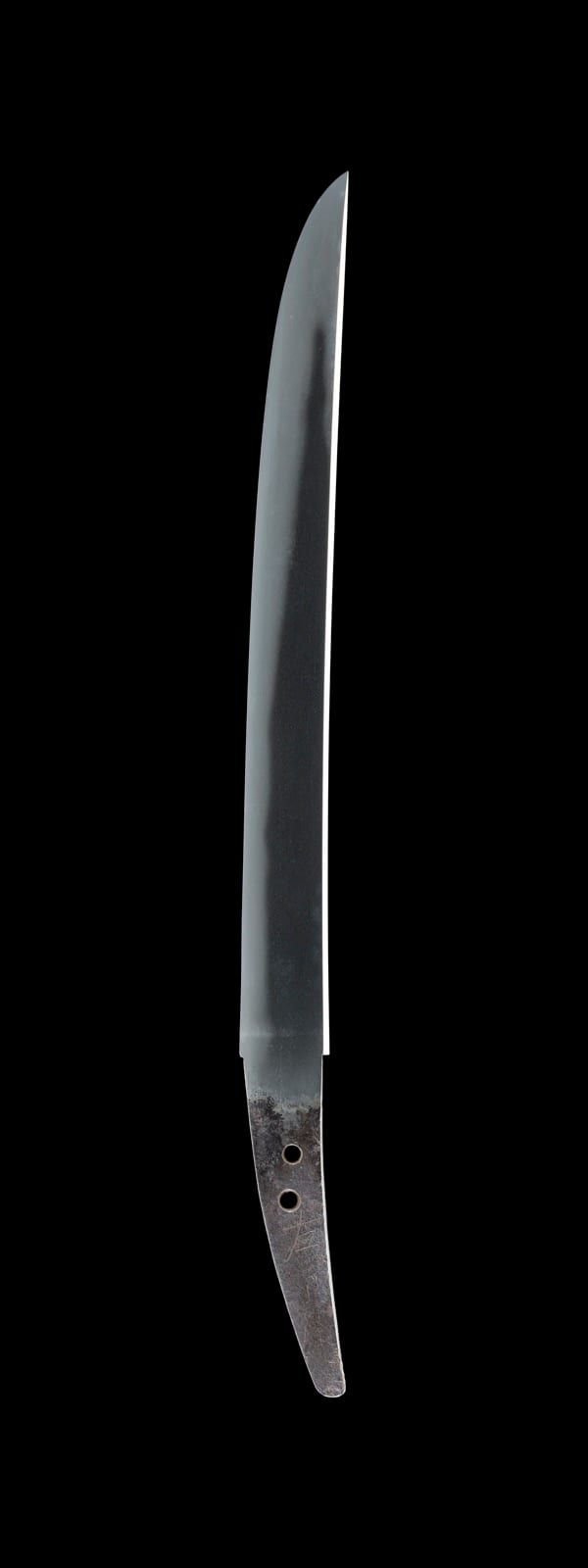
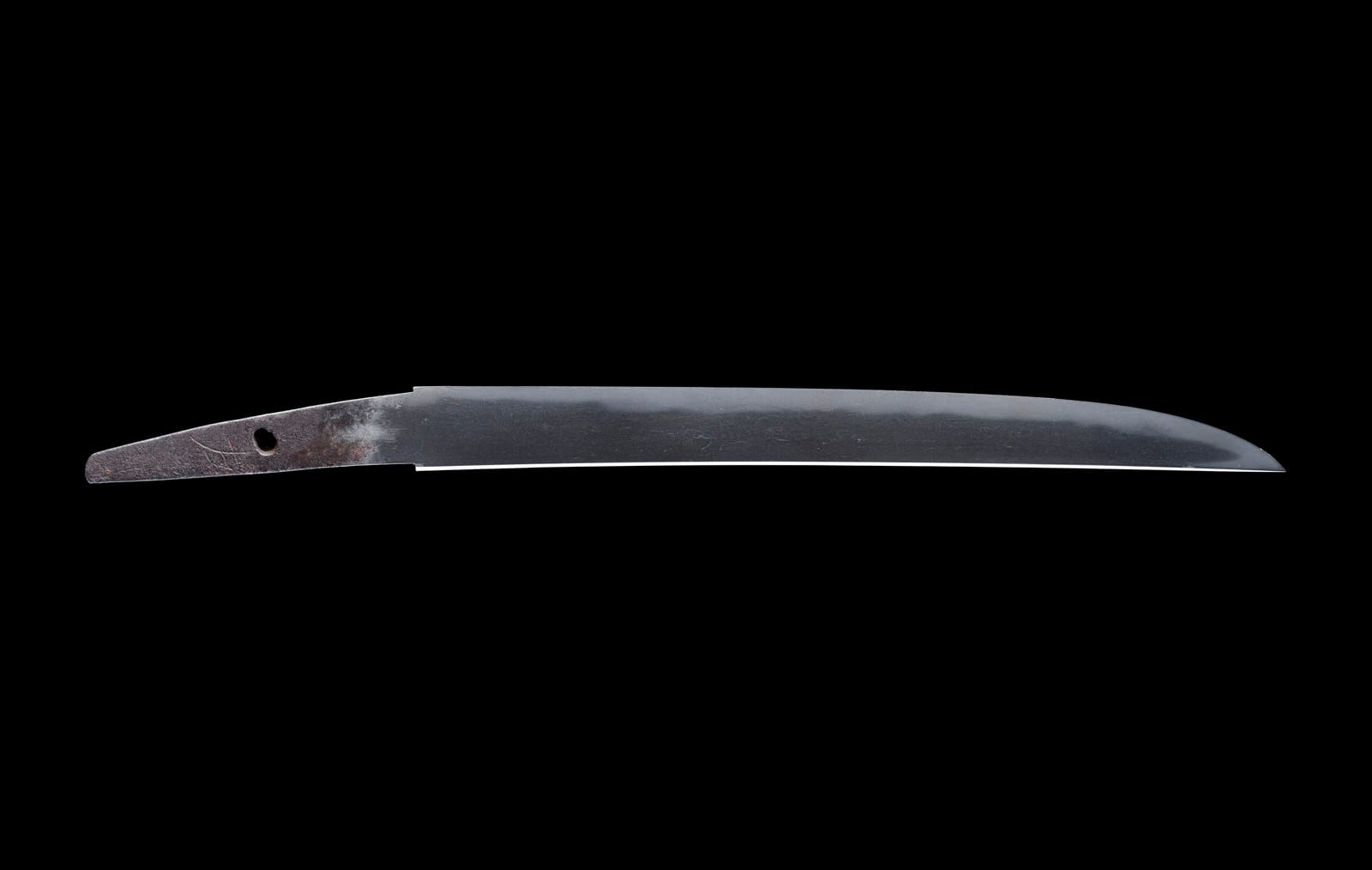 Tight itame · notare with nie · rising bōshi
Work and style
The kantei points of his work: the steel, the temper, the point, the shape, the tang and the signature.
-
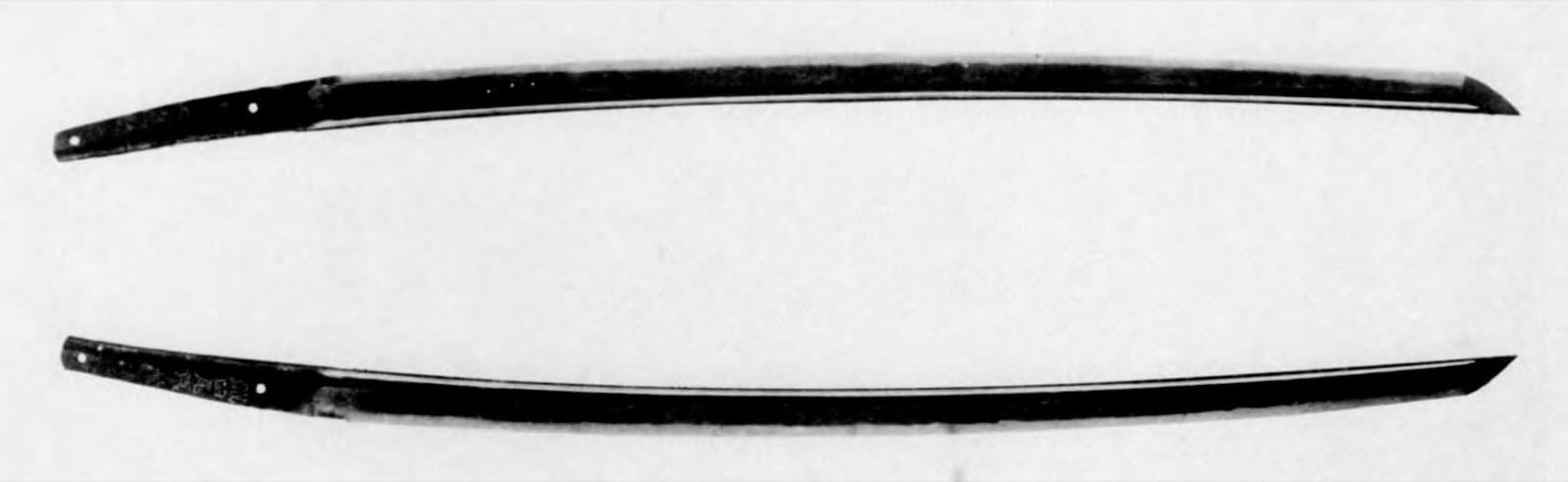 National Treasures · meibutsu
Famous works
The Kōsetsu, the Taikō, the Sayo and the Yoshimoto Samonji, and the tantō of the national museums.
-
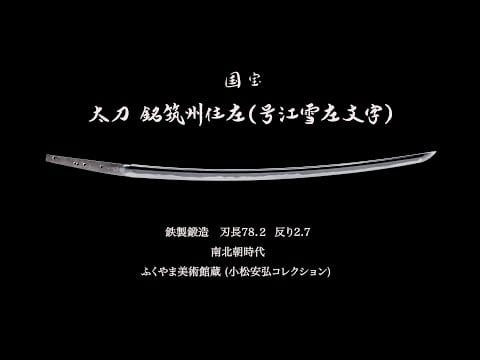 Works on display
Videos
The Kōsetsu Samonji at the Fukuyama Museum of Art and the audio guide of an exhibition of the school.
-
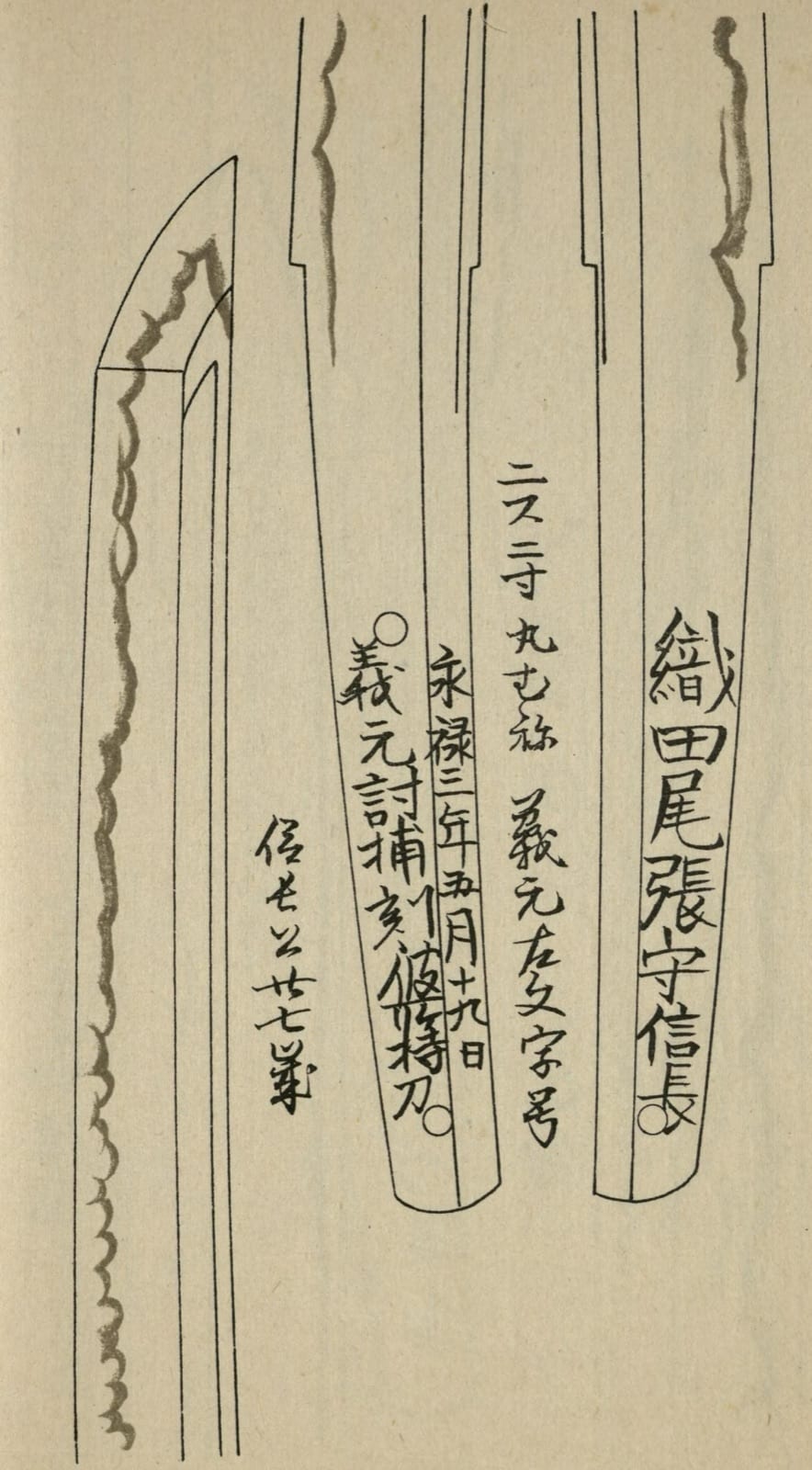 Bibliography and credits
Sources
The sources consulted on 4 October 2026, with their link, and the credit for each image.