On this page
His works with a designation
| Work | Type | Designation | Where it is |
|---|---|---|---|
| 江雪左文字 (Kōsetsu Samonji) | Tachi, 筑州住左 (Chikushū jū Sa) | National Treasure since 1951; designated in 1933 under the old law | Fukuyama Museum of Art (Hiroshima) |
| 太閤左文字 (Taikō Samonji) | Tantō, 左 (Sa) / 筑州住 (Chikushū jū) | National Treasure since 1952; designated in 1934 under the old law | Fukuyama Museum of Art |
| Tantō 筑州住左 (Chikushū jū Sa) | Tantō | National Treasure, according to the Japanese Wikipedia | Private collection |
| 小夜左文字 (Sayo Samonji) | Tantō, 左 (Sa) / 筑州住 (Chikushū jū) | Important Cultural Property | A private company in Ibaraki (Ōsaka) |
| 義元左文字 (Yoshimoto Samonji) or 宗三左文字 (Sōza Samonji) | Katana ō-suriage, unsigned | Important Cultural Property | Kenkun shrine (建勲神社, Kenkun Jinja), Kyoto, on deposit at the Kyoto National Museum |
| Tantō 左 (Sa) / 筑州住 (Chikushū jū) | Tantō, 25.4 cm blade | Important Cultural Property | Kyūshū National Museum |
| Tantō 左 (Sa) / 筑州住 (Chikushū jū) | Tantō | Important Cultural Property | Kyoto National Museum |
The Kōsetsu Samonji
It owes its name to Itabeoka Kōsetsusai, a vassal of the Hōjō; it later passed to Tokugawa Ieyasu and to his son Yorinobu, of the Kii branch, according to the Japanese Wikipedia. Today it is at the Fukuyama Museum of Art; the city of Fukuyama has owned it since 2018, by donation.
The Taikō Samonji
It passed from Toyotomi Hideyoshi, the Taikō, to Tokugawa Ieyasu and to Hidetada, and then to the Inoue house of Hamamatsu, until about 1930. The Japanese Wikipedia says that the name “Taikō” dates from the Shōwa era and that it was formerly called 聚楽 (Juraku).
The Sayo Samonji
The Japanese Wikipedia records two versions of the origin of its name, one of them a revenge at the pass of 小夜の中山 (Sayo no Nakayama). They are tales, not documented history.
The Yoshimoto Samonji
According to the Japanese Wikipedia, it belonged to Miyoshi Sōsan, who gave it in 1536 to Takeda Nobutora; it passed to Imagawa Yoshimoto and, when he fell at Okehazama in 1560, to Oda Nobunaga, who had the date of that victory and his name engraved on the tang, inlaid in gold. Today it measures 65.1 cm; it measured 78.8. It burned in the great Meireki fire and was retempered.
The plate of 1932 makes both inscriptions legible: 永禄三年五月十九日 (Eiroku sannen gogatsu jūkunichi) 義元討捕刻彼所持刀 (Yoshimoto uchitoru koku kare shoji katana), “19th day of the fifth month of the third year of Eiroku: Yoshimoto struck down, the sword he carried is engraved”, and 織田尾張守信長 (Oda Owari-no-kami Nobunaga).
In the treatises
Several of his blades are meibutsu of the 享保名物帳 (Kyōhō meibutsuchō), the register of famous swords of the Kyōhō era: the Kōsetsu, the Sōza or Yoshimoto, the Sayo and others, according to the Japanese Wikipedia. His place in the cutting lists (wazamono) and in the old appraisals is not recorded in any of the sources consulted.
Gallery
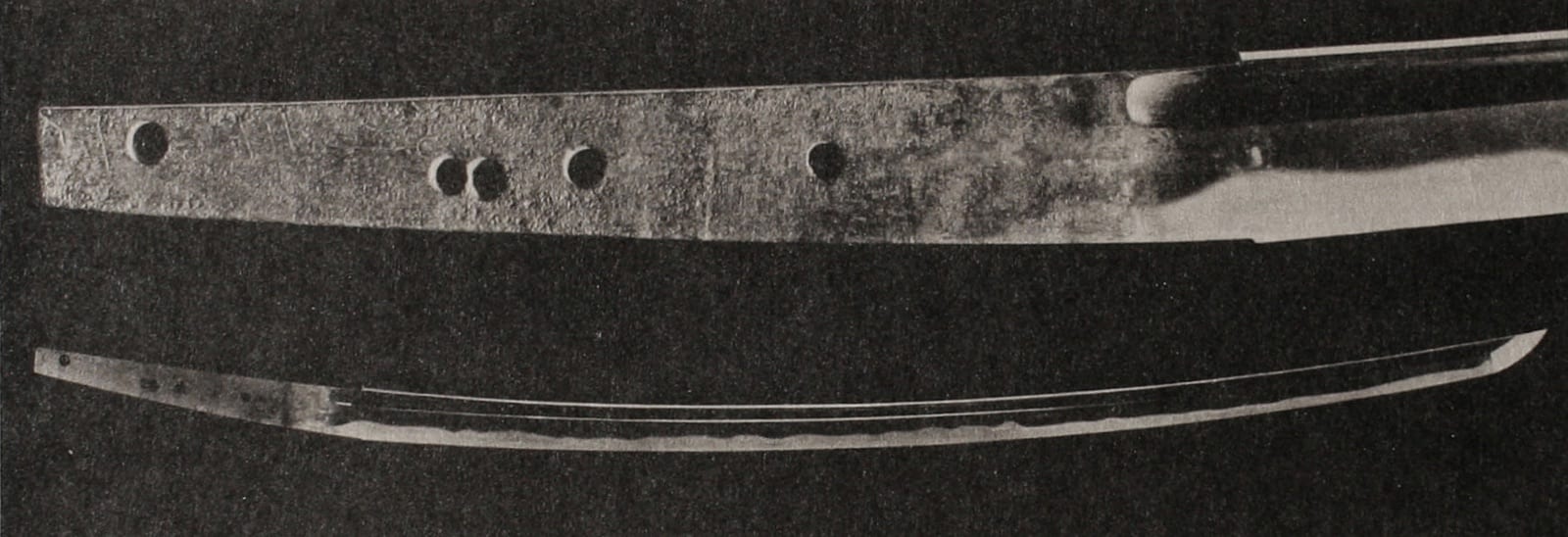
The Kōsetsu Samonji (江雪左文字, Kōsetsu Samonji), tachi and National Treasure, in a plate of 1952. Association of Cultural Properties, Japan (1952), public domain, via Wikimedia Commons · Public domain · source 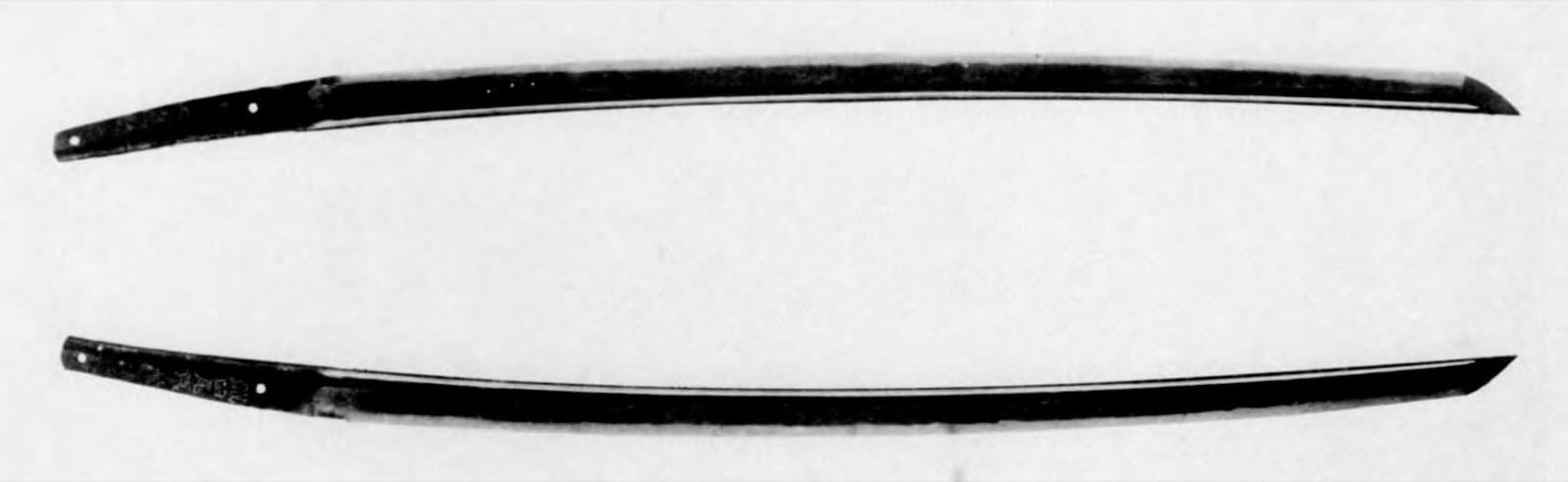
The Yoshimoto Samonji (義元左文字, Yoshimoto Samonji), from both faces, in a plate of 1924. Unknown author (1924), public domain, via Wikimedia Commons · Public domain · source 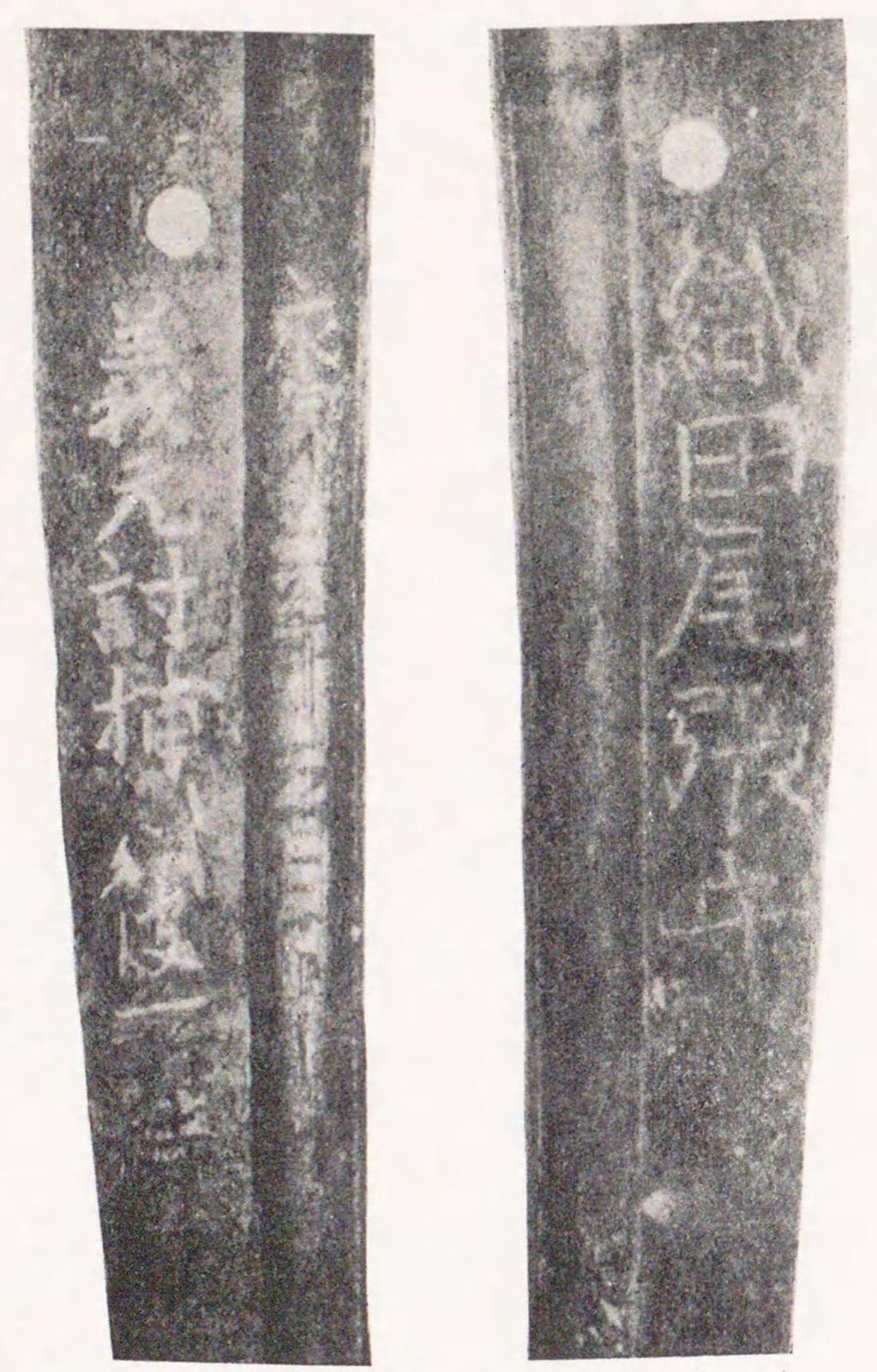
The tang of the Yoshimoto Samonji with the gold inscriptions that Oda Nobunaga had added, in a plate of 1932. Unknown author (1932), public domain, via Wikimedia Commons · Public domain · source 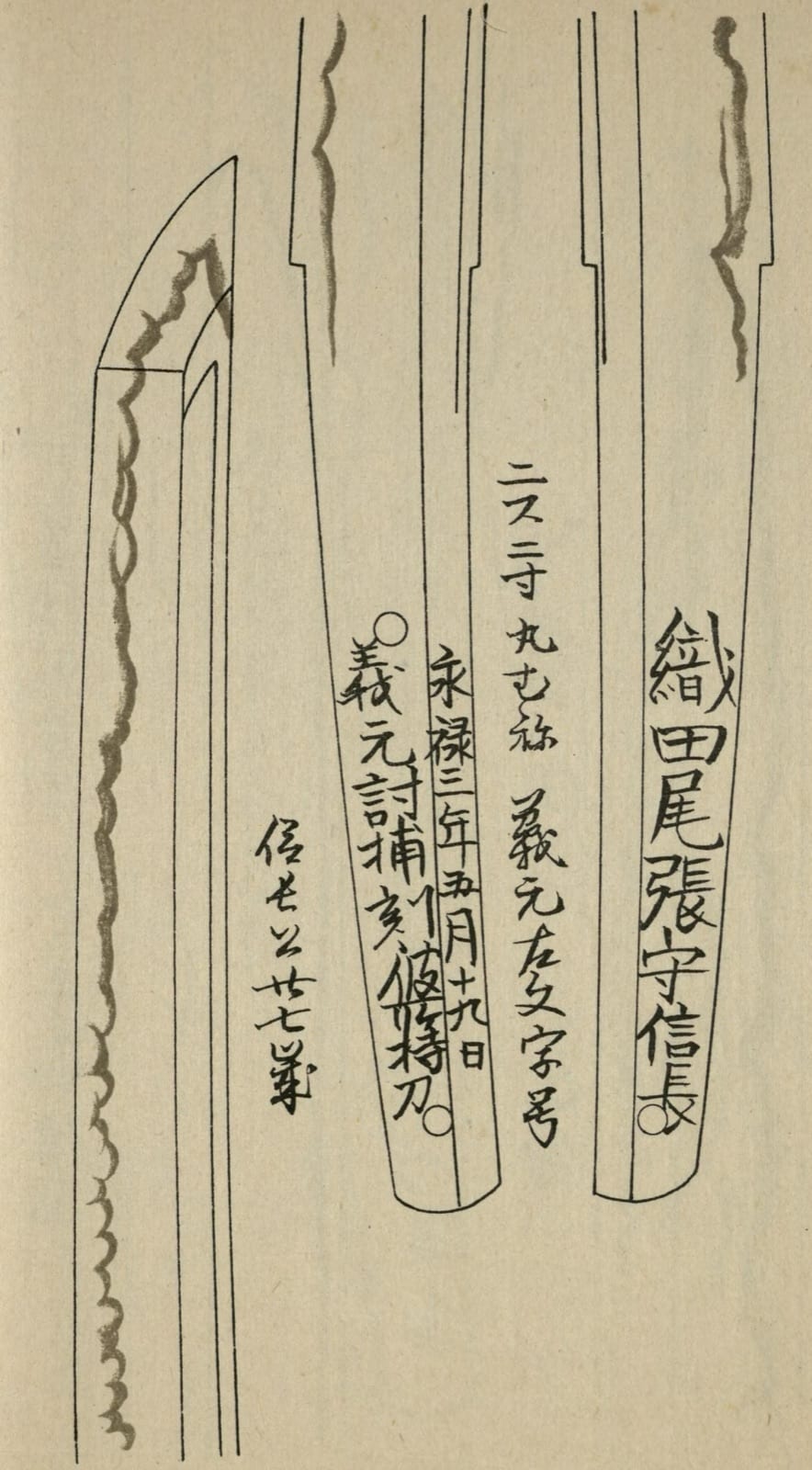
Oshigata (押形, oshigata) of the Yoshimoto Samonji, in a compilation published in 1928. Unknown author (1928), public domain, via Wikimedia Commons · Public domain · source


