On this page
Quick profile
- Name
- Takahashi Sadatsugu; he signed Ryūōji Sadatsugu and, after becoming a Living National Treasure, Ryūsen Sadatsugu HD
- Kanji and reading
- 高橋貞次 (Takahashi Sadatsugu) · 龍王子 (Ryūōji) · 龍泉 (Ryūsen) HD
- Birth and death
- 14 April 1902, in Ōmachi, now Saijō (Ehime) · 21 August 1968 AT
- Where he forged
- Matsuyama (Ehime), in the Ishite district, from 1936; Kotobank brings the move to Matsuyama forward to 1930 AT
- Masters
- 月山貞一 (Gassan Sadakazu) and his son 月山貞勝 (Gassan Sadakatsu), in Osaka, from 1917; later, an apprentice of the 中央刀剣会 (Chūō Tōken-kai) in Tokyo AT
- School or tradition
- Trained with the Gassan; he excelled in the Bizen tradition and mastered the five traditions (五箇伝, gokaden) AT
- Licence
- He forged before the war; after the ban of 1945, licensed forging reopened in 1953 AT
- Rank
- Living National Treasure (重要無形文化財「日本刀」保持者, jūyō mukei bunkazai Nihontō hojisha) since 1955; NBTHK mukansa in 1958, according to Markus Sesko AT
In short
What we know. The 2019 NBTHK catalogue exhibits him among the holders of the intangible cultural property “Japanese sword”, with a katana and a wakizashi of February 1958 made at the request of Ehime prefecture. The Tokyo National Museum holds six works of his, among them a tachi of 1960 forged with the steel left over from the protective sword of Prince Naruhito.
How we know it. His life is told by the Japanese Wikipedia, the Kotobank biographical dictionary, Ehime Kioku and the Ehime Museum of History and Culture, which holds part of his forge.
What we do not know. The exact year in which he opened his Matsuyama forge (1930 or 1936), that of his appointment as mukansa, which only one source gives, and who his pupils were.
Sections
-
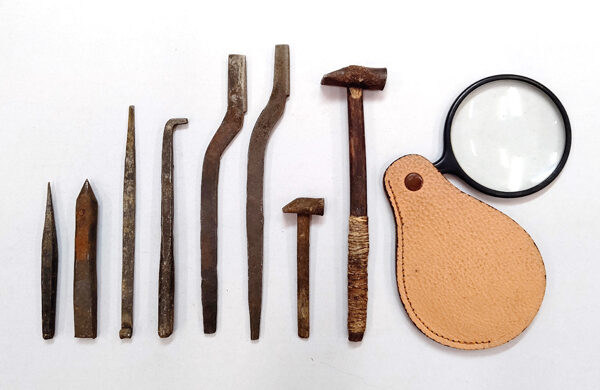
 Gassan · Matsuyama · Ise
Life and forging
His apprenticeship in Osaka and Tokyo, his forge in Matsuyama, the post-war years and the swords for the imperial family.
-
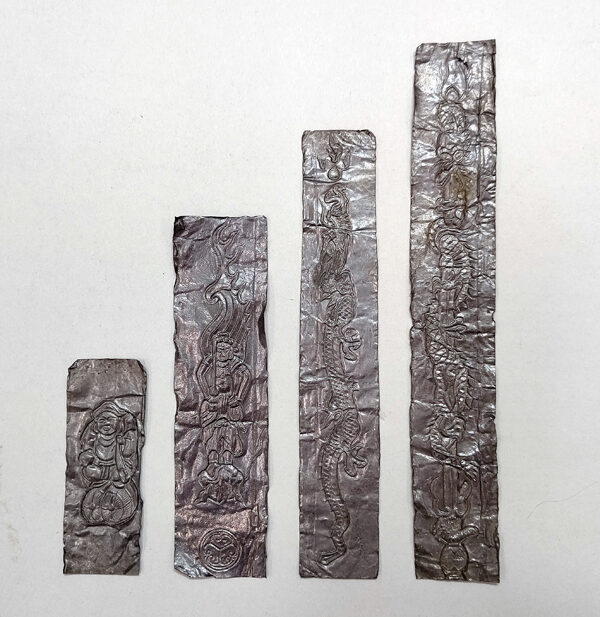
 Bizen · engraving · dragons
Work and style
The Bizen tradition, the engraving of the blades and his works in museums and in the NBTHK catalogues.
-
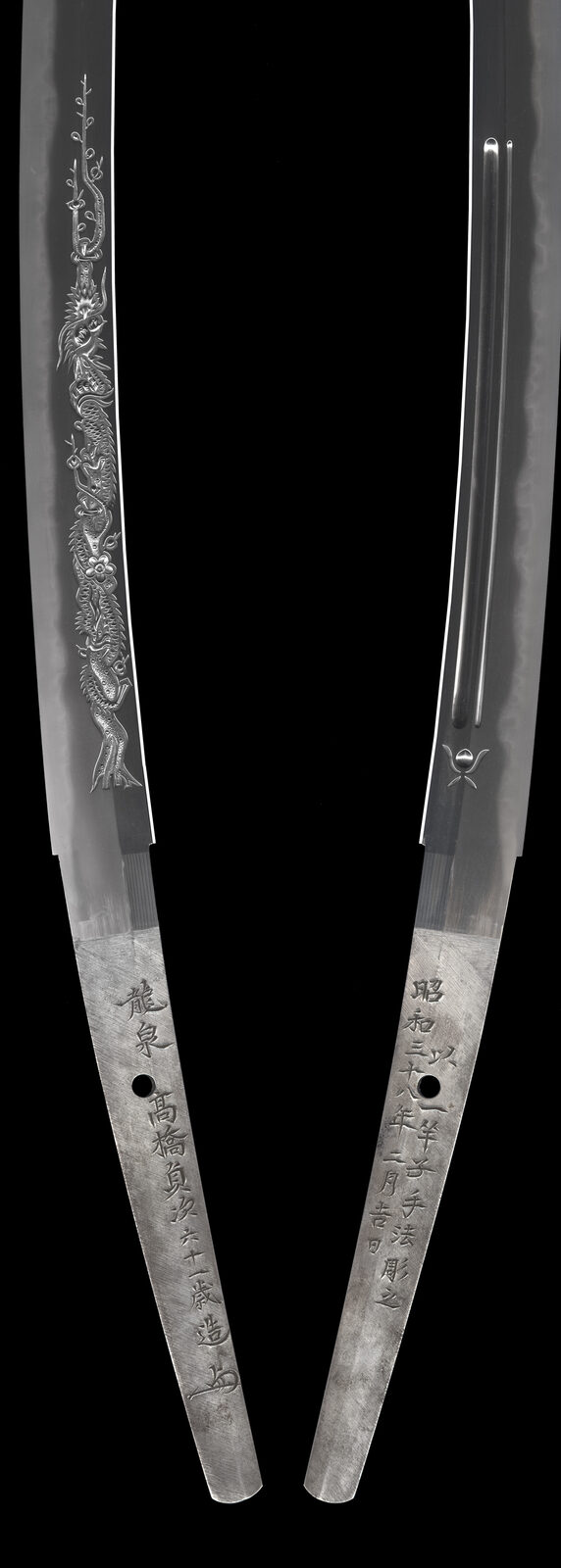
 Living National Treasure · Imperial Household
Prizes
His prizes and his titles, from the 1938 exhibition to the designation of 1955.
-
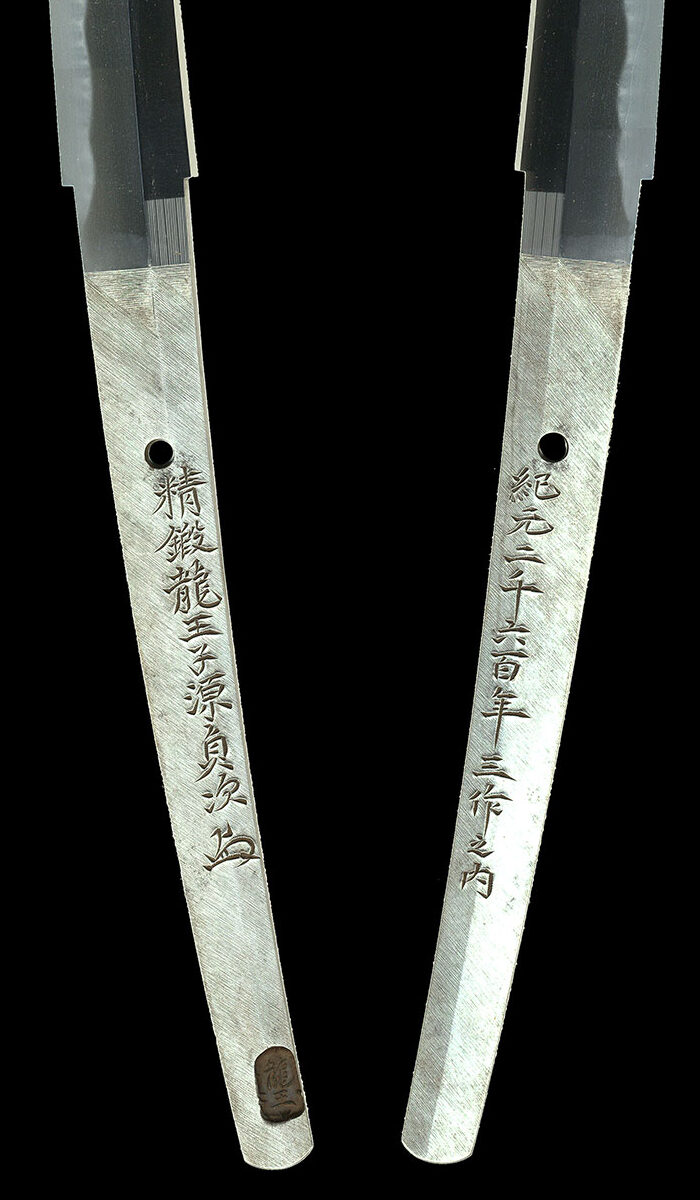 Bibliography and credits
Sources
The sources consulted on 4 October 2026, with their link where possible, and the credit for each image.