On this page
Training
- He was born on 14 April 1902 in Ōmachi, in the Niihama district, now the city of Saijō (Ehime). His elder brother 高橋義宗 (Takahashi Yoshimune), also a swordsmith, died young. Ehime Kioku relates that he was encouraged to forge by his brother 徳太郎 (Tokutarō), a swordsmith and sword dealer.
- In 1917, at the age of fifteen, he joined 月山貞一 (Gassan Sadakazu) and his son 月山貞勝 (Gassan Sadakatsu) in Osaka.
- In 1919 he became an apprentice of the 中央刀剣会 (Chūō Tōken-kai) in Tokyo, where he studied the old swords for four years until he mastered the five traditions (五箇伝, gokaden).
The Matsuyama forge
- Kotobank settles him in Matsuyama in 1930, with the forging name 龍王子貞次 (Ryūōji Sadatsugu); the Japanese Wikipedia and Ehime Kioku open his Ishite forge, in Matsuyama, in 1936.
- In 1938 he won the Prime Minister’s prize at the first sword exhibition, and in 1940 he forged the sacred sword of the shrine 鶴岡八幡宮 (Tsurugaoka Hachimangū), in Kamakura.
- In 1943 he became swordsmith to the court (宮中御用刀匠, kyūchū goyō tōshō) and artist of the Imperial Household (皇室技芸員, kōshitsu gigei-in). At 42 he led the swordsmiths of the great workshop of the shrine 熱田神宮 (Atsuta Jingū).
After the war
- The Allied ban on forging swords left him without work. On the advice of 本間順治 (Honma Junji), in 1950 he gave a dagger engraved with a plum tree and a dragon (梅龍, ume ryū) to Lieutenant General Walker, of the United States 8th Army, who wrote him a letter of thanks; it was part of the campaign to have the sword recognised as art. Licensed forging reopened in 1953.
- In 1951 he forged the sacred treasure swords of the shrine 伊勢神宮 (Ise Jingū) for its ritual renewal (式年遷宮, shikinen sengū).
- In 1955, at the age of 53, he was the first swordsmith named a Living National Treasure, and to this day the only one from Ehime.
- He forged the protective swords (御守刀, omamori-gatana) of Princess Michiko in 1959, for her wedding to Prince Akihito, and those of Princes Naruhito in 1960 and Fumihito in 1965. The Tokyo National Museum holds a tachi of 1960 forged with the steel left over from Naruhito’s sword.
- The Japanese Wikipedia adds that the Burmese general Aung San owned a sword of his, which his daughter Aung San Suu Kyi inherited.
What remains
- He died on 21 August 1968, at the age of 66. He is buried at the temple 金剛院 (Kongō-in), in Saijō; the site of his Ishite forge has already been demolished.
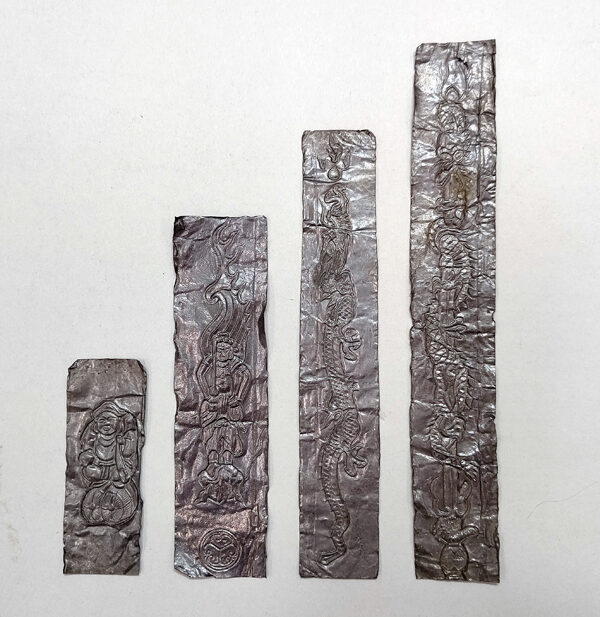
- In 2001 part of the material from his forge was deposited at the Ehime Museum of History and Culture: engraving tools and lead moulds of his motifs. The museum studied them in an article of 2002.
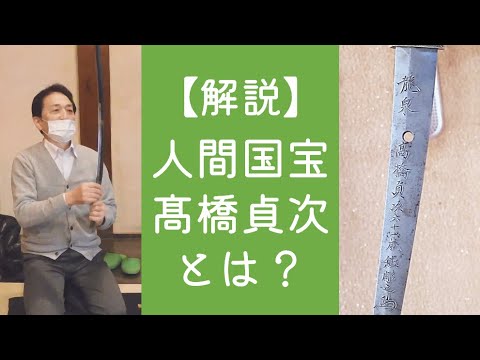 Play: 刀匠初の人間国宝!?髙橋貞次について (Tōshō hatsu no ningen kokuhō!? Takahashi Sadatsugu ni tsuite)
刀匠初の人間国宝!?髙橋貞次について (Tōshō hatsu no ningen kokuhō!? Takahashi Sadatsugu ni tsuite) · 松山城公式チャンネル (Matsuyama-jō kōshiki channel)
1:39 · 8 March 2023
A short presentation from the Matsuyama castle channel, with his works on display at the castle and the collaboration of the Ehime branch of the NBTHK. He does not appear.