Kantei keys
They are given by the official record of the Kitsunegasaki, his only known work:
- Sugata. Shinogi-zukuri and iori-mune; 78.8 cm long, 3.4 cm of sori, 3.2 cm wide at the base and 2.1 cm at the point; kissaki of 3.3 cm, ikubi; high koshizori and great stature. Unlike other Ko-Aoe tachi, the width does not taper so much towards the point, according to the Japanese Wikipedia.
- Jihada. Ko-itame with mokume, somewhat visible (the so-called chirimen-hada), thick ji-nie, midare-utsuri, sumi-hada in the lower part and plenty of chikei.
- Hamon. Ko-midare with many ashi and yō, a somewhat sunken nioiguchi and deep ko-nie. The Japanese Wikipedia describes it as a chū-suguha with a somewhat wide temper, with ko-midare and ko-chōji, in nie.
- Bōshi. Nie-kuzure, according to the official record; yakizume, according to the Japanese Wikipedia.
- Nakago and mei. Unshortened tang, with strong sori even in the tang; ō-sujikai file marks and two holes. The two-character signature, 為次 (Tametsugu), somewhat small, on the ura side (the one facing the body when worn), towards the back and next to the hole. The Japanese Wikipedia places it halfway up. Signing on the ura, even on a tachi, is a Ko-Aoe custom.
The features of Ko-Aoe
According to the Japanese Wikipedia: marked koshizori, with sori even in the tang, as the Kitsunegasaki shows; a shape that tapers to a ko-kissaki; a steel more visible than that of Bizen, with ji-nie and the characteristic sumi-hada, blue with dark patches; a temper of suguha-chō or ko-midare with ko-chōji, of subdued appearance; komaru bōshi; ō-sujikai file marks, and the signature almost always on the ura.
Markus Sesko places the Kitsunegasaki, with a tachi by Bungo Yukihira and another by Niō Kiyotsuna, among the tachi of the early Kamakura period; he gives 3.3 cm of sori, against the 3.4 of the official record and of Wikipedia.
The Kitsunegasaki and its school
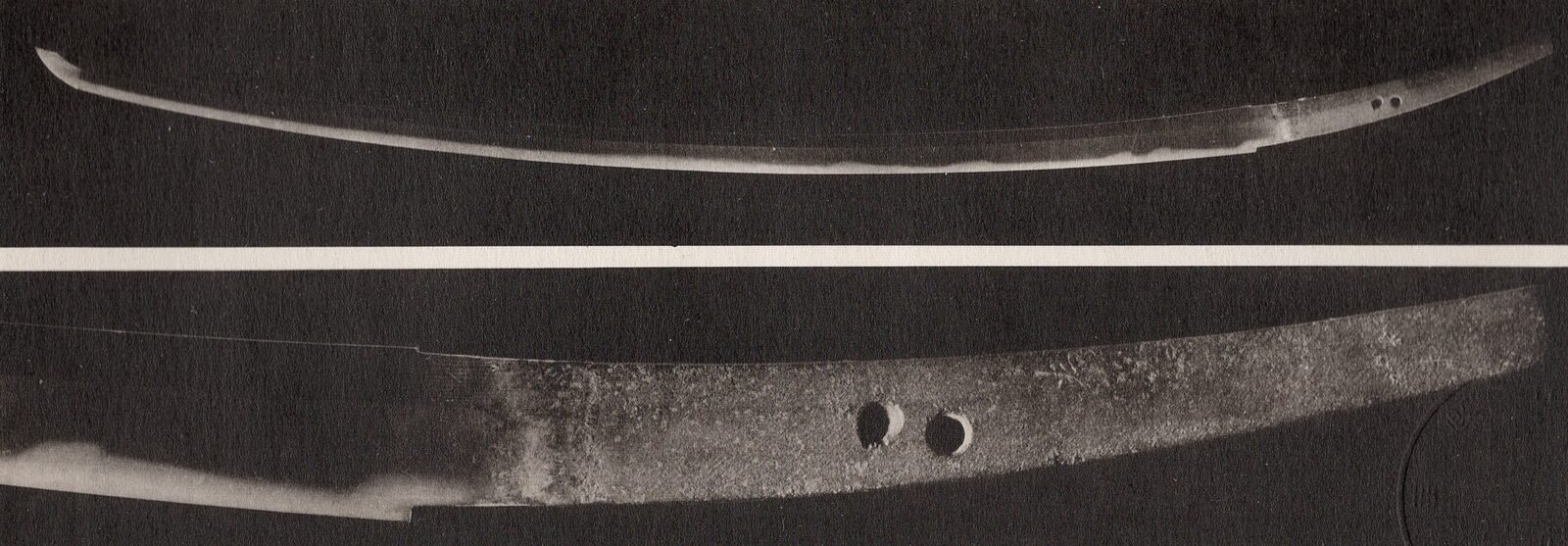
The tachi Kitsunegasaki, a National Treasure: the whole blade and the tang. 文化財協会 (Bunkazai Kyōkai), public domain, via Wikimedia Commons · Public domain · source 
The tang of the Kitsunegasaki, unshortened, with its curve. Unknown author, public domain, via Wikimedia Commons · Public domain · source 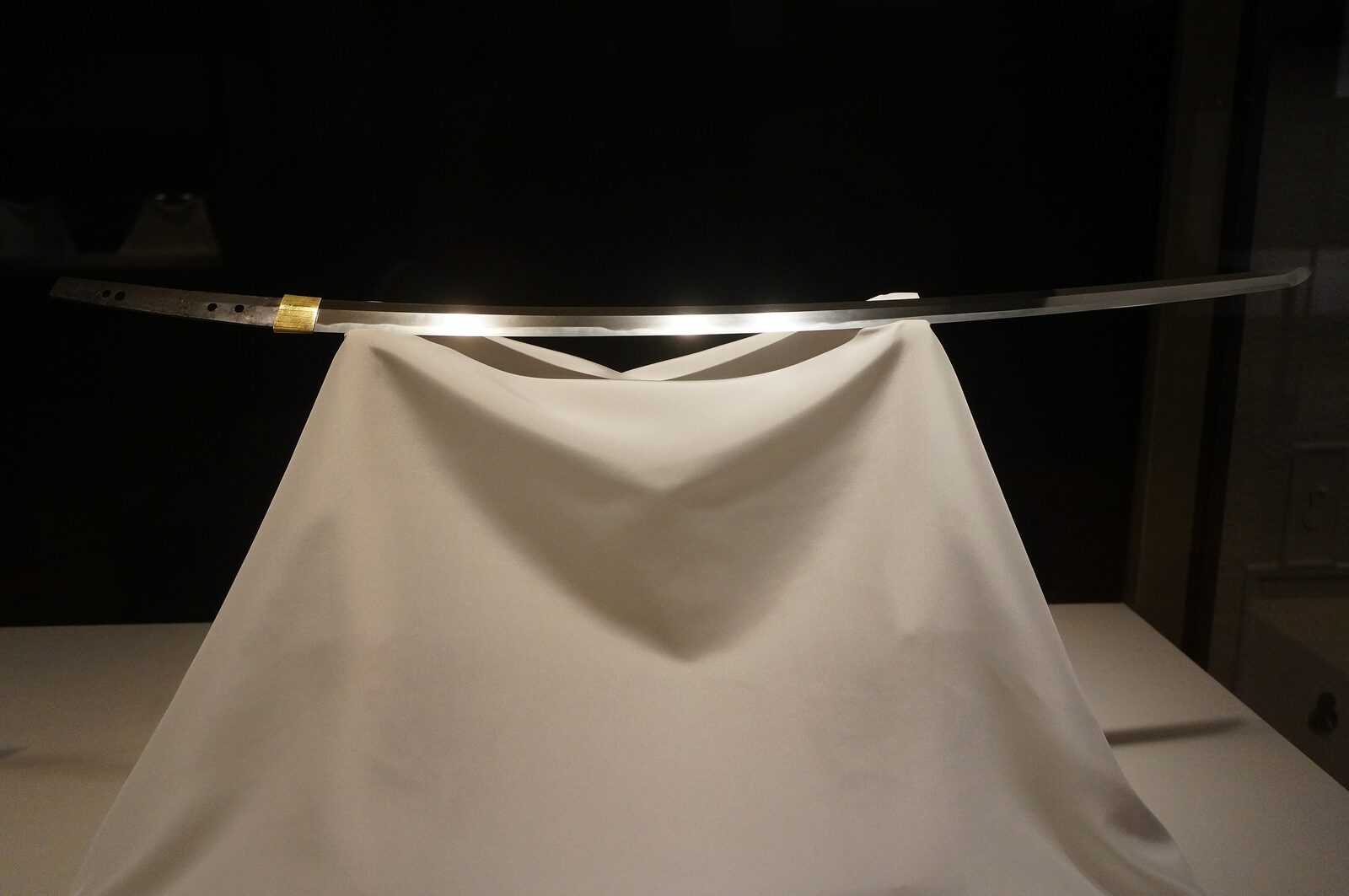
For comparison: a tachi by Masatsune, of the Ko-Aoe school, in the Tokyo National Museum. SLIMHANNYA, CC BY-SA 4.0, via Wikimedia Commons · CC BY-SA 4.0 · source


