On this page
The Kitsunegasaki
- Tachi 銘為次 (mei Tametsugu), called 狐ヶ崎 (Kitsunegasaki), with its mounting 黒漆革巻太刀拵 (kurourushi-gawa-maki tachi-goshirae): designated in 1933 under the old law and a National Treasure since 9 June 1951, with the mounting as part of the designation.
- It is in the Kikkawa Historical Museum (吉川史料館, Kikkawa Shiryōkan), in Iwakuni (Yamaguchi), of the Kikkawa Hōkōkai foundation. The museum displays it every autumn.
- The official record describes it as very well preserved and healthy, and regards it as the best work of its maker. The Japanese Wikipedia calls it the best-preserved tachi of the Aoe school and stresses that it is rare for one of its period to have come down as if new; its original black-lacquer and leather mounting is, it says, an extremely rare piece.
- The Japanese Wikipedia gives 98.8 cm in total, with 20.3 cm of tang, which leaves a blade of 78.5 cm, against the 78.8 cm of the official record.
The battle of Kitsunegasaki
In 正治 (Shōji) 2, 1200, with the fall of Kajiwara Kagetoki, the vassal 吉香友兼 (Kikka Tomokane), ancestor of the Kikkawa, defeated Kajiwara Kagehige with this tachi at Kitsunegasaki, in Suruga (today Shizuoka); the sword takes its name from that place. The Kikkawa kept it for eight hundred years as the family’s protective sword.
The fight is recorded in the 吾妻鏡 (Azuma kagami), in the entry for the 20th day of the first month of 1200, and that is why the sword has a name. That documents the battle, not that Tomokane’s sword was this one nor that Tametsugu forged it: it is the family’s tradition.
In the lists and the treatises
- It is not on record, in the sources consulted, that the Kitsunegasaki is in the Kyōhō meibutsuchō (享保名物帳); Sesko calls it “meibutsu” in the sense of a named sword. Nor is Tametsugu on record in the wazamono lists.
- The Japanese Wikipedia cites as a reference for the work the 『日本刀大鑑』 (Nihontō taikan) by Honma Junji and Satō Kanbyō, volume 3 of the kotō, page 144. Its assessment has not been read.
The sword and its house
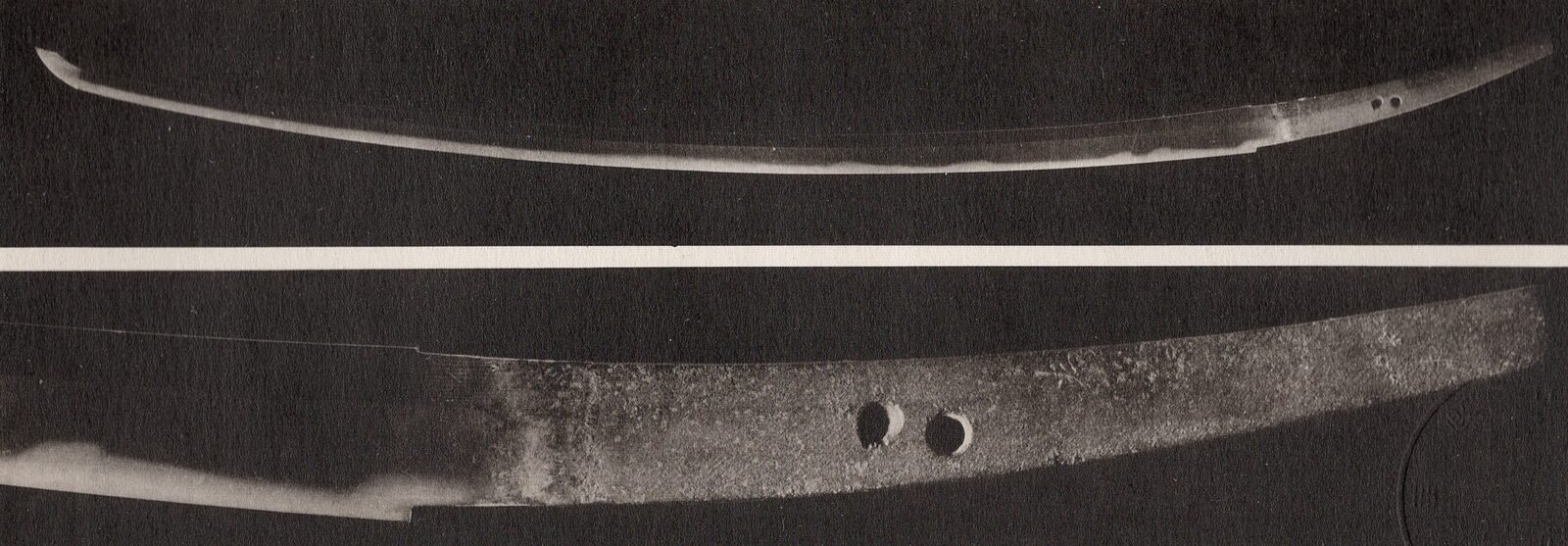
The tachi Kitsunegasaki, a National Treasure: the whole blade and the tang. 文化財協会 (Bunkazai Kyōkai), public domain, via Wikimedia Commons · Public domain · source 
The black-lacquer and leather mounting of the Kitsunegasaki. Unknown author, public domain, via Wikimedia Commons · Public domain · source 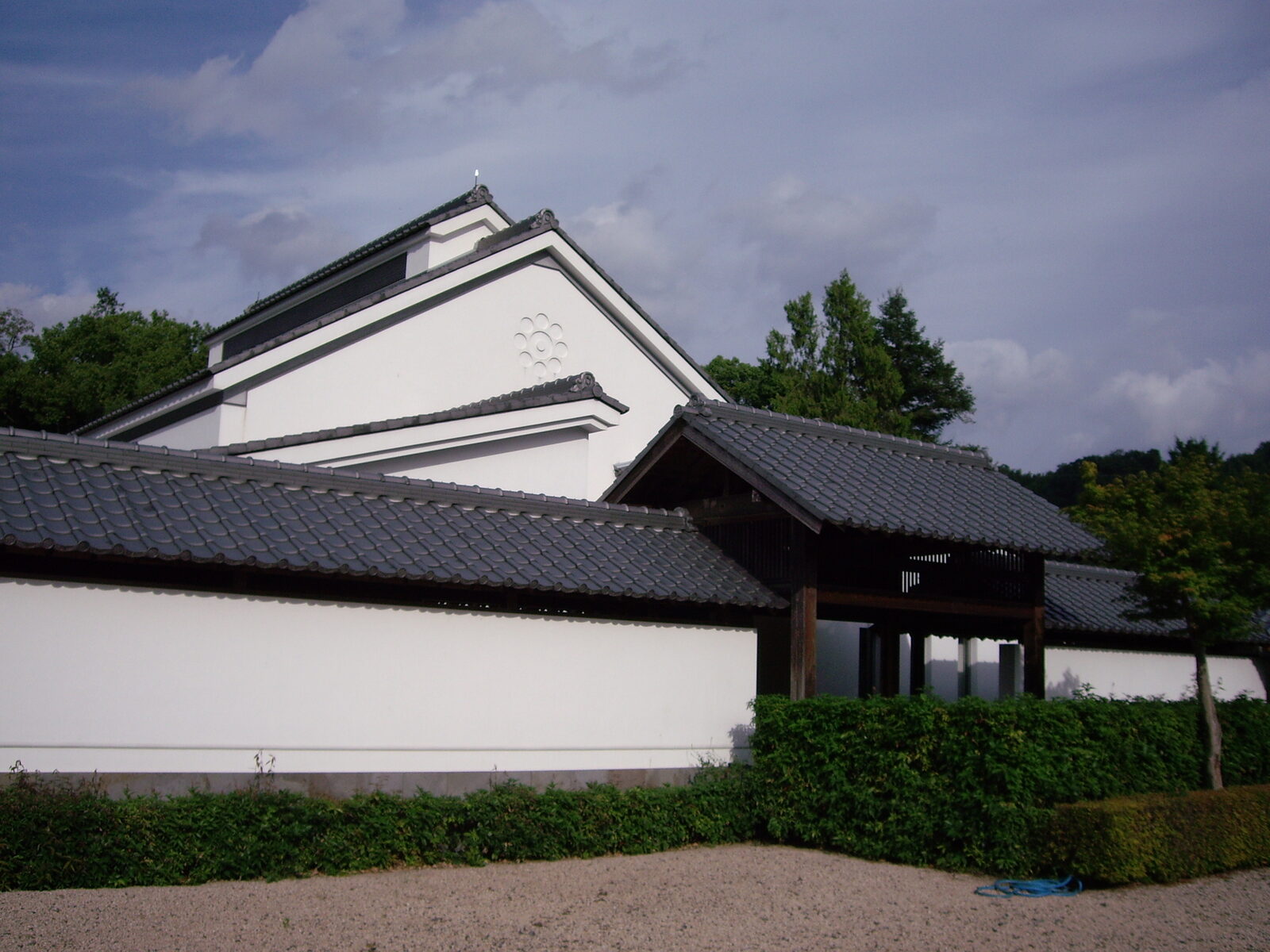
The Kikkawa Historical Museum, in Iwakuni, where the Kitsunegasaki is kept. Umako, public domain, via Wikimedia Commons · Public domain · source


