When he worked
- The Japanese Wikipedia places him between the late Heian and the early Kamakura period, and the biographical dictionary between the late Heian and Kamakura. The official record of the Kitsunegasaki dates him to Kamakura. Neither the year of his birth nor that of his death is known.
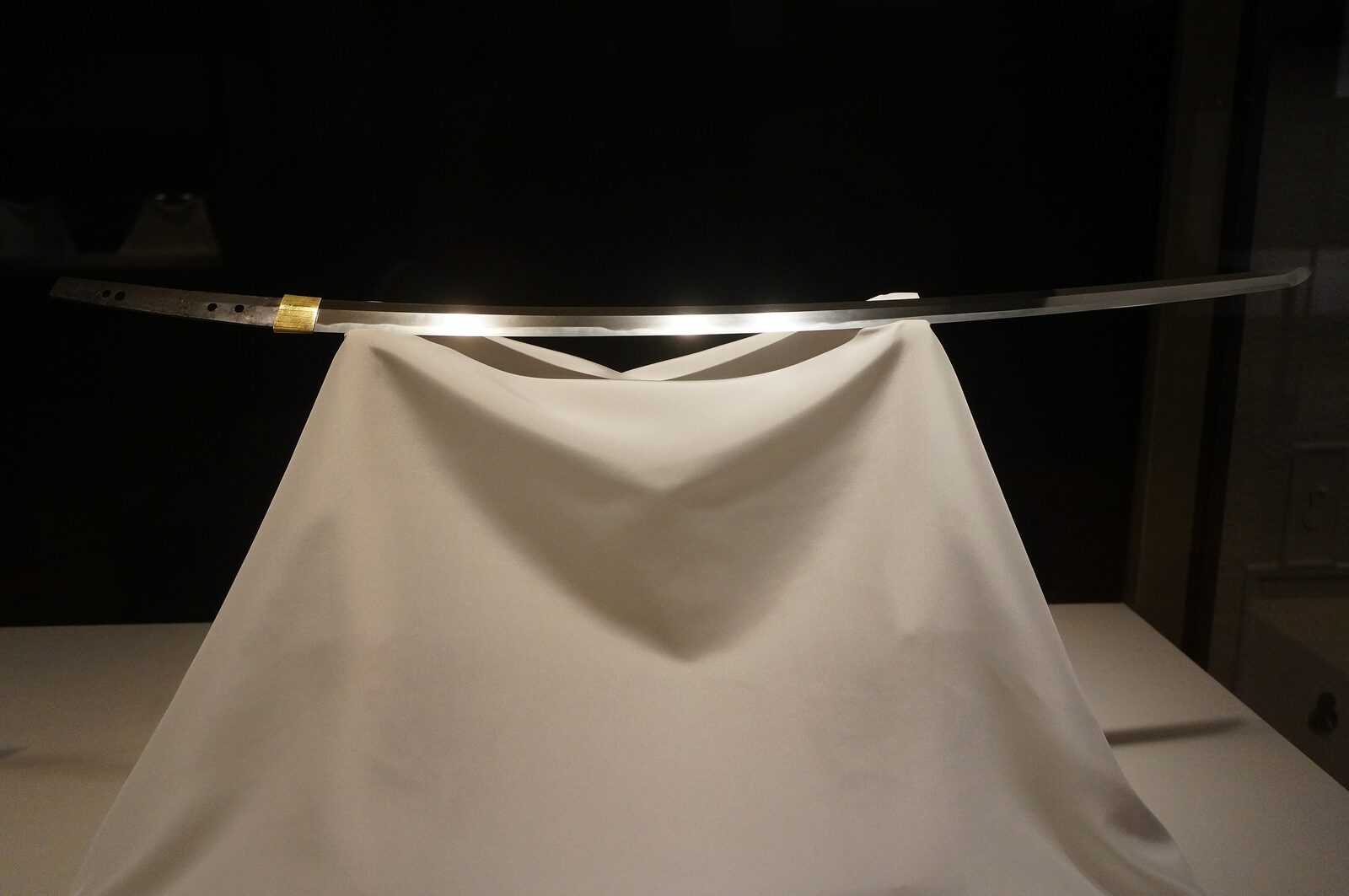
- Markus Sesko, on stylistic grounds, dates the Kitsunegasaki to the Jōgen era (1207–1211). If the sword was at the battle of 1200, as the legend says, it would have to be earlier; the Japanese Wikipedia says “around the Shōji era”. Sesko’s date is a dating by style, not by document.
The Aoe school
- Aoe is in Bitchū, today Kurashiki, in Okayama. Its school is divided by period: Ko-Aoe, until the mid-Kamakura period; Chū-Aoe, from the late Kamakura to the early Nanbokuchō period, with the oldest inscribed date in the Shōwa era; and Sue-Aoe, in Nanbokuchō, around the Enbun era.
- The Ko-Aoe swordsmiths do not inscribe years, and almost all have the character 次 (tsugu) in their name: 守次 (Moritsugu), 貞次 (Sadatsugu), 恒次 (Tsunetsugu), 次家 (Tsuguie), 為次 (Tametsugu), 康次 (Yasutsugu), 助次 (Suketsugu), 次忠 (Tsugutada) and 末次 (Suetsugu), among others.
The emperor’s swordsmiths
According to the Kanchi-in-bon Meizukushi, the retired emperor Gotoba-in called swordsmiths from Yamashiro, Bizen and Bitchū to his court to serve in rotation; from Bitchū, Sadatsugu, Tsunetsugu and Tsuguie. Tametsugu is not among them: nothing says that he was one of Gotoba’s swordsmiths.