On this page
Quick profile
- Name
- Tanba no Kami Yoshimichi; English sources also write “Tamba no Kami” AT
- Kanji and reading
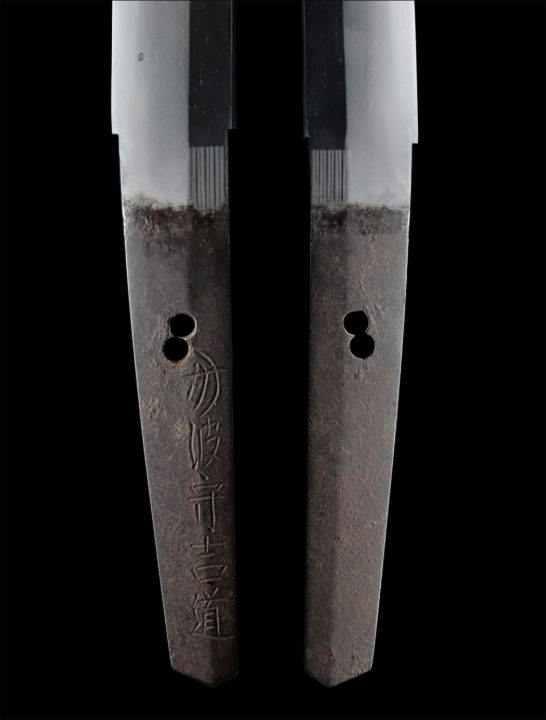
- 丹波守吉道 (Tanba no Kami Yoshimichi) HD
- Period
- Shintō: from the end of the 16th century to the middle of the 19th AT
- Province
- Yamashiro (山城), in Nishinotōin (西洞院), Kyoto; a branch in Osaka, in Settsu (摂津) AT
- School
- Mishina (三品派, Mishina-ha), which came from Mino HD
- Master
- Who taught him is not recorded; the NBTHK thinks that the first was a son of Kanemichi (兼道), a swordsmith of Mino AT
- Title
- Tanba no Kami (丹波守); in 1595 (Bunroku 4), according to Haga Yaichi’s dictionary AT
- Generations
- Eleven between 1634 and 1853 according to Hawley, in two branches, Kyoto and Osaka; no reliable family tree published AT
- Cutting rank
- yoki-wazamono (良業物) for the first two generations of Kyoto and the two of Osaka, in the Yamada cutting list AT
- What is documented
- A katana that is an Important Art Object in the Kyoto National Museum; a katana by the first, NBTHK Tokubetsu Jūyō HD
- The tradition
- That the first Yoshimichi created the sudare-ba AT
- What is not on record
- The order of the generations and who founded the Osaka branch PC
In short
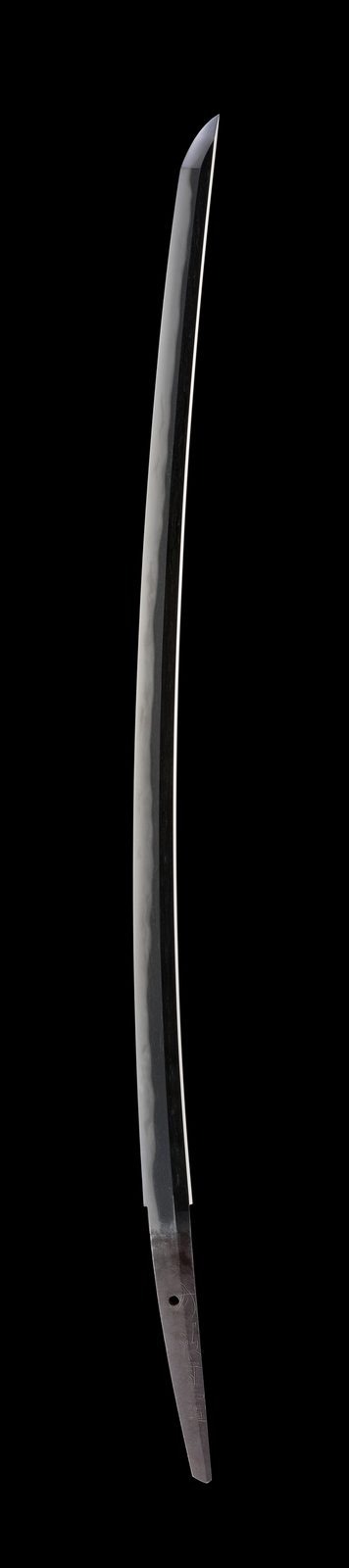
With his brothers Iga no Kami Kinmichi, Rai Kinmichi and Etchū no Kami Masatoshi, and with Ōmi no Kami Hisamichi, the first Yoshimichi makes up the five swordsmiths of Kyoto (京五鍛冶, Kyō go-kaji), who prospered throughout the Edo period alongside the Umetada and Horikawa schools. According to the tradition recorded by the NBTHK, Yoshimichi created the sudare-ba. The NBTHK already sees in a katana by the first signs of the sudare-ba that would become the style of the next generation. They should not be confused with Yamato no Kami Yoshimichi (大和守吉道), of Osaka, who is another swordsmith and is in another grade of the cutting list.
Sections
-
 The generations
Life and times
From Mino to Kyoto, the five swordsmiths of Kyoto, the Osaka branch and what is known of each generation.
-
 Kantei keys
Work and style
Sugata, jihada, sudare-ba, bōshi, the signature and how to tell Kyoto from Osaka.
-
In museums and lists
Famous works
An Important Art Object, a Tokubetsu Jūyō, their blades in museums and their place in the lists.
-
Bibliography and credits
Sources
The sources consulted and the image credits.