Sugata
The e-Museum describes his National Treasure tachi as slender, with a high koshizori, funbari and ko-kissaki: an archaic look. The official record adds that a hi with a straight sword (ken) carved in it, at the waist, is rare. It is the Ko-Bizen shape: almost always tachi, with a high koshizori, ko-kissaki and a nakago in the shape of a pheasant’s thigh (雉股, kijimomo), according to the Japanese Wikipedia.
In 2018 the NBTHK showed another tachi 友成作 (Tomonari saku), an Important Art Object, of 3 shaku 1 sun 7 bu (about 96 cm): long and wide as few of his are, with a shape of the late Heian or early Kamakura period.
Jihada
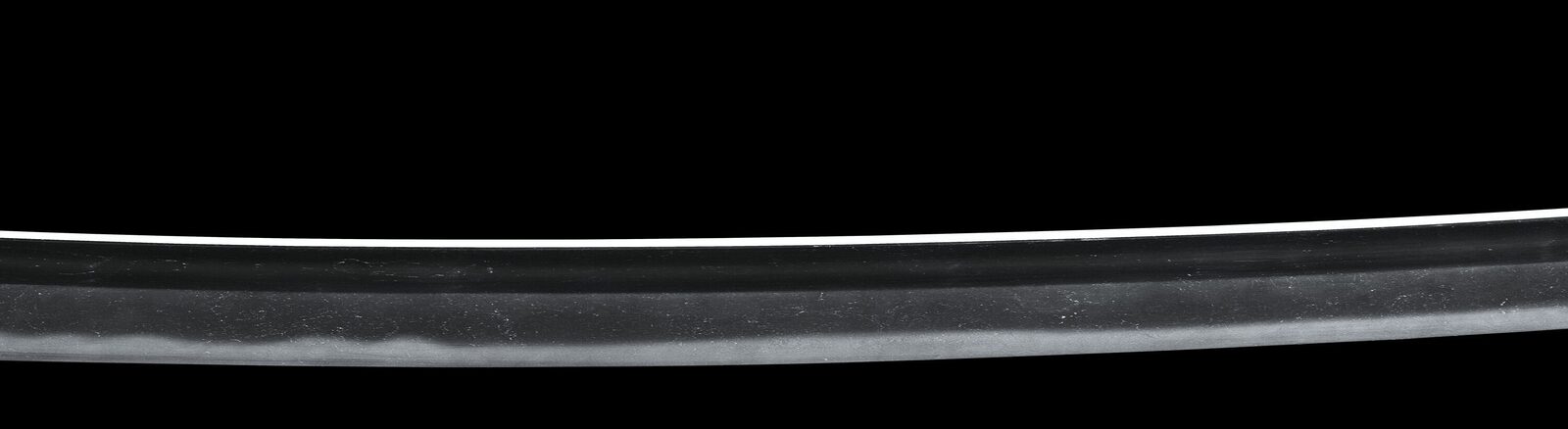
On the Tokyo National Museum tachi, itame that stands out a little (hadatachi) with a faint utsuri, according to the e-Museum; ko-itame somewhat hadatachi and moist, according to the official record. The NBTHK sums it up for kantei: a jigane of a somewhat dark colour, with the itame visible and a pale utsuri or none. The Uguisumaru, according to the Japanese Wikipedia, has a hadatachi jigane with thick ji-nie and midare-utsuri.
Hamon
A low ko-midare, with ashi and yō, on the Tokyo tachi (e-Museum); “in good taste”, in the official record. For the NBTHK it is a ko-midare “especially classical even among the Ko-Bizen”: without conspicuous round-headed ko-chōji, with hotsure, uchinoke and small, complex details. On the Uguisumaru, a suguha with ko-midare that turns into notare (湾れ) in the upper half. The Itsukushima tachi departs from this: it does not have the typical Ko-Bizen ko-midare, but a suguha with a somewhat tight nioiguchi, and the official record places it among his latest works.
Bōshi
The records and articles consulted do not describe his bōshi (帽子); the photograph of the point of the Tokyo tachi, below, lets it be seen.
Nakago and mei
The Tokyo tachi bears the five-character signature 備前国友成造 (Bizen no kuni Tomonari zō); the Itsukushima one, 友成作 (Tomonari saku). The long signatures with the name of the province are held to be older than the short ones.
Kantei keys
The NBTHK distinguishes him from Masatsune, with his tight, bright jigane, clear utsuri and well-defined ko-chōji, and from similar swordsmiths of Ko-Bizen and Ko-Ichimonji such as 包平 (Kanehira), Sukemura and Norimune: his hallmark is a “midare of classical elegance”.
The tachi of the Tokyo National Museum

The tachi 備前国友成造 (Bizen no kuni Tomonari zō), whole, on the omote side. Tokyo National Museum, via e-Museum · ColBase terms of use · source 
The same tachi, on the ura side. Tokyo National Museum, via e-Museum · ColBase terms of use · source 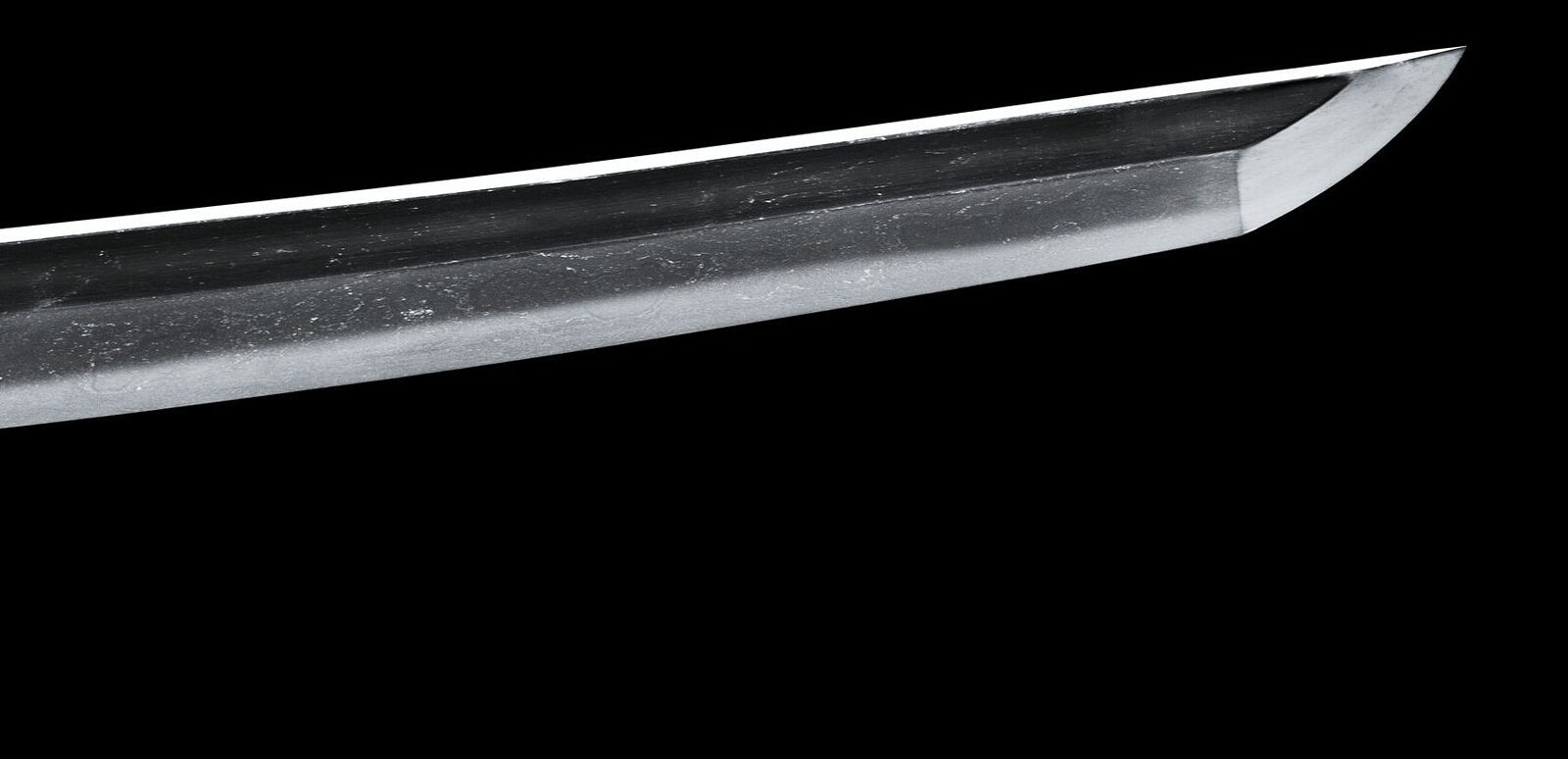
The kissaki and the bōshi, on the omote side. Tokyo National Museum, via e-Museum · ColBase terms of use · source 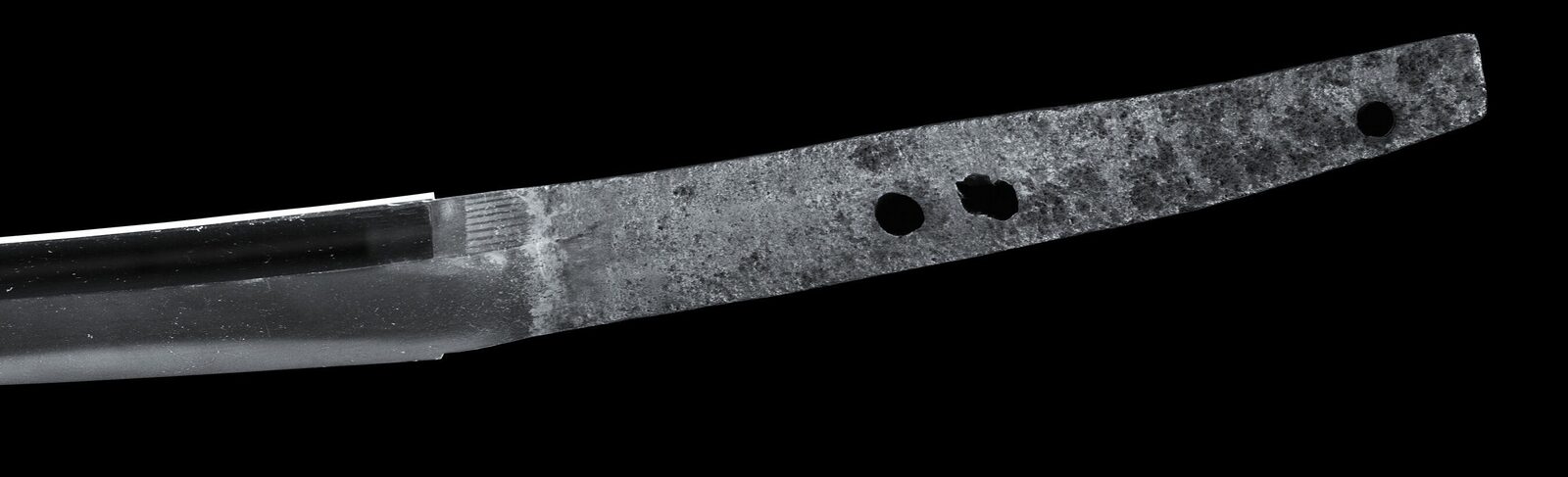
The nakago, on the ura side. Tokyo National Museum, via e-Museum · ColBase terms of use · source