On this page
The tradition
According to the Japanese Wikipedia, Tomonari was a Bizen swordsmith of the middle or late Heian period, son of 実成 (Sanenari). Tradition tells that he forged a sword with his father for Emperor Ichijō and places him around the era 永延 (Eien, 987–989). His dates of birth and death are not known. The Nihon jinmei daijiten, on Kotobank, repeats the parentage and the Eien era.
Ko-Bizen
Ko-Bizen (古備前, Ko-Bizen) is not a specific school, but the name given to the early swordsmiths of Bizen, from the late Heian to the early Kamakura period. Tradition puts Tomonari at the head of the series; the surviving works run from the late Heian to the middle of the Kamakura period, and his name is, after Masatsune’s, the one that recurs most often in the signatures. The Kotobank dictionaries give him, with 正恒 (Masatsune), as the representative of Ko-Bizen. The NBTHK journal (2018) calls him “one of the two best swordsmiths of Ko-Bizen, with Masatsune”.
Several Tomonari
There is a blade dated to the era 嘉禎 (Katei, 1235–1238), and the signatures on the Heian blades are by different hands: that is why it is assumed that there were several swordsmiths called Tomonari. The Japanese Wikipedia adds that inheriting the name did not become common until the Muromachi period and that, in his case, it does not look like a succession of the name.
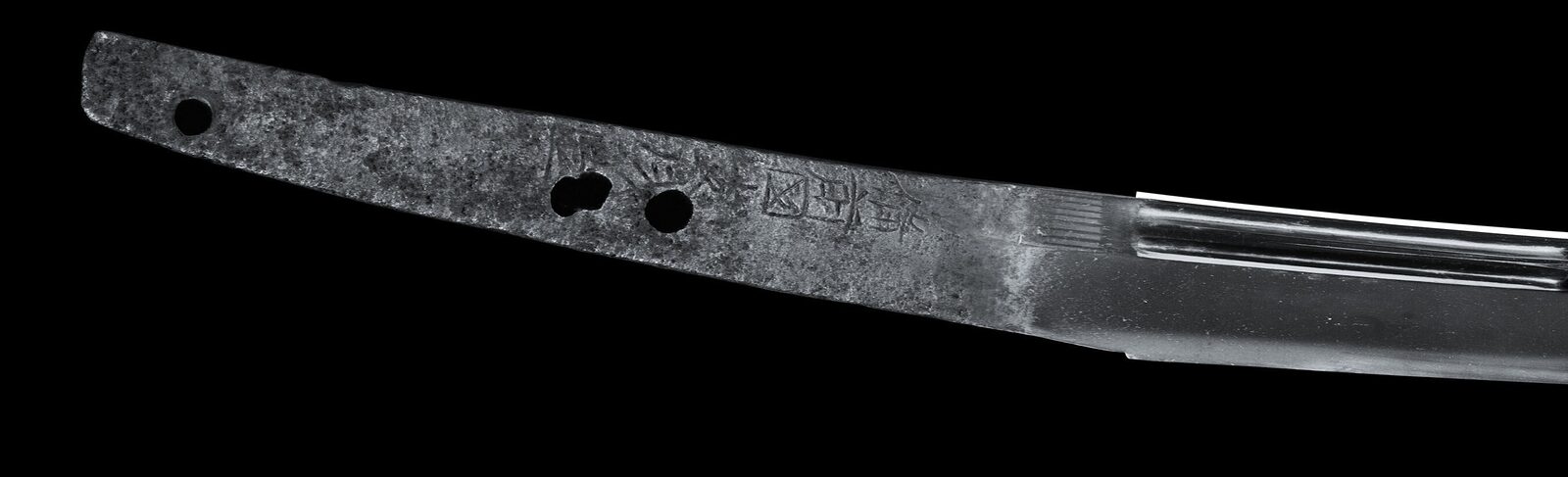
His signatures are of two kinds: the long ones, 備前国友成 (Bizen no kuni Tomonari) and 備前国友成造 (Bizen no kuni Tomonari zō), like those of the Uguisumaru and of the Tokyo National Museum tachi, and the short ones, 友成 (Tomonari) and 友成作 (Tomonari saku), like that of the Itsukushima tachi. The Japanese Wikipedia considers the first group the older.