On this page
Documented works
| Work | Designation | Where it is |
|---|---|---|
| Katana 近江守高木住助直 (Ōmi no Kami Takagi jū Sukenao), 1678 (Enpō 6) | No designation | Tokyo National Museum (F-271) |
| Katana of 1689 (Genroku 2), discussed in the NBTHK Sword Journal (no. 717, 2016) | Not recorded | Not recorded |
| Tachi 津田近江守助直 (Tsuda Ōmi no Kami Sukenao), 1690 (Genroku 3), made at the age of 52 | No designation | Tokyo National Museum (F-17218) |
| Wakizashi 近江守助直 (Ōmi no Kami Sukenao), blade of 43.2 cm | No designation | Tokyo Fuji Art Museum (9688) |
| Wakizashi blade 近江守助直 (Ōmi no Kami Sukenao) | No designation | Tokyo National Museum (F-17311) |
| Katana 津田近江守助直 (Tsuda Ōmi no Kami Sukenao), with an inscription on the scabbard by 佐藤寒山 (Satō Kanzan) | No designation | Saitama Prefectural Museum of History and Folklore |
Known works
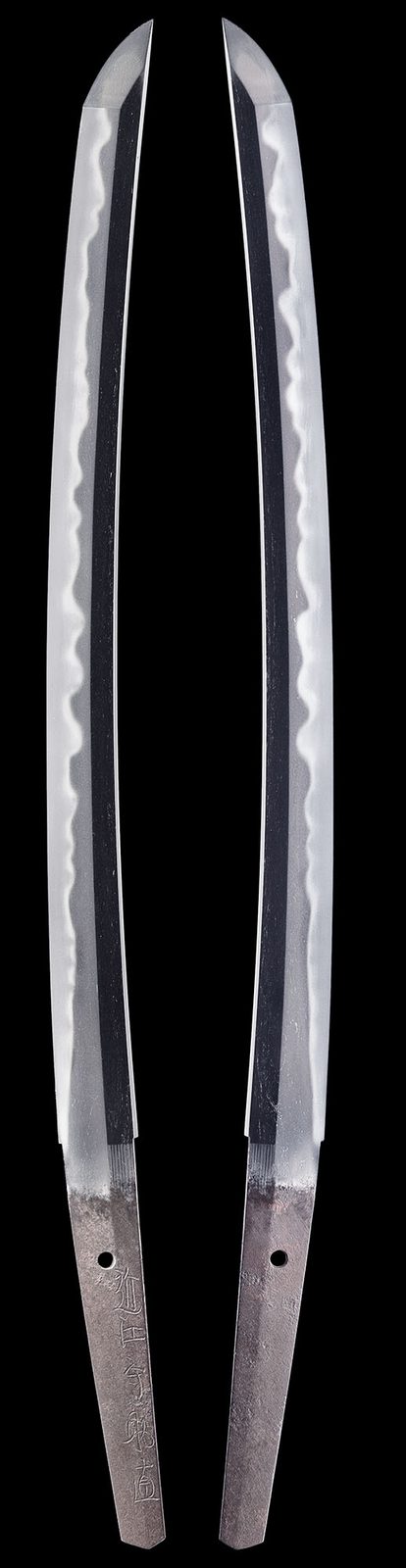
The Tokyo National Museum presents the tachi of 1690 as a work of his 52nd year, from his period of maturity, and as a typical example of tōran-ba, with a clean hamon. The wakizashi in the Tokyo Fuji Art Museum is wide and full-bodied, with a very tight ko-itame and a tōran-ba with a very bright and crisp nioiguchi.
No blade of his designated National Treasure, Important Cultural Property or Important Art Object is recorded in the records consulted.
In the lists
In the Yamada cutting list (懐宝剣尺, Kaihō Kenjaku, 1797), Ōmi no Kami Sukenao is in the third grade, that of the yoki-wazamono (良業物), according to the Japanese and the English Wikipedia. The grade belongs to the swordsmith, not to a particular blade. In Tomita Kiyama’s ranking of shintō swordsmiths (1933), published in the 日本刀辞典 新刀篇 (Nihontō Jiten Shintō-hen) in 1935, he is komusubi of the western side, below the ōzeki Inoue Shinkai and the sekiwake Tsuda Sukehiro, according to the translation of the Japanese Sword Index. No work of his is recorded in the Kyōhō meibutsuchō (享保名物帳).