Sugata
The NBTHK describes a katana of his of 1689 (Genroku 2) with the shape of the shintō of the Jōkyō and Genroku eras, and in another kantei notes that, compared with the shape of the Kanbun era, Sukenao’s sori is usually somewhat deeper. The wakizashi in the Tokyo Fuji Art Museum is wide and full-bodied: a blade of 43.2 cm with 1.0 cm of sori.
Jihada
A very tight ko-itame, with thick ji-nie over the whole blade, in the wakizashi of the Fuji Art Museum; a tight ko-itame with fine ji-nie and chikei, in the katana of 1689 that the NBTHK discusses.
Hamon
According to the Fuji Art Museum, he follows the tōran-ba (濤瀾刃) that his master created, but more orderly and cleaner in appearance, and a step behind in energy; he also tempers gunome-midare, notare and suguha, always with abundant ko-nie and a bright nioiguchi. The Tokyo National Museum speaks of a work with a clean hamon that follows Sukehiro’s tōran-ba. In the katana of 1689, the NBTHK sees a straight yakidashi at the base and, above it, an o-gunome with notare that begins to form the tōran-ba, with ashi, a dense nioiguchi, nie, kinsuji and sunagashi. His traits, according to the NBTHK: in the midare, the peaks and valleys differ little and the valleys are wide; in suguha, the temper is wider than Sukehiro’s. In another kantei, the NBTHK sums it up as a tōran-type o-gunome with marked sunagashi.
Bōshi
In the katana of 1689, straight and with a small round turn-back (小丸, komaru), according to the NBTHK. The sources consulted give no general rule for Sukenao’s bōshi.
Nakago and mei
According to the Fuji Art Museum, the usual signature is 近江国住助直 (Ōmi no kuni jū Sukenao) or 近江守高木住助直 (Ōmi no Kami Takagi jū Sukenao); in his early works he sometimes signs 近江大掾藤原助直 (Ōmi Daijō Fujiwara Sukenao), and from the Tenna era (1681-1684), 津田近江守助直 (Tsuda Ōmi no Kami Sukenao). The katana of 1678 in the Tokyo National Museum bears 近江守高木住助直 (Ōmi no Kami Takagi jū Sukenao) on one side of the tang and, on the other, the date 延宝六歳九月吉日 (Enpō rokusai kugatsu kichijitsu), an auspicious day of the ninth month of 1678.
Who he is confused with
With Sukehiro: according to the NBTHK, there are two manners of tōran-ba. That of Sukehiro, who created it, follows the shape of the crest of the wave; the other, an o-gunome that forms the tōran-ba, is the one associated with Sukenao. With Suishinshi Masahide, who also made tōran-ba: the NBTHK points out that a blade by Sukenao would have an Osaka yakidashi and the valleys of the midare would be wide.
Details
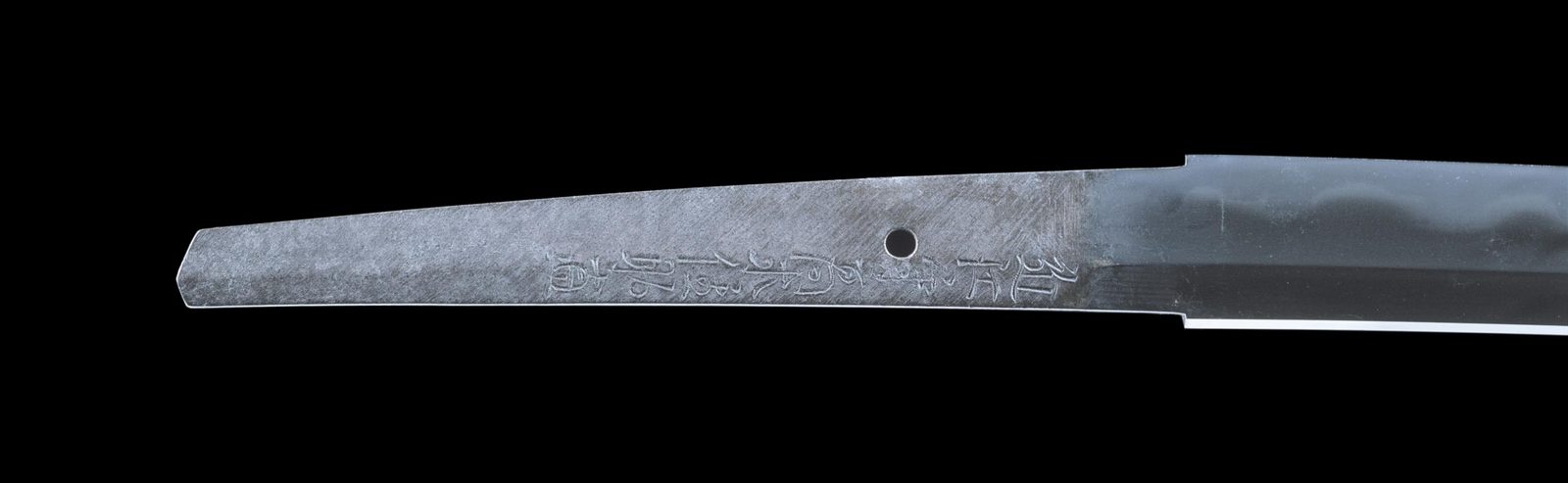
The signature 近江守高木住助直 (Ōmi no Kami Takagi jū Sukenao) of the katana of 1678. Tokyo National Museum, via ColBase · ColBase terms of use · source 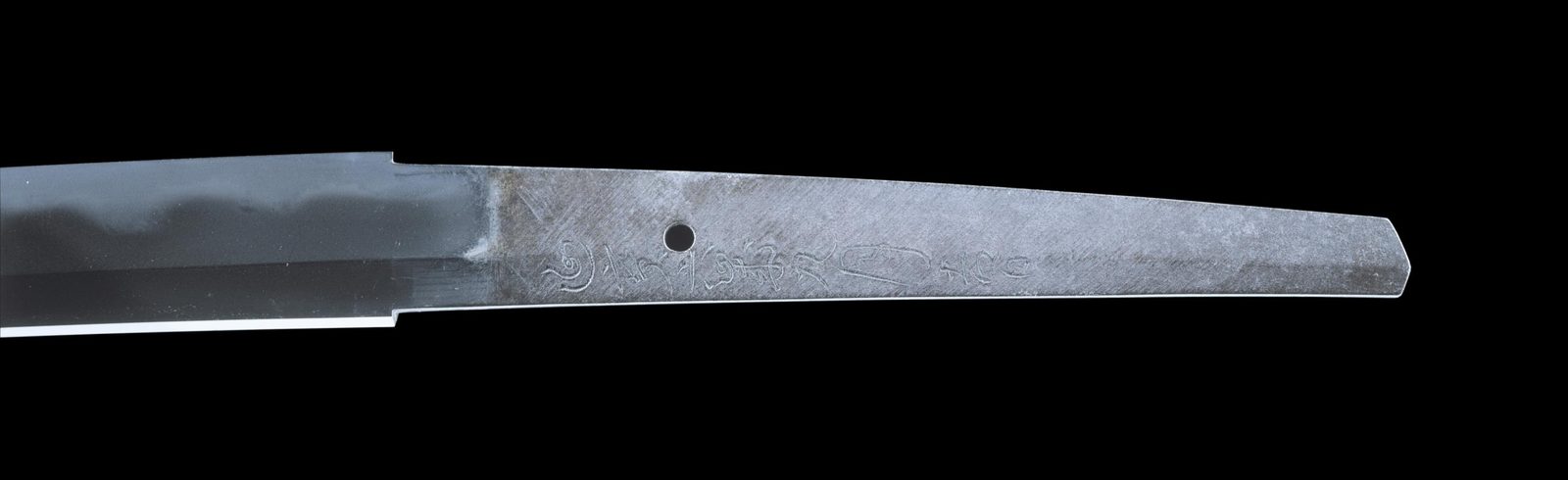
The date of the katana of 1678, on the other side of the tang. Tokyo National Museum, via ColBase · ColBase terms of use · source 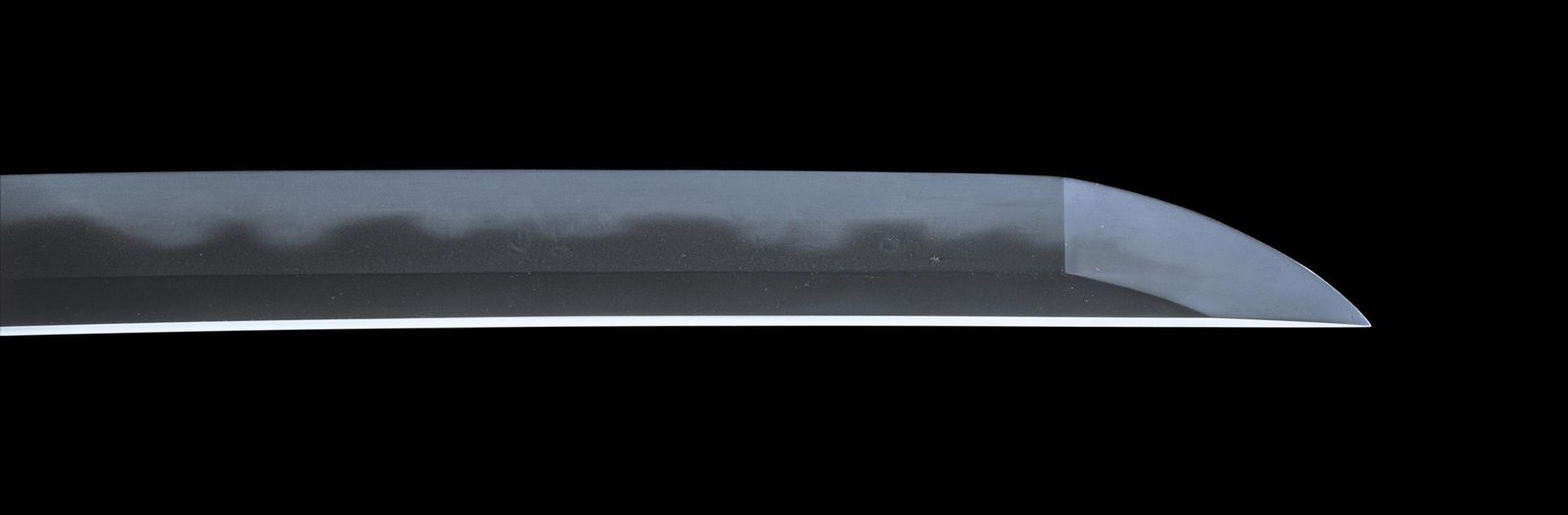
The point and the wave temper of the katana of 1678. Tokyo National Museum, via ColBase · ColBase terms of use · source 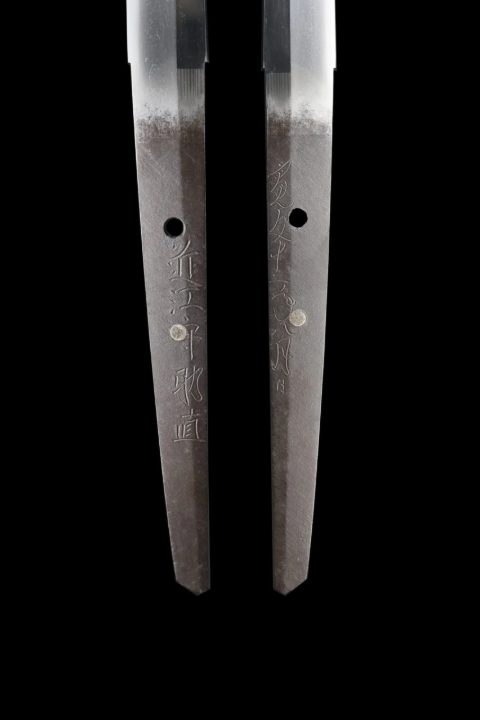
The two sides of the tang of another katana signed 近江守助直 (Ōmi no Kami Sukenao). Photo: dealer in Japan