His own steel
He extracts his steel from iron sand in a small tatara (たたら, tatara) in the workshop and chooses it for each blade, something uncommon among swordsmiths. He says that with it he achieves swords that do not break, do not bend and cut well, with a steel (地鉄, jigane) that comes close to that of the old swords (古刀, kotō).
Traditions and goals
He works in the Bizen-den, because of where he forges; the Sōshū-den, the one perfected by Masamune (正宗, Masamune); and the Sōden-Bizen, which blends the two. His declared goal is to surpass the old swords and to make a sword of the rank of a National Treasure (国宝, kokuhō).
He mentions a wakizashi in shinogi-zukuri forged with a single hammer (2024), a tantō that seeks the manner of Osafune in the Nanbokuchō period (2025), a kōbuse wrapping steel (2026) and hardening tests with knives of the same tamahagane. He also makes kitchen knives (和包丁, wa-bōchō) with the same steel and the same method as his swords.
The tatara and its steel
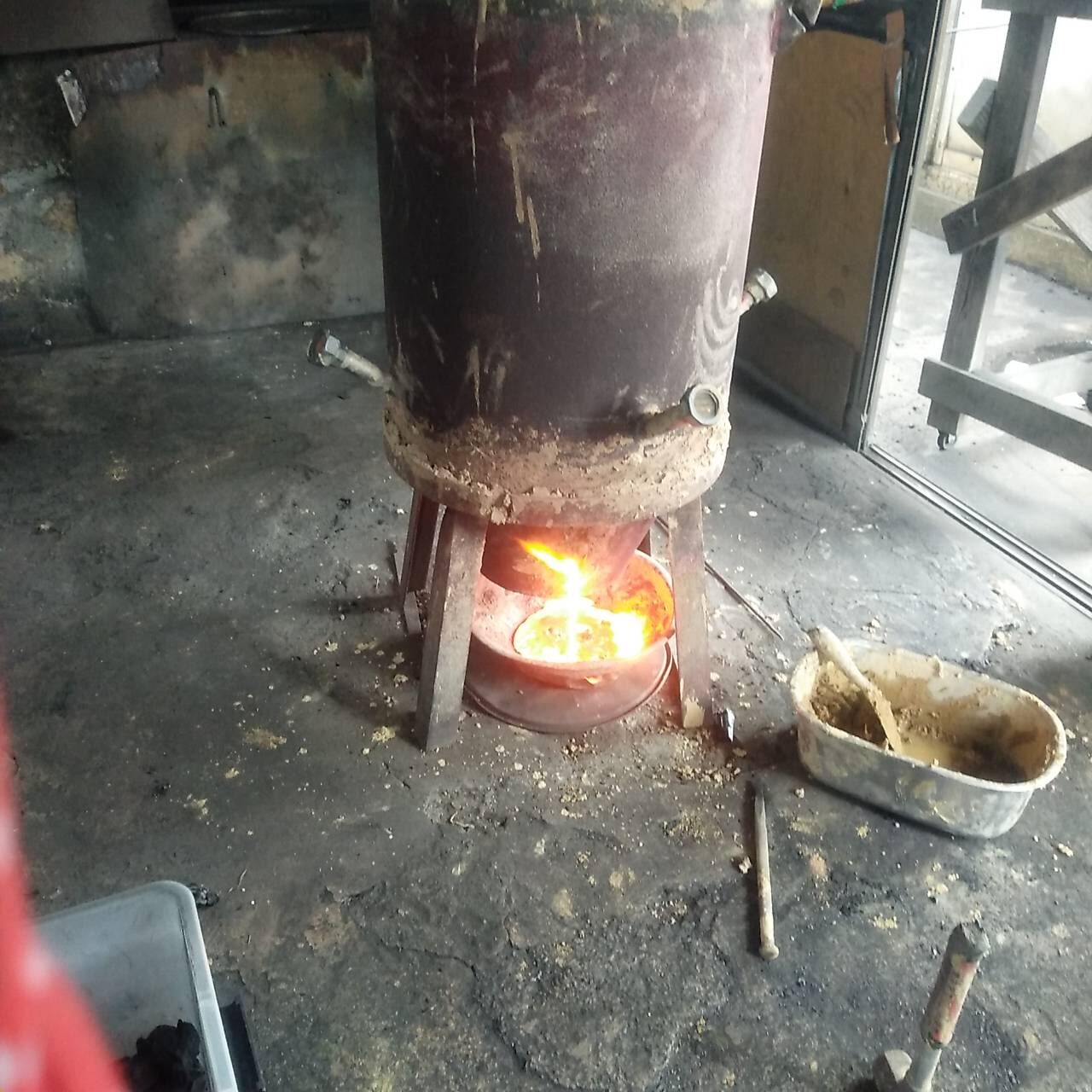
His tatara furnace (たたら, tatara), a small one. Photo: the smith himself 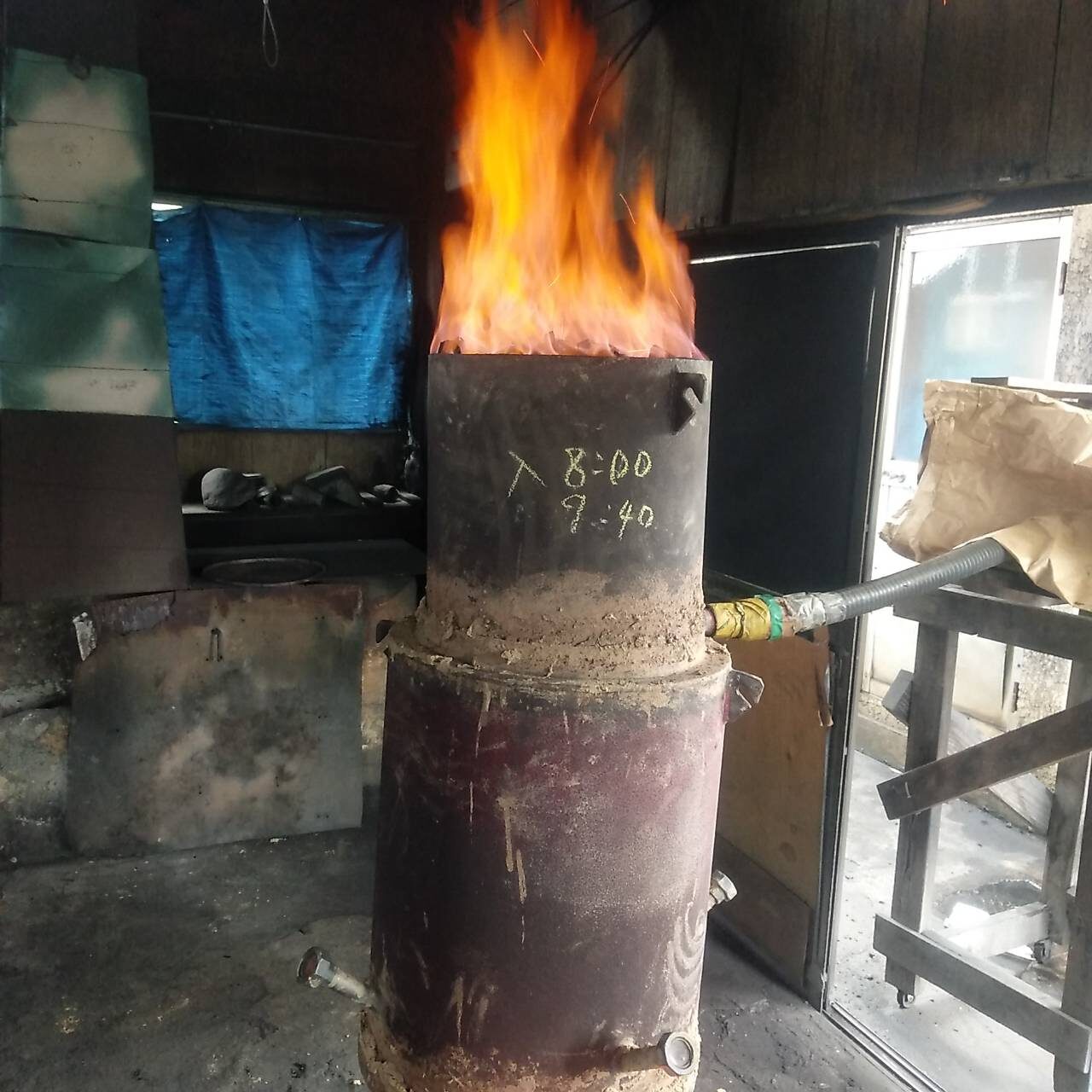
The tatara in operation, with the times noted on the clay. Photo: the smith himself 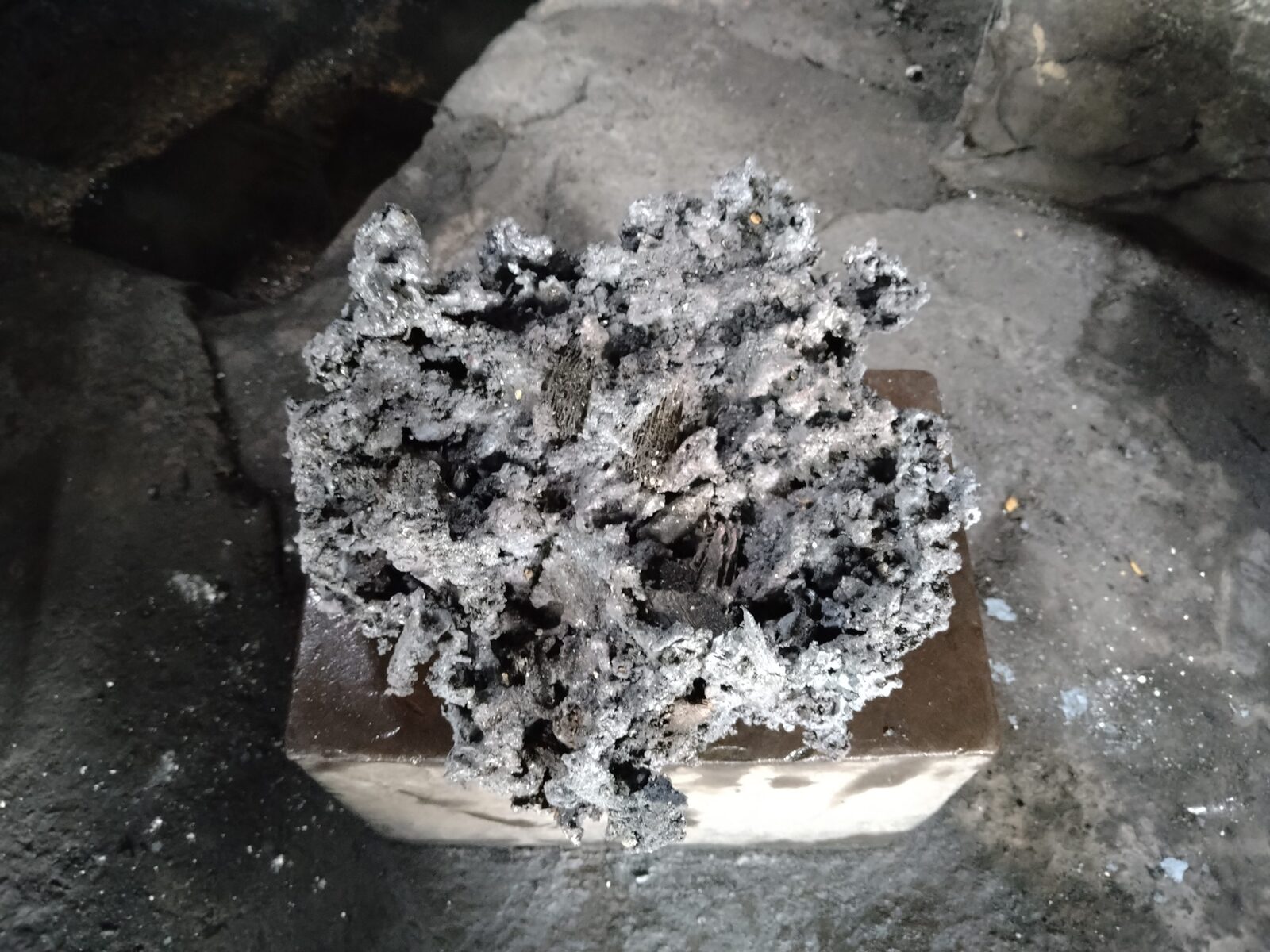
The kera (鉧, kera), the block of steel that comes out of his tatara. Photo: the smith himself
His work

A wakizashi of his, with the signature on the tang. Photo: the smith himself 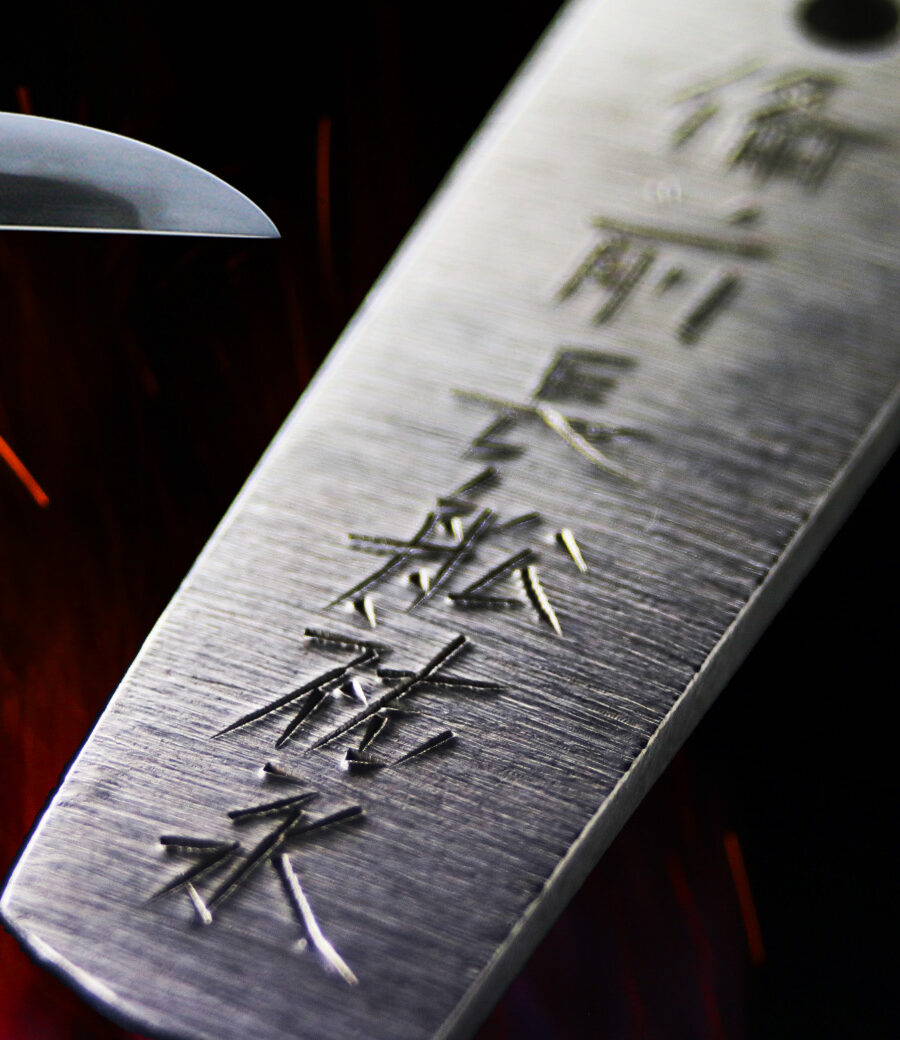
The signature 備前長船祐永 (Bizen Osafune Sukenaga) on the tang. Photo: the smith himself