On this page
Sugata
Very slender and elegant tachi, with a deep koshizori that bends towards the tip, funbari and a ko-kissaki that sometimes tends towards a chū-kissaki, according to Sesko. The National Treasure measures 80.4 cm in nagasa with a sori of 3.0 cm; it is shinogi-zukuri and iori-mune.
Jihada
His jigane is of unequalled quality: the old texts call it たたきつめ (tataki-tsume), dense “like a stamped-down clay floor”. On the National Treasure, a very dense ko-itame with abundant ji-nie, which reaches nie-utsuri, and nashiji-hada. The official record of the tachi of 78.4 cm that is an Important Cultural Property describes an extremely tight jigane, with nie and lustre, which it calls muranashiji. The Tokyo National Museum points out in its katana the bright jigane and the crisp hamon, characteristic features of Hisakuni.
Hamon
On the National Treasure, a ko-nie suguha-chō with ko-midare, ko-chōji and ko-gunome, a lot of ko-ashi, uchinoke, kinsuji, sunagashi and bright ha-nie; the nioiguchi is very clear. On the tachi that is an Important Cultural Property, a ko-midare and ko-notare with ashi and ara-nie.
Bōshi
On the National Treasure, a shallow notare-komi with a short kaeri, almost yakitsume on the ura, and hakikake. On the tachi that is an Important Cultural Property, a bōshi which on the omote recalls the head of a jizō.
Nakago and mei
The nakago of the National Treasure is ubu, although with the end reworked, kurijiri, with sujikai-yasurime and two mekugi-ana. The two-character signature, 久国 (Hisakuni), is placed next to the mekugi-ana and is the finest known by him; the monogram (kaō) at the end is not his but that of a later owner.
Most common is a thicker chiselling than that of the National Treasure; Tanobe assumes that all known signatures are by a single hand. There are rare examples with the full name, 藤次郎久国 (Tōjirō Hisakuni).
Tantō
Most of his tantō are small and with a marked uchizori; Hisakuni is often cited among the earliest fine tantō that survive. The exception is a wide and long tantō, of 29.4 cm and with bōhi, an Important Art Object; and the tantō that is an Important Cultural Property, of 20.1 cm, with a ko-nie suguha-chō, nijūba and kuichigai-ba, is held to be one of the best Awataguchi tantō.
The katana of the Tokyo National Museum
It is a shortened tachi: when the tang was cut down, its signature was kept as an inlaid plate (gakumei). It came from the Tokugawa of Owari, who offered it to the court in 1863 together with the “Okayama Tōshirō”, according to the museum.
The katana signed Hisakuni, in five photos

The whole blade, on one side. Tokyo National Museum, via ColBase · ColBase terms of use · source 
The whole blade, on the other side. Tokyo National Museum, via ColBase · ColBase terms of use · source 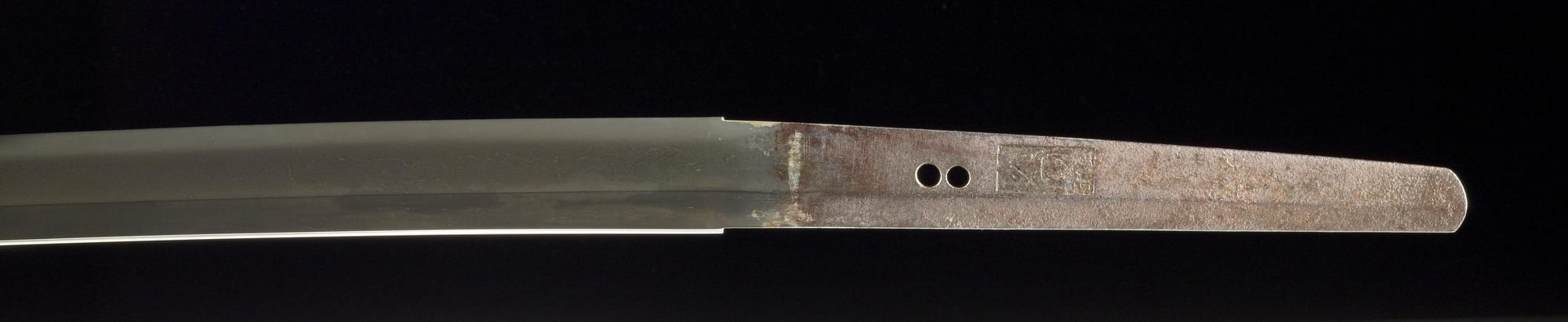
The nakago, with the signature 久国 (Hisakuni) kept as gakumei. Tokyo National Museum, via ColBase · ColBase terms of use · source 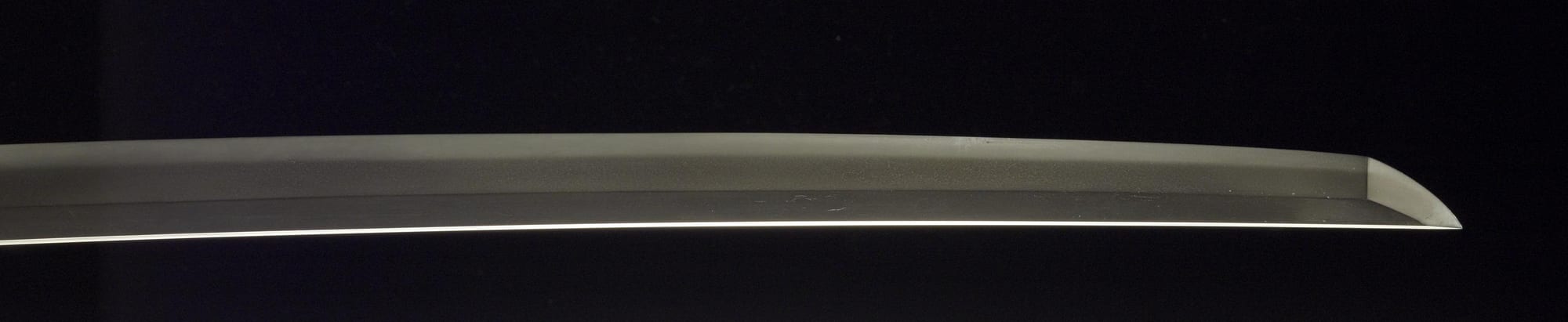
The kissaki and the bōshi, on one side. Tokyo National Museum, via ColBase · ColBase terms of use · source 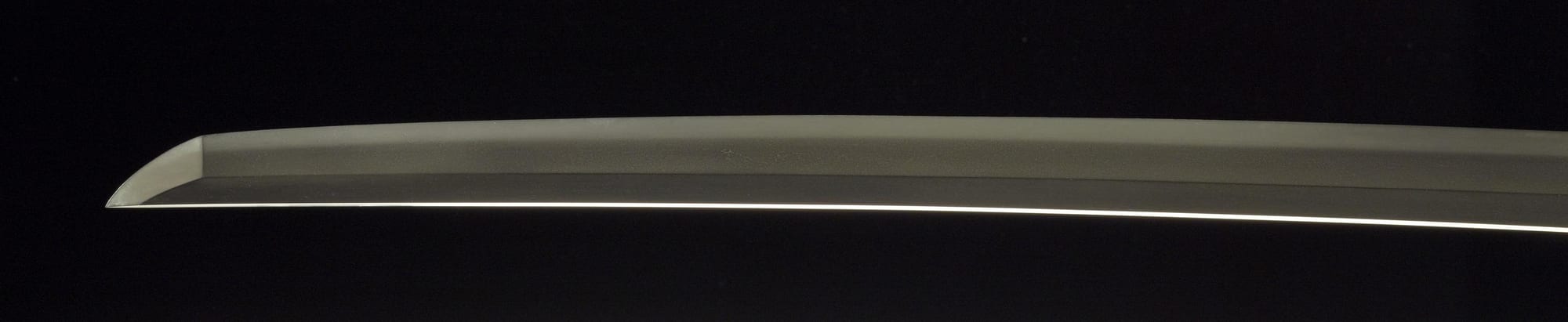
The kissaki and the bōshi, on the other side. Tokyo National Museum, via ColBase · ColBase terms of use · source