On this page
Kantei keys
- Sugata
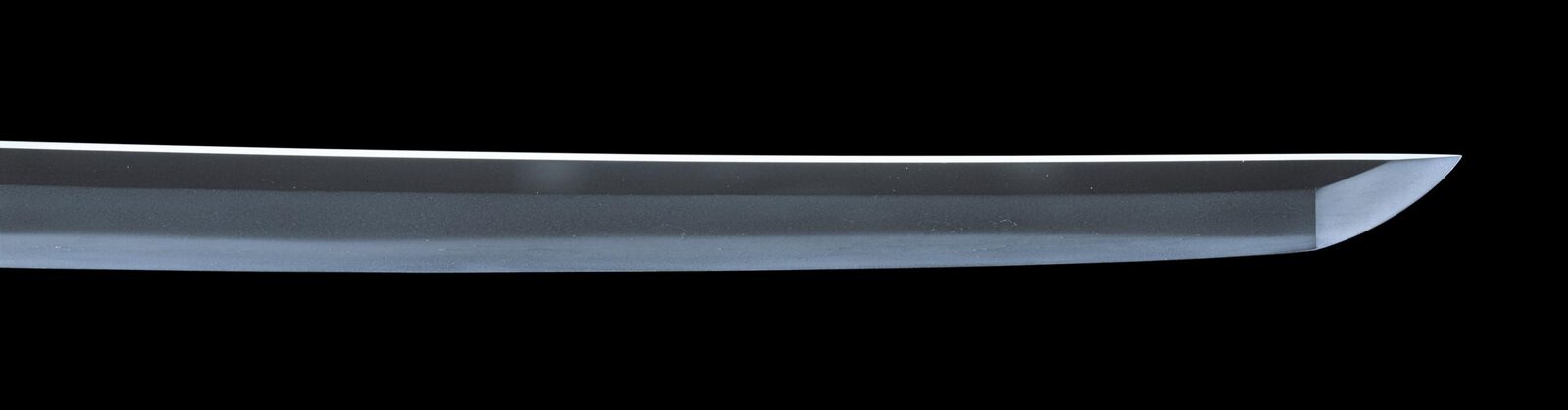
- Slender, with a large koshizori and a small kissaki. In the Kokin Denju no Tachi, shinogi-zukuri and iori-mune, thick, with funbari and a sori that flattens towards the point. HD
- Jihada
- Tight ko-itame, sometimes with ō-hada, with ji-nie and shirake-utsuri; a soft steel with a moist look (“uruoi”) and a patina. HD
- Hamon
- Suguha, or suguha with ko-midare, in nioiguchi with plenty of nie and a yaki-otoshi above the machi. Sesko places him among those who make a suguha with a diffuse, subdued nioiguchi. HD
- Bōshi
- In the Kokin Denju no Tachi, sugu and yakizume. HD
- Nakago and mei
- Almost everything signed is unshortened (ubu). In the Kokin Denju no Tachi, kiji-mata, kurijiri and suji-chigai yasurime. A six-character signature, 豊後国行平作 (Bungo Koku Yukihira saku), on the ura; rarely a two-character one, 行平 (Yukihira). HD
- Horimono
- Kurikara in gyō and sō style, Jizō bosatsu, bonji, cranes pecking at the pine (matsukui-tsuru) and cherry blossoms, which are not seen in other smiths of his time; that is why he is held to be a master of engraving. HD
Who he is confused with
- The NBTHK describes the classic work of Kyūshū: tight ko-itame with nagareha, a moist jihada with whitish utsuri, a soft ko-midare hamon and yaki-otoshi in the koshimoto.
- It is confused with Sadahide and with the Ko-Naminohira. Yukihira often shows pale yubashiri and tobiyaki, and almost always engravings; the Ko-Naminohira have a high shinogi and fine nijūba or kuichigaiba in the habuchi.
- Compared with Sadahide, Yukihira engraves more, and in more detail, in the koshimoto, and does not use the gyaku-takanoha file pattern.
Details
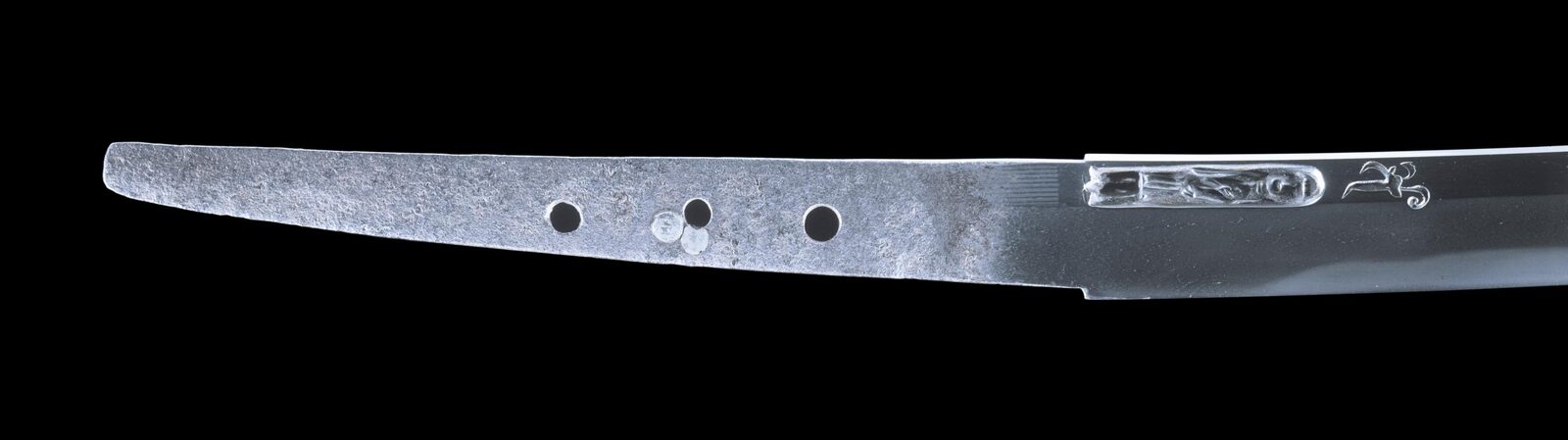
The same tachi: the tang and the engraving at the base of the blade. Tokyo National Museum, via ColBase · ColBase terms of use · source 
The same tachi: the unshortened tang, with three holes and the signature. Tokyo National Museum, via ColBase · ColBase terms of use · source 
The same tachi: the small kissaki and the bōshi. Tokyo National Museum, via ColBase · ColBase terms of use · source